


For many first-time visitors to Europe, the decision comes down to two very different paths: join a Contiki group tour or plan the trip completely on your own. Both can deliver a great adventure, but they suit different travel styles, budgets and comfort levels. Understanding what you gain and what you give up with each option is the key to choosing the right trip for you.
Get the latest updates straight to your inbox!
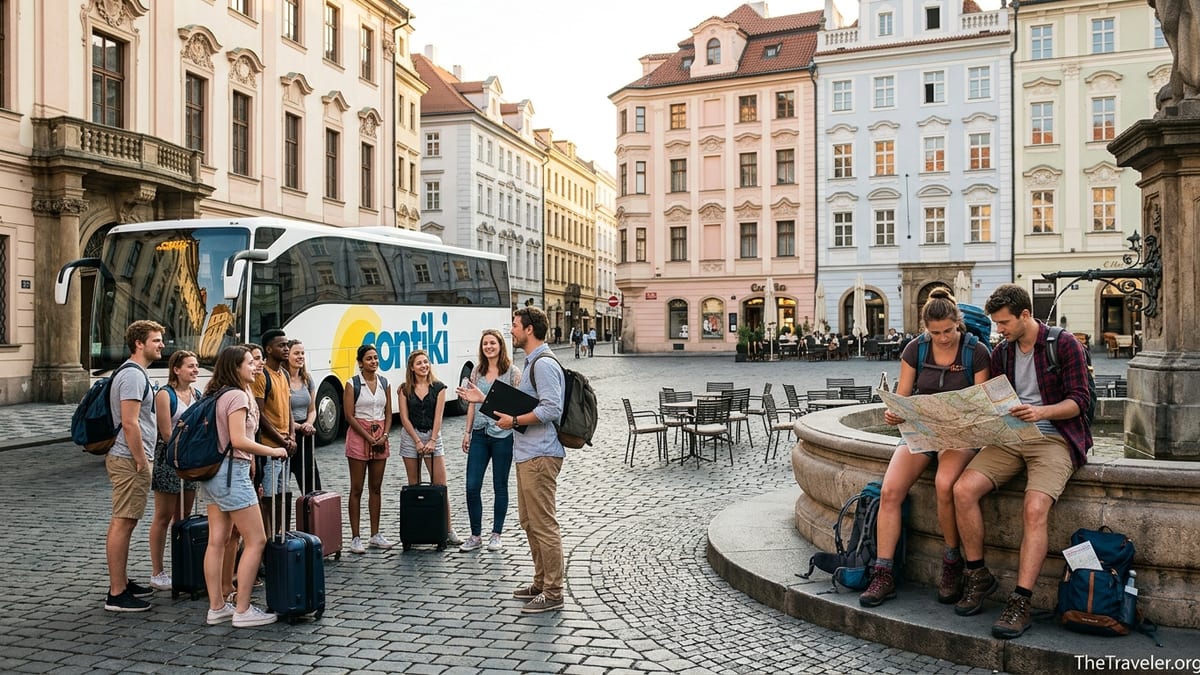
What Contiki Actually Offers (And Who It Is For)
Contiki is a guided group tour company designed specifically for travelers aged 18 to 35. On a typical trip you travel with a set itinerary, a Trip Manager, a driver and a busload of people in the same age bracket, often a mix of solo travelers and small friend groups. The company now runs more than 200 trips in around 75 countries, but its classic product is a multi-country Europe tour covering major cities like London, Paris, Rome and Amsterdam in one itinerary.
Most Contiki itineraries are fast paced. A flagship route such as European Discovery or European Whirl might cover 8 to 10 countries in around 12 to 18 days, with many stops running to two nights and some single overnights. You get city highlights, coach transport between destinations, a selection of included activities, and a social schedule that leans heavily into nightlife, bar crawls and shared meals. For travelers who want a ready-made group and do not want to handle logistics in multiple languages, this structure is a major selling point.
Accommodation on Contiki trips is usually a mix of modern hostels, budget hotels and sometimes special stays like cabins or boat hostels, depending on the itinerary. You will generally share rooms with other travelers from the group, often in twin or multi-share setups. Some meals are included, usually breakfasts and a few dinners, while lunches and free evenings are left open so you can explore on your own. The feeling is closer to a university trip or social travel program than a classic coach tour aimed at retirees.
The age cap matters. Because Contiki is limited to 18 to 35 year olds, the vibe on board is youthful and often party-forward. Many guests are in their early to mid-twenties, taking advantage of a first big trip after college or between jobs. If you want a quiet, slow-paced cultural immersion or are hoping for mixed-age groups including families with kids, Contiki will not be the right fit. If you are 19, nervous about your first solo international trip, and excited to make friends at hostels and rooftop bars, you are exactly the target audience.
What It Really Costs: Contiki vs Planning It Yourself
When comparing Contiki to a do-it-yourself trip, it helps to look at specific, real-world numbers. As a broad reference point, many backpackers traveling independently across Europe in 2026 report average daily spending of roughly 50 to 80 euros per day in budget-friendly regions, and more in Western capitals. That range typically covers hostel dorm beds, local public transport, simple meals and a few paid attractions each week.
Contiki positions itself as a cost-comparable or sometimes cost-saving option once you add up transport, accommodation and some activities. For example, Contiki’s own cost comparison materials show a 12-day multi-country Europe trip where the total per-person cost with Contiki comes out close to a mid-range independent traveler booking equivalent standard hotels and paying for city-to-city transport separately. The Contiki price wraps in most intercity transport, accommodation, a Trip Manager and several experiences, while you still pay for optional extras, many lunches and some nights out.
To see how this translates in practice, imagine you want to spend about 12 days visiting London, Paris, Swiss Alps and Rome in July. A popular Contiki itinerary in peak summer might be priced in the rough range of 2,300 to 3,000 US dollars excluding international flights, depending on current promotions, room type and departure date. That works out to around 190 to 250 dollars per day, but it already includes your coach transport between cities, a bed every night and a regular schedule of included sightseeing and some meals.
Planning something similar yourself, staying in central but basic hostels or simple two-star hotels, you might budget about 60 to 100 euros per day for accommodation, 25 to 40 euros for food and drinks, and another 10 to 25 euros for local transport and sightseeing. Intercity trains between those destinations in peak summer can easily add several hundred dollars, especially if you leave booking late or prefer faster services. For many routes, a realistic independent cost lands in the 150 to 220 dollars per day range for a mid-range backpacker who wants comfort but not luxury. In other words, Contiki is rarely dramatically cheaper, but the price is often competitive once you factor in everything that is bundled.
The Convenience Factor: Time, Stress and Safety
One of the strongest arguments in favor of Contiki is convenience. You make one booking, pay one main bill, and from the moment you meet the group your transport, route and primary accommodation are handled. If your bus is delayed, the Trip Manager deals with it. If there is a storm and a ferry is cancelled, the operations team rearranges the plan. For a first-time traveler or someone squeezing a lot into limited vacation time, the reduction in mental load can be significant.
On a Contiki tour, there is also built-in support with the basics that can trip up new travelers, from understanding local tipping customs to figuring out how much cash you need for a metro ride. Trip Managers and local guides regularly brief the group on safety in each city, show how to navigate public transport for free time, and suggest areas to avoid late at night. This can feel reassuring if you are traveling solo, particularly as a younger or less experienced traveler.
Planning and running your own trip offers maximum flexibility but also shifts all that work onto you. You must research each stop, book trains or buses that actually connect, navigate different booking platforms, and troubleshoot when things go wrong. If your budget airline cancels a flight from Barcelona to Rome the day before departure, you are the one scrambling for alternatives. For some travelers this is part of the fun and a skill-building experience. For others it is exactly what they want to avoid on precious holiday days.
Safety is another consideration. Both Contiki and independent travel can be safe options, but the nature of risk differs. On Contiki, you are seldom alone after dark unless you choose to be, and you have a group and a Trip Manager who know roughly where everyone is. On a solo backpacking itinerary through big cities like Berlin, Prague and Budapest, you will make more day-to-day decisions about where to go, when to walk back to the hostel and who to trust for advice. Neither option is inherently safer, but the group tour naturally structures your days in ways that reduce some forms of risk while introducing others, such as social pressure to go along with heavy nights out.
Flexibility, Freedom and Depth of Experience
The biggest advantage of planning your own trip is freedom. You decide how long to stay in each city, which neighborhoods to base yourself in, and how fast to move. If you reach Lisbon and fall in love with the rhythm of the city, you can extend your stay by a week. If rain ruins your beach days on the Croatian coast, you can pivot inland to Ljubljana and the Julian Alps. Contiki, by design, locks in your route and timing long before departure. Once the bus moves on from Paris or Florence, you move with it.
This flexibility also extends to budgets and priorities. Independent travelers can mix splurge days and savings days, staying in a hostel dorm in Vienna to afford a better restaurant in Prague or upgrading to a private room in a cheaper city like Krakow. You can choose slow travel, staying two weeks in one country and learning enough of the language to shop at local markets, or you can design your own whirlwind multi-country loop. A Contiki itinerary will always reflect the company’s best guess at what most people want, not your personal niche interests.
Depth of experience is another key difference. On many multi-country Contiki trips, you might get one full day in a major city before moving on, often with several hours of that day taken up by included group activities. That can be a fun overview, like a highlights reel of Europe. Independent travel lets you spend four days in Berlin focusing on street art, three days in the Italian countryside near Bologna learning to make pasta, or a quiet week on a Greek island like Naxos where the main event is slow swims and long tavern dinners. If your dream is to really get under the skin of a place rather than tick off countries, planning the trip yourself usually wins.
That said, Contiki can still offer meaningful experiences, particularly on itineraries that slow down in certain regions. Many trips now include locally run food tours, community-based experiences and visits to less touristy neighborhoods alongside the headline sights. For some people, the social aspect of sharing these moments with a busload of new friends is more important than deep solo immersion, and that is a valid choice.
Social Life, Group Dynamics and Travel Style
Social dynamics are where Contiki stands out most sharply from independent travel. A typical departure includes 30 to 50 people, many of them solo travelers. Days on the coach, shared rooms and regular group dinners make it almost impossible not to meet people. Pre-trip WhatsApp groups and social media communities add another layer, so by the time you arrive at the starting hotel you may already know some names and faces.
On the ground, that translates into busy evenings, bar crawls, club nights and a lot of shared stories. If you are an extrovert or just looking to widen your circle of travel friends quickly, this can be a huge plus. Travelers often describe leaving Contiki with a ready-made group chat full of people they later visit in Australia, Canada or the United States. It can feel like adult summer camp stretched across Europe.
Independent travel can be equally social, but in a different way. Staying in hostels with common rooms and organized activities in cities like Barcelona, Budapest or Porto gives you endless opportunities to meet people from all over the world. Free walking tours, cooking classes and hostel bar nights serve as natural mixing points. The difference is that you need to opt in, introduce yourself and make plans with people you meet. There is no built-in structure forcing everyone to show up at the same bar at 9 p.m.
The flip side of the Contiki social machine is that it may not suit all personalities. If you prefer quiet evenings, early mornings at museums or long solo walks, you may find the constant group energy draining. Sharing rooms and buses with the same people for 10 to 20 days can also amplify any clashing personalities. On a DIY trip, if you do not click with people in one hostel, you can change beds or cities. On a Contiki coach, you work around the friction for the duration of the tour.
When a Contiki Tour Makes More Sense
Contiki is most compelling for specific types of travelers and circumstances. If you are between 18 and 30, have limited vacation time, and want to sample as many iconic European cities as possible in two or three weeks, a Contiki tour can be a solid choice. It compresses planning, gives you a ready-made group and ensures you see the major highlights like the Eiffel Tower, Venice canals and the Colosseum without needing to coordinate every leg yourself.
It can also be an ideal entry point for nervous first-timers. Imagine a 22-year-old traveler from the United States with no prior experience of long-haul flights, a limited budget, and parents anxious about safety. A Contiki itinerary where all accommodation and main transfers are pre-arranged, the group meets in a central hotel in London, and the Trip Manager walks everyone through metro tickets and basic phrases can be a major confidence boost. After one structured trip, that same traveler might feel ready to return to Europe independently.
Group tours like Contiki are often appealing for milestone trips. Graduation adventures, gap year kickoffs, or “last summer before the big job” moments are classic reasons people book these trips. The party-friendly vibe, group photos outside landmarks, and easy logistics leave more space for celebration and less for admin. If your goal is to maximize shared memories with friends and do not mind sacrificing some flexibility, this is exactly the kind of product built for you.
Finally, Contiki can sometimes be better value in high season or for complex routes. During peak July and August weekends in cities like Paris or Amsterdam, last-minute hotel and train prices can be eye-watering. A pre-negotiated group hotel rate and coach transport may undercut what an inexperienced planner could pull together on their own with only a few weeks’ notice, particularly if they want private rooms rather than hostel dorms.
When You Are Better Off Planning the Trip Yourself
Planning your own trip is the stronger option when you care more about depth than breadth, prefer control over your daily rhythm, or fall outside Contiki’s core demographic. If you are in your early thirties and happiest in small, quiet wine bars rather than loud clubs, a custom itinerary that strings together cities like Porto, Bologna and Ljubljana at a slow pace may feel more aligned with your style than a fast-paced multi-country coach tour.
Independent travel is also where you have the best chance of stretching a tight budget. For instance, a traveler willing to stay in six-bed hostel dorms, cook many meals and travel overland in countries like Poland, Hungary, Slovakia and the Balkans can often keep daily costs in the lower half of the 40 to 80 euros range. Choosing night trains or budget buses between cities, traveling outside peak season, and staying longer in each stop to reduce transport costs all add up. None of this flexibility exists on a fixed group tour schedule.
DIY planning suits travelers with niche interests, too. If your dream Europe trip is built around specific music festivals, food regions or hiking routes, you will struggle to find an off-the-shelf group tour that matches. A person obsessed with Scandinavian design might want a week each in Copenhagen and Stockholm, while a hiker might plan two weeks walking hut-to-hut in the Dolomites and a few days at thermal spas in Slovenia. Contiki can deliver a taste of many places, but not that kind of custom focus.
There is also the question of sustainable travel choices. When you build your own route, you can choose slower overland journeys, spend more time in fewer destinations, and direct more of your budget to locally owned guesthouses and restaurants instead of large chains. Many travelers now prefer this slower, lower-impact style over a quick-fire loop of 10 countries in 14 days, especially if they can work remotely and travel outside school holiday seasons.
The Takeaway
Choosing between Contiki and planning your Europe trip yourself is not about which option is objectively “better,” but which one fits your personality, goals and constraints right now. Contiki shines when you want convenience, a guaranteed social group and a fast-paced highlight reel of Europe with minimal planning. It reduces stress, wraps many major costs into a single bill and gives young, often first-time travelers a structured way to see a lot in a short time.
Independent travel excels when you value flexibility, depth and personal control over every stop. It lets you tailor the pace, pick your neighborhoods, chase good weather, and adjust your budget day by day. It can be cheaper or more expensive than a group tour depending on your choices, but it will always be more customizable.
If you are reading this while finishing exams, imagining your first summer abroad and feeling daunted by train timetables, a Contiki tour could be a great on-ramp to the wider world. If you already have a long wish list of specific cafés, neighborhoods and hiking trails saved on your phone, you may find that designing your own route is half the joy of the trip.
In the end, both paths can deliver unforgettable European adventures. The most important step is to be honest with yourself about what you need right now: structure or freedom, built-in community or open-ended possibility. Once you know that, the choice between Contiki and a self-planned journey becomes much clearer.
FAQ
Q1. Is Contiki cheaper than planning a trip to Europe myself?
In many cases, Contiki comes out roughly similar in cost to a mid-range independent trip once you add up transport, accommodation and some activities. It is rarely dramatically cheaper, but the price bundles a lot of logistics into one package, which some travelers value as much as raw savings.
Q2. What age group is Contiki really best for?
Contiki is marketed to 18 to 35 year olds, with many travelers in their early to mid-twenties. If you enjoy late nights, fast-paced itineraries and meeting lots of new people quickly, you are likely in the sweet spot. If you prefer quiet evenings and slower travel, you may be happier planning your own route or choosing a different style of group tour.
Q3. Can I still make friends if I travel independently instead of with Contiki?
Yes. Staying in social hostels, joining free walking tours, joining food or wine experiences and using local event listings can all help you meet people. The difference is that you need to be proactive. With Contiki, the group is built in from day one; with independent travel, you create your own social opportunities as you go.
Q4. How much should I budget per day for independent travel in Europe?
For a backpacker-style trip, many travelers in 2026 report daily costs around 50 to 80 euros in budget-friendly regions, and more in expensive capitals. That typically covers hostel dorms, simple meals, local transport and a few paid attractions. Staying in private rooms, eating at sit-down restaurants most nights or traveling at a very fast pace will push that number higher.
Q5. Is a Contiki tour safe for solo travelers?
For many solo travelers, Contiki feels safer than going completely alone because you have a group, a Trip Manager and structured days. You still need to take normal precautions on nights out and in busy tourist areas, but you have people around you and staff who know the local context, which can be reassuring on a first big trip.
Q6. Will I have any free time on a Contiki trip?
Yes, most itineraries include blocks of free time in each city for you to explore independently, shop, visit museums or rest. However, the overall pace is fast and major travel days, included activities and group meals will take up large parts of the schedule, so you will not have the same level of open-ended days as on a self-planned trip.
Q7. What do I miss out on by choosing Contiki instead of planning my own trip?
The main trade-offs are flexibility and depth. You cannot easily stay longer in places you love, skip stops that do not interest you, or design an itinerary around niche interests like specific hiking routes or food regions. You also share your days with a large group, which shapes where you go and how you experience each place.
Q8. What are the biggest risks of planning everything myself?
The main risks are underestimating costs, overpacking your itinerary and making stressful connections between cities. Booking long-distance trains or flights too late can be expensive, and trying to see too many countries in too few days leads to burnout. There is also more responsibility on you to handle problems when things go wrong, from cancellations to lost reservations.
Q9. Could I combine Contiki with independent travel on the same trip?
Absolutely. Many travelers use a Contiki tour for the first two or three weeks of a longer Europe trip, then stay on independently. This hybrid approach lets you build confidence, make friends and see many highlights quickly, then slow down afterward in one or two countries that appeal to you most.
Q10. How far in advance should I book a Contiki tour or a self-planned trip?
For Contiki, popular summer departures can book out months in advance, so it is wise to lock in your spot and pay your deposit as soon as you know your dates. For independent travel, booking long-distance transport and central accommodation several months ahead generally leads to better prices, especially for July and August in major European cities.