


More news on this day
A recent freight train derailment in Repentigny, Quebec, has renewed scrutiny of how extreme summer heat and stressed rail infrastructure may be combining to raise safety risks across Canada’s busy freight corridors.
Get the latest news straight to your inbox!
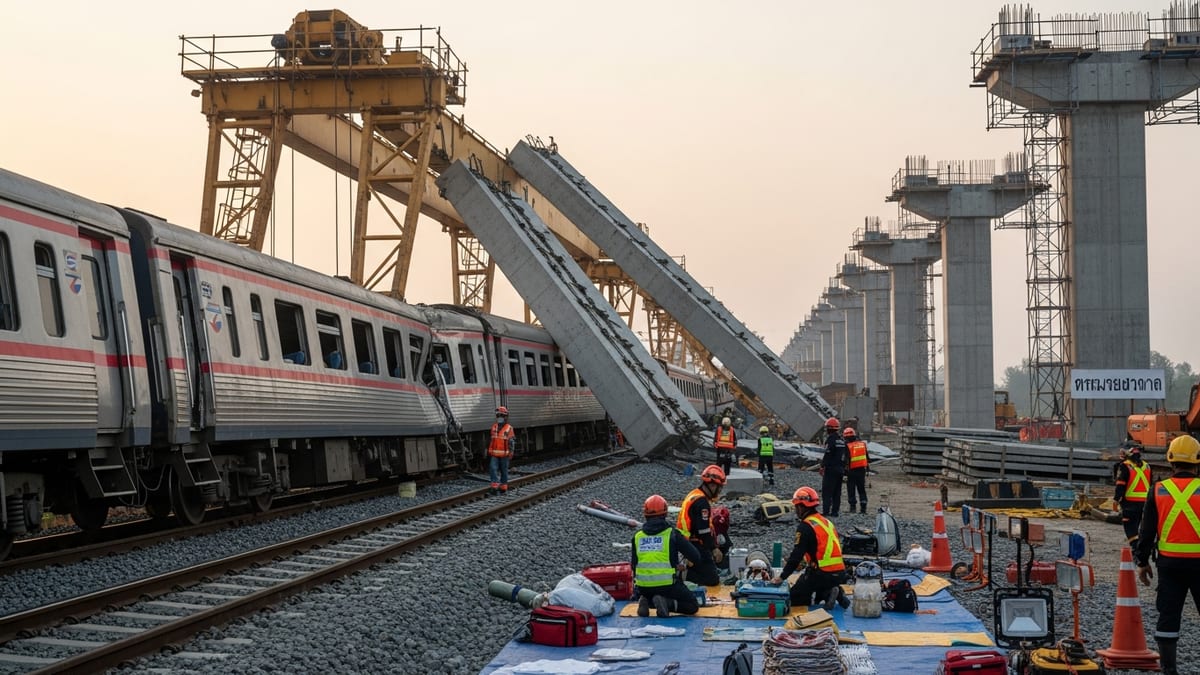
A High-Profile Derailment in the Midst of a Heat Wave
The derailment occurred on July 5 in Repentigny, a suburban community northeast of Montreal, when a Canadian National Railway freight train left the tracks on the Joliette Subdivision. Publicly available information describes a train-initiated emergency brake application as locomotives crossed a public grade crossing, followed by a derailment farther back in the consist. Rail safety officials have classified the event as a significant main-track occurrence and have opened a formal investigation.
Reports indicate that several cars derailed, prompting a substantial emergency response and disruption to local residents. No fatalities were reported, but the derailment raised immediate questions about the condition of the track, the integrity of the rolling stock and the operational context at the time of the incident.
The derailment unfolded during a period of elevated summer temperatures in Quebec. Although specific meteorological readings for the exact location and hour vary by source, the broader region had experienced an extended spell of hot weather, with heat advisories in effect on multiple days around the time of the accident. That backdrop is significant because rail experts have long warned that prolonged high temperatures can increase the risk of track deformation.
Canadian National has stated in its public communications that, at this stage, it does not consider train speed, train handling or mechanical failure as likely primary causes. Instead, attention has turned to the infrastructure itself, and to whether latent weaknesses in the track structure may have been exposed by sustained heat.
Track Stress, Rail Anchors and the Mechanics of Heat
According to technical material from the Transportation Safety Board of Canada, modern continuously welded rail is designed to operate within a specific temperature range known as the rail neutral temperature. When steel rails heat up significantly above that range, they expand and can be placed under intense compressive stress. If the track structure is not adequately restrained, that stress can cause the rail to move laterally, a phenomenon often referred to as track buckling or a sun kink.
A recent safety advisory from the board, issued in connection with the Repentigny derailment, draws attention to the role of rail anchors, ballast and ties in maintaining track stability. Investigators reported finding missing or displaced rail anchors in the area of the occurrence, which can reduce the ability of track to resist longitudinal movement and redistribute thermal stresses along the rail. When that restraint is compromised, even modest additional heat can tip the balance toward instability.
Past investigation reports into other Canadian derailments have documented similar mechanisms. In several cases, track buckling under compressive thermal stress was linked to inadequate anchoring, poor ballast conditions or work practices that altered the stress state of the rail without sufficient follow-up monitoring. These findings have led regulators and investigators to stress the importance of rigorous inspection routines, particularly during heat waves.
Railways respond to high temperatures with temporary slow orders and increased visual inspections, seeking to limit dynamic forces on potentially vulnerable track. Such measures are routinely seen in central Canada during peak summer heat. The Repentigny derailment occurred despite these established practices, which is one reason the condition of the track, and how it behaved under heat, is now under close examination.
Extreme Heat as an Emerging Climate Risk for Rail
The Repentigny incident comes as Canada experiences more frequent and intense heat events attributed to a warming climate. Rail infrastructure, much of it designed and installed decades ago, is now being tested under temperature regimes that can differ from historical norms. In that environment, risk models calibrated to past conditions may understate the likelihood of track stress and buckling.
Rail safety literature notes that when ambient temperatures climb rapidly or remain high for extended periods, rail temperatures can exceed air temperatures by a wide margin, especially in direct sun. That can magnify thermal expansion forces along long stretches of welded rail. If track sections are already near their design limits because of prior work, aging materials or uneven ballast support, extreme heat can push them past the threshold of stability.
Recent Canadian investigations outside Quebec have underscored how infrastructure conditions and environmental stress can interact. In some cases, investigators have cited deferred maintenance, insufficient anchoring or inadequate stress management of continuous welded rail as contributing factors when cars left the track on hot days. While these events occurred in other provinces, they provide a technical context for the questions now being asked in Quebec.
Public discussion around the Repentigny derailment has increasingly focused on climate resilience. Advocates argue that the rail sector needs to treat extreme heat in the same way it has historically regarded deep cold or heavy snowfall, by updating design standards, inspection protocols and contingency planning to reflect a shifting climate baseline.
Investigators Focus on Infrastructure and Oversight
The Transportation Safety Board has deployed investigators to the Repentigny site, collecting data on train operation, rolling stock and track conditions. The occurrence has been categorized as a Class 3 investigation, which typically involves detailed examination of physical evidence, operating practices and regulatory oversight, culminating in a public report with findings and recommendations.
A safety advisory issued in connection with the derailment highlights concerns about missing or displaced rail anchors along mainline freight corridors. The advisory notes that insufficient anchoring can increase the risk of track buckling under thermal stress, particularly where heavy freight traffic generates additional dynamic forces on the rail. It suggests that, in certain circumstances, existing inspection programs may not be robust enough to detect and correct these deficiencies before they contribute to an accident.
Transport Canada has publicly stated that it is monitoring the Repentigny response and that trains moving through the area are subject to temporary speed restrictions significantly below the normal regulated limit. The department has emphasized that railways must comply with safety rules when repairing and reopening track after a derailment and that federal regulators retain the authority to halt operations or impose additional conditions if safety concerns arise.
Canadian National, for its part, has reported that the track and track bed at the derailment site were rebuilt before service resumed and that further inspections by external parties have been carried out. The company has indicated it is open to additional oversight measures, such as expanded inspections, while the investigation continues.
Balancing Freight Demand With Safety in a Changing Climate
The Repentigny derailment is drawing attention not only because it occurred in a densely populated corridor, but also because it illustrates the challenge of operating long, heavy freight trains on infrastructure stressed by climate extremes. The Joliette Subdivision is part of a vital east-west freight artery, and interruptions there can have ripple effects on supply chains across the region.
Railways face pressure to maintain fluid operations even as they impose heat-related slow orders and undertake more frequent inspections. Every reduction in speed can constrain capacity on single-track or mixed-traffic lines, which may affect passenger services as well as freight. That tension encourages a closer look at whether more fundamental infrastructure upgrades, such as improved ballast profiles, enhanced anchoring or advanced rail-stress monitoring technologies, might offer a more sustainable safety margin.
Advocates for stronger rail safety oversight argue that the Repentigny case should prompt a broader review of standards covering continuous welded rail, including the way neutral temperatures are set and verified, how maintenance work is documented and how quickly identified deficiencies in anchors or ballast must be addressed. They contend that incremental measures may not be sufficient as heat waves become more frequent.
As the investigation proceeds, analysts suggest that a key question will be whether the Repentigny derailment represents an isolated infrastructure failure or a symptom of systemic vulnerabilities in how Canadian rail networks manage thermal stress. The answer will likely influence future safety advisories, regulatory actions and investment decisions across Quebec and the rest of the country.