


More news on this day
New airspace restrictions and shifting safety assessments across the Middle East have triggered the cancellation of around 170 flights and delays to more than 800 services in a single day, disrupting operations at key hubs in Saudi Arabia, Qatar, Türkiye and Bahrain and affecting passengers flying with Emirates, Saudia, Qatar Airways and other major airlines.
Get the latest news straight to your inbox!
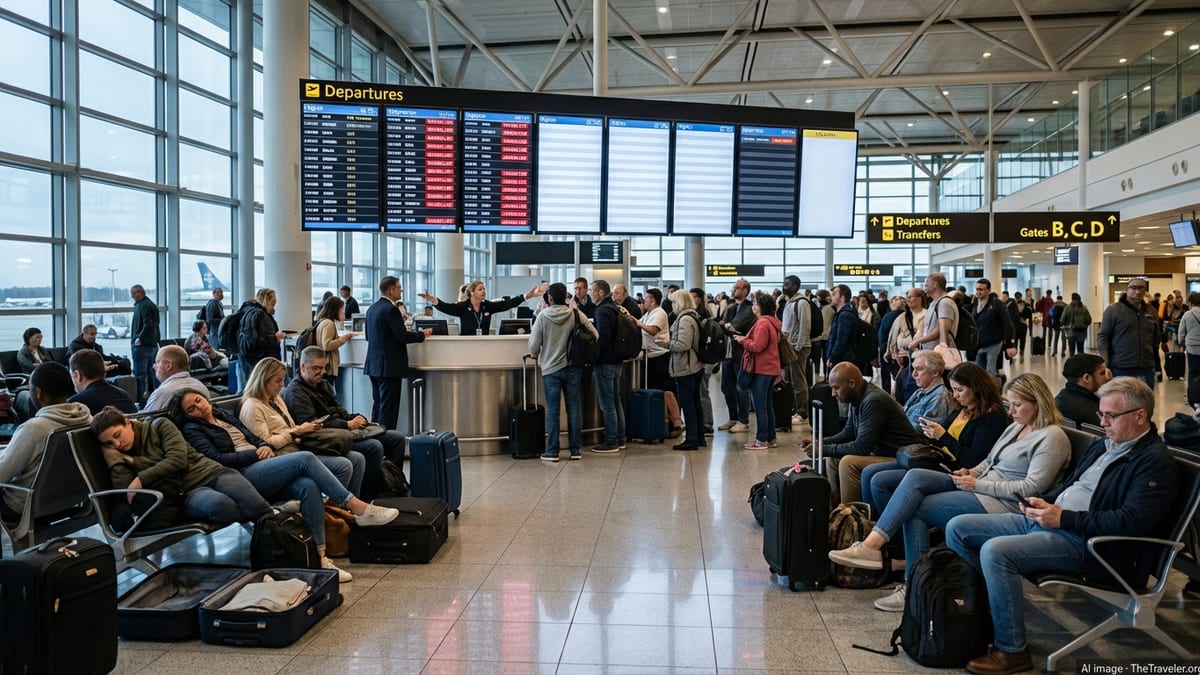
Airspace Restrictions Ripple Across Key Gulf and Regional Hubs
According to published operational data and aviation monitoring platforms, the latest round of disruption follows renewed airspace closures and tight restrictions affecting corridors over and around the Gulf. Airspace above or near conflict-affected zones has been subject to intermittent shutdowns and severe routing limits, forcing carriers to cancel or reroute services at short notice.
Publicly available information indicates that Bahrain, Qatar and parts of the United Arab Emirates remain particularly sensitive, with access subject to rolling security assessments. Flight tracking data shows repeated holds, diversions and groundings at airports that normally function as high-volume transfer points on routes between Europe, Asia and Africa.
While some countries, including Saudi Arabia and Türkiye, continue to maintain partially open skies, airlines based there have scaled back operations on routes that would normally traverse restricted airspace. Saudia and other regional carriers have trimmed frequencies or suspended selected services, while international airlines from Europe and Asia have rerouted around the Gulf to avoid affected zones, lengthening journeys and adding pressure to already stretched schedules.
Industry summaries of the current disruption suggest that, in aggregate, at least 170 flights have been cancelled and more than 800 delayed across the wider Middle East on the latest impacted day, with the numbers fluctuating as new restrictions are issued and lifted.
Emirates, Qatar Airways and Saudia Among Hardest Hit
Large Gulf network airlines that rely on hub-and-spoke operations are bearing the brunt of the turmoil. Emirates, based in Dubai, has continued to adjust its schedules as regional flight corridors open and close, operating a reduced network compared with normal peak capacity. Public timetables and status pages show rolling cancellations, delays and aircraft swaps as the carrier works around closed or constrained airspace.
Qatar Airways, which depends on Doha as a global transfer hub, has faced some of the most acute operational challenges. Earlier in the disruption cycle, the airline temporarily suspended regular passenger operations when Qatari airspace was effectively closed, before gradually introducing limited repatriation and corridor flights. More recently, the carrier has moved to a mixed schedule of reduced and rerouted services, with some long haul flights operating via alternative tracks while others remain suspended.
Saudi flag carrier Saudia has also been forced to modify its network. Operational notices and regional coverage describe cuts to flights touching affected neighbors, including Bahrain, Kuwait and parts of the Levant, even as Saudi airspace itself remains an important corridor for east west traffic. Low cost and hybrid Saudi operators have followed suit, cancelling departures to airports where airspace access cannot be guaranteed.
In Türkiye, both Turkish Airlines and local low cost carriers have trimmed frequencies or suspended services to destinations whose approach routes would cross closed skies. Flight data shows Istanbul, normally a powerful competitor to the Gulf hubs for connecting traffic, absorbing additional rerouted services while simultaneously losing direct links to several Middle Eastern cities.
170 Cancellations and 829 Delays: How the Disruption Adds Up
Aviation analytics firms tracking the current wave of disruption estimate that around 170 flights were cancelled and approximately 829 delayed across the Middle East and adjacent corridors on the latest heavily affected date. These figures cover a mix of passenger and cargo operations and highlight how a relatively small number of outright cancellations can mask a much wider pattern of knock on delays.
Many airlines have opted to keep flights operating where possible but with extended routings that skirt closed airspace over the Gulf and parts of the Levant. These longer tracks add flying time and fuel burn, pushing departure and arrival times outside their planned windows. The result is a cascade of missed connections at hub airports and aircraft returning late to their bases, which in turn affects subsequent rotations.
Industry data suggests that the majority of delays currently fall in the range of 30 to 180 minutes, although some long haul services have been retimed by many hours or pushed into the following day. With crews and aircraft out of position, carriers have occasionally converted long delays into cancellations in order to restore some regularity to their schedules.
Analysts note that the figures for cancellations and delays can swing significantly from one day to the next as airspace conditions change. A sudden closure of a key corridor can prompt an immediate wave of groundings, while partial reopenings often see airlines reinstating flights but with altered routings and timings that still impact passengers.
Passengers Face Missed Connections, Rebookings and Longer Journeys
For travelers, the immediate impact is a spike in missed connections, unexpected stopovers and complex rebookings. Public updates from major carriers advise customers not to proceed to the airport unless their flight status has been reconfirmed, and to expect longer journey times even when flights do operate. In many cases, itineraries that once involved a single change in the Gulf now require detours through alternative hubs in Europe, Central Asia or North Africa.
Reports from airline communications and passenger forums indicate that rerouting options are often constrained by capacity limits on unaffected carriers and airports. With a large proportion of global east west traffic normally funneled through Dubai, Doha, Abu Dhabi, Riyadh and Istanbul, the sudden loss or reduction of several of these hubs has created bottlenecks elsewhere in the network.
Some airlines are offering flexible rebooking policies and refunds for travelers who no longer wish to fly into or through the region while the situation remains volatile. Others are prioritizing stranded passengers for the first available seats, even if this means routing them on significantly longer paths that avoid the Middle East almost entirely.
Travel agents and corporate travel departments are also recalibrating their booking strategies. Publicly available corporate advisories encourage the use of routings that bypass the most affected zones, even at higher cost, and suggest building in longer connection times to cope with further schedule changes.
What Travelers Should Do Before Flying Through the Region
Given the fast moving situation, aviation and travel experts are advising passengers with upcoming trips involving the Middle East to stay as flexible and informed as possible. The first step is to monitor the status of any bookings directly through airline or airport channels on the day of travel, with particular attention paid to flights that route via Saudi Arabia, Qatar, the United Arab Emirates, Bahrain or Türkiye.
Travelers are also being urged to allow extra time for connections and to prepare for the possibility of overnight stays if onward flights are missed. For those with non refundable hotels, tours or cruises at their final destination, checking the terms and conditions for changes and cancellations has become an important part of trip planning.
Industry guidance highlights the value of maintaining up to date contact details with airlines so that schedule changes can be communicated quickly. Where multiple carriers are involved on a single ticket, passengers may need to liaise with the original issuing airline or travel agent to coordinate changes, as third party apps and aggregators may not always reflect the latest operational decisions.
With the broader geopolitical context still unsettled, aviation observers expect that further periods of disruption are likely in the weeks ahead. For now, the combined effect of at least 170 cancellations and hundreds more delays underlines both the vulnerability of global air travel to regional crises and the central role Middle Eastern hubs play in connecting continents.