

More news on this day
Croatia Airlines is entering 2026 at a crossroads, leaning on a rapid fleet overhaul and its largest network expansion in years to shift from loss-making transition to sustainable growth in a fiercely competitive Adriatic market.
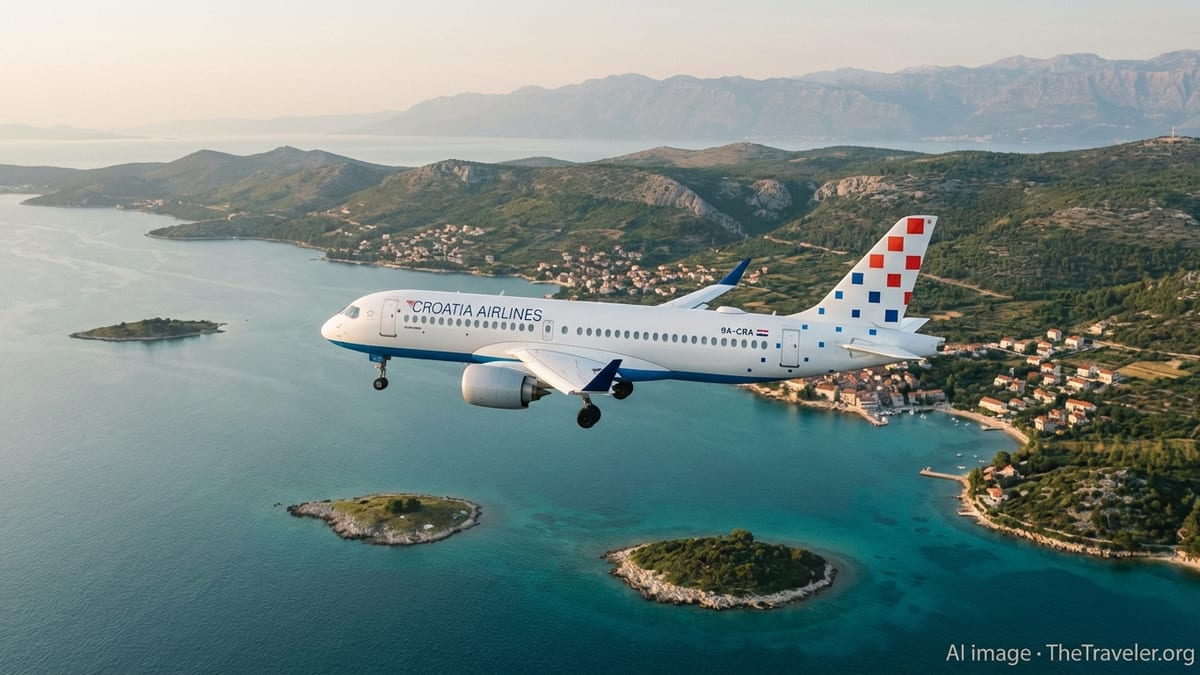
From Costly Transition to Growth Ambitions
The Croatian flag carrier has spent the past two years in the red as it replaces its aging Airbus and turboprop fleet with new Airbus A220 jets. Fleet-transition costs, delayed aircraft deliveries, extended maintenance on older airframes and expensive wet leases pushed the airline to a net loss of around €19.6 million for 2024, reversing the modest profit it reported in 2023. Management has consistently framed these losses as an investment phase, arguing that the new aircraft will enable lower unit costs and a more competitive schedule from 2026 onward.
Early 2025 figures underline both the pressure and the potential. By the end of the third quarter of 2025, the airline had already exceeded its 2024 full-year loss, yet passenger numbers continued to rise and core operating earnings before depreciation and financing remained positive. That pattern suggests underlying demand is robust, but the balance sheet is burdened by the cost of modernizing the fleet and reconfiguring the network at the same time.
For 2026, Croatia Airlines is presenting its summer timetable as a turning point. The carrier plans to connect Croatia with 32 European destinations, up from 30 in the 2025 season, and to increase frequencies on several existing routes. Executives are positioning this wider network, supported by a larger, more efficient A220 fleet, as the key lever to turn higher capacity and rising passenger numbers into a path back toward profitability.
The strategy unfolds against a backdrop of intensifying competition in Croatia’s skies. Low cost rivals are also growing aggressively from coastal airports, particularly on seasonal leisure routes. Croatia Airlines is therefore seeking to differentiate itself through year-round connectivity, hub feed into major European gateways and a product pitch built around reliability and national flag-carrier identity.
A220 Fleet at the Core of the Recovery Plan
At the heart of the 2026 plan is the Airbus A220, a new-generation narrowbody that promises double-digit fuel savings compared with the aircraft it replaces. As of early 2026, Croatia Airlines operates seven A220s and expects a further seven to join during the year, with the goal of moving to an all-A220 fleet by 2027. The type is gradually displacing older Airbus A319 and A320 jets and Dash 8 Q400 turboprops, which have become increasingly expensive to maintain and less attractive to passengers.
The airline’s first two A220s entered commercial service in the second half of 2024 after delivery delays disrupted the original schedule. Those delays forced Croatia Airlines to keep older aircraft flying longer and to lease in capacity from other operators at premium rates to maintain its timetable. By 2025, more A220s had arrived and were already operating new seasonal routes from Zagreb to Milan, Prague, Bucharest, Madrid and Hamburg, giving a glimpse of the future single-type operation.
With a larger A220 fleet in service through 2026, the carrier is banking on tangible reductions in fuel burn, maintenance costs and crew training complexity, alongside improved reliability. Standardizing on a single modern aircraft family should simplify scheduling and allow more flexible deployment of capacity between Zagreb, Split and Dubrovnik as demand shifts between business and leisure peaks.
The passenger experience is a second pillar of the fleet bet. The A220’s quieter cabins, larger windows and contemporary interiors are being used in the airline’s marketing to reinforce its image as a modern national carrier. Croatia Airlines hopes that business travelers connecting through major European hubs and higher-spending tourists heading to the Adriatic coast will be willing to pay a small premium for a more comfortable, full-service product on key routes.
Network Expansion Across Zagreb, Split and Dubrovnik
The 2026 summer schedule significantly broadens the airline’s European footprint. From March to October, Croatia Airlines plans to link the country with 32 destinations across the continent, adding two new seasonal international routes and increasing capacity on many existing ones. The move builds on the 2025 expansion, when new services from Zagreb to Milan, Prague, Bucharest, Madrid and Hamburg were introduced using the A220.
In 2026, Zagreb will remain the main hub, with links to 23 international cities including major European gateways such as Amsterdam, Brussels, Frankfurt, London Heathrow, Paris and Zurich, as well as regional destinations including Mostar, Sarajevo, Skopje and Tirana. The airline is also maintaining through services that route some flights to Athens and Rome via coastal airports, giving travelers added flexibility and providing additional feed into domestic tourism centers along the way.
Split, Croatia’s busiest coastal airport in the summer months, is slated to be connected to 20 destinations in 2026, covering 21 airports. capacity to and from Split is expected to rise by around 10 percent compared with the previous season, reflecting the city’s role as a key gateway for island tourism and cruise traffic. Dubrovnik, meanwhile, will see direct services to eight European cities, consolidating its position as a premium leisure and city-break destination with strong inbound demand from Western and Central Europe.
Two seasonal routes underscore the airline’s intent to diversify source markets. New services between Nantes and Split, and between Stuttgart and Dubrovnik, are planned for the 2026 summer timetable. Both target regions with growing interest in the Adriatic and are designed to capture higher-yield passengers by offering direct links to coastal airports rather than relying on connections through larger hubs.
State Support and Financial Pressures
Despite the upbeat narrative around fleet renewal and network growth, Croatia Airlines enters 2026 with significant financial headwinds. The government in Zagreb has approved a recapitalization package that will raise the airline’s share capital from just over €92 million to about €248 million between 2025 and 2027. The plan combines fresh cash injections with the conversion of existing loans and accrued interest into equity, effectively using public funds to stabilize the balance sheet during the transition.
The recapitalization is scheduled in stages, with new capital provided in 2025 and 2026, followed by a final injection in 2027. Officials say the objective is to secure the airline’s long-term viability, safeguard connectivity for the country and support the broader tourism economy, which depends heavily on reliable air links. Analysts, however, note that the move also compensates for years of accumulated losses tied to the fleet overhaul and rising external costs, such as fuel prices and regulatory requirements.
From a strategic perspective, the substantial state backing buys Croatia Airlines time to complete its A220 roll-out and ramp up the expanded route network without the immediate threat of insolvency. It also signals that the government is not prepared to let the flag carrier fail in a market where foreign low cost carriers dominate much of the seasonal traffic. The challenge will be to translate this breathing space into a credible path back to self-sustaining profitability once extraordinary support tapers off.
Key to that effort will be strict cost control, better aircraft utilization and continued focus on routes where the airline can sustain pricing power, either because of business demand, connectivity to major hubs or strong inbound tourism flows. Management has indicated that digitalization, closer cooperation within airline alliances and optimization of the schedule around peak demand periods are all priorities for the 2026 planning cycle.
Competing for the Adriatic Skies in 2026
Croatia Airlines’ 2026 strategy unfolds against an increasingly crowded regional backdrop. Low cost carriers have announced record summer schedules from Croatian airports, adding dozens of routes and millions of seats that directly compete for holidaymakers headed to the Adriatic. These rivals often undercut fares on point-to-point leisure routes, forcing the national carrier to be selective about where it deploys its capacity.
In response, Croatia Airlines is placing greater emphasis on year-round operations, business travel and connectivity through major European hubs, where its full-service model and alliance partnerships can add value beyond the base ticket price. The expanded 2026 network out of Zagreb, combined with upgraded capacity from Split and Dubrovnik, is designed to reinforce its role as the primary Croatian-owned carrier feeding both inbound tourism and outbound business and diaspora traffic.
The coming summer season will provide an early test of whether newer aircraft and broader coverage can offset the pressure from low cost competitors. Load factors, yields on newly launched routes and reliability metrics for the growing A220 fleet will all be closely watched by investors and policymakers. A successful 2026 could validate the costly bet on modernization and state-supported recapitalization, putting Croatia Airlines on firmer footing as it approaches its goal of an all-A220 fleet in 2027.
For now, the airline enters the year with more destinations, more seats and more fuel-efficient aircraft than at any point in its recent history. Whether that combination is enough to turn a fragile recovery into lasting growth will depend on execution in a tightly contested European short-haul market.