


More news on this day
A residential "cruise for life" ship that promised years of continuous global travel has been placed under arrest in Singapore, weeks after its operator halted the voyage and left about 200 long term guests stranded in Cambodia.
Get the latest news straight to your inbox!
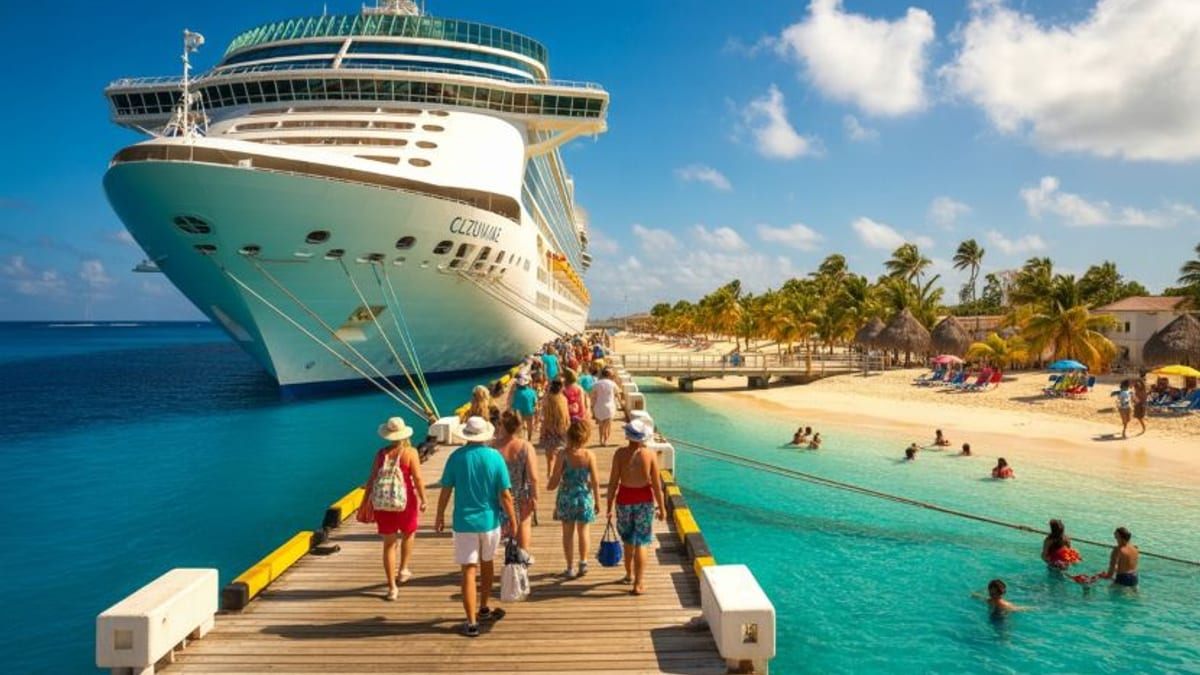
Residential world cruise ends in legal limbo
The vessel, Villa Vie Odyssey, arrived in Singapore from the Cambodian port of Sihanoukville and was detained at Changi General Purpose Anchorage on 8 November 2026 under a Singapore court order, according to court records and local media reports. Publicly available information from Singapore’s Maritime and Port Authority indicates the ship is currently anchored in port waters without passengers, with only crew remaining on board.
A listing of arrested vessels on the Singapore Courts portal identifies the Odyssey by name, with Singapore maritime law firm Helmsman LLC recorded as the arresting solicitor. Coverage of the case notes that the listing does not specify which party the firm represents or the nature of the underlying claim, leaving the financial and legal future of the ship uncertain as proceedings begin.
Reports indicate that the arrest follows a rapid unwinding of the business model behind the Odyssey, which marketed itself as an affordable way to live at sea full time while circling the globe. The sudden move into legal limbo marks the latest setback for a niche but growing segment of the cruise industry that combines elements of residential property, long term cruising and retirement migration.
Information published by outlets including the BBC and Channel NewsAsia describes the Odyssey as lying at anchor in Singapore waters while creditors and legal representatives work through the arrest process. There has been no indication in public records that passengers will be able to rejoin the vessel in the short term.
From Belfast departure to Cambodian standstill
The Odyssey’s current troubles cap a turbulent two year period that began with high expectations when the voyage was first promoted. Publicly available information indicates the ship set off from Belfast in October 2024, marketed as a three and a half year journey that would call at around 150 countries. The itinerary and marketing materials emphasized the ability of residents to live, work remotely and retire on board while slowly circumnavigating the world.
Reports indicate that the cruise was beset by delays and operational issues even before departure. Media coverage has described a four month delay to the initial sailing attributed to repairs and paperwork, as well as subsequent itinerary changes as the operator sought to manage finances and fuel costs. During calls in Southeast Asia, news reports describe crew purchasing provisions from shoreside supermarkets after a vendor reportedly halted deliveries over unpaid bills.
The situation deteriorated further in October 2026 when the operator, Florida based Villa Vie Residences, issued a statement announcing the suspension of operations. Passengers were instructed to disembark in Sihanoukville, Cambodia, during what had originally been scheduled as a routine port call. Around 200 guests left the vessel there, according to multiple news reports, abruptly ending their plan to remain on board for years.
Public statements from the company at the time said it would work with residents to help identify temporary accommodation in Cambodia while options were assessed. However, in the weeks that followed, available coverage has focused primarily on the ship’s movements without passengers and the subsequent arrest in Singapore, rather than any restart of the voyage.
A business model built on long term life at sea
The Odyssey was positioned within a small but high profile niche of the cruise and real estate markets in which ships operate as floating residential communities. Marketing materials and media coverage show that Villa Vie Residences offered several options, including outright cabin purchase with multi year residency rights and monthly rental for those seeking shorter stays. The concept was pitched to potential guests as a way to live on a ship permanently while seeing the world.
According to published details, permanent residencies on board were marketed at prices ranging from about 120,000 to 440,000 US dollars, with the option to extend beyond the initial multi year voyage through five year residency agreements. Rental options were advertised from around 3,500 US dollars per month for shorter commitments. Promotional language highlighted that, for roughly the price of a car in some markets, residents could acquire a compact but private home on a ship that would continuously travel.
Reports indicate that many guests structured life changes around the voyage, with some selling property or giving up long term leases on land in anticipation of moving aboard full time. The abrupt end to the itinerary in Cambodia and uncertainty surrounding the ship’s future in Singapore have therefore raised difficult questions for residents who had planned to treat the Odyssey as a long term home rather than a traditional cruise.
The Odyssey’s situation also follows earlier high profile attempts to launch similar “live aboard” world cruises, including projects that faced ship changes, funding gaps and postponements before sailing. Industry observers have noted that such ventures combine the risk profile of both the cruise and property sectors, with complex regulatory, financing and logistics requirements.
Fuel price shock and financial strain
In its late October statement announcing the suspension of operations, Villa Vie Residences cited what it described as extraordinary increases in fuel costs linked to conflict involving Iran and wider instability in global energy markets. Publicly available information shows that the company said it had taken steps to reduce consumption, but that these measures were insufficient to offset the jump in prices.
Media reports drawing on that statement describe an escalation in monthly fuel costs per cabin in parts of Asia from about 1,800 US dollars to between 6,000 and 8,000 US dollars. These figures highlight the sensitivity of long distance, slow speed cruising to bunker fuel prices, particularly for itineraries that involve extended repositioning segments between regions.
Coverage of the final months at sea has also described a series of emergency cost cutting measures, including appeals to residents to contribute additional funds. Reports indicate that while the ship was in Singapore earlier in 2026, well before its current arrest, passengers were asked to help raise money to pay for fuel in order to allow the voyage to continue. At that time, the operator warned that detention was a possibility if bills could not be paid, foreshadowing the present situation.
Publicly available information from CBS News and other outlets on the so called “forever cruise” has noted that difficulties in securing fuel and provisions, as well as temporary detainment in other ports, were already placing operational pressure on the company before the final halt in Cambodia. The subsequent arrest in Singapore appears to reflect the point at which creditor claims crystallized into a formal legal process.
What the arrest means for travelers and future voyages
Under maritime law, a ship arrest is a civil legal mechanism that allows creditors or claimants to detain a vessel as security for alleged debts or other claims. Publicly accessible explanations from legal and maritime references describe how, once a ship is arrested, it generally cannot sail without court approval until the dispute is settled, security is posted or the vessel is sold as part of the proceedings.
In the case of the Odyssey, reports from Singapore based outlets indicate that the crew remain on board and that their welfare is being arranged by creditors while the ship lies at anchor. There are no passengers currently aboard, and there has been no detailed public announcement outlining a timetable for resolving claims or determining whether the vessel might re enter service under the current operator or a future owner.
For affected travelers, publicly available coverage suggests that the main questions now concern refunds for time not sailed, assistance with replacement housing and the status of long term residency contracts. As of 10 November 2026, there have been no widely reported, detailed guarantees regarding reimbursement or alternative voyages, and residents are relying on general statements that discussions with stakeholders are ongoing.
For the wider travel industry, the seizure of a high profile residential cruise ship underscores both the appeal and fragility of “cruise for life” concepts. Interest in long term living at sea has grown in recent years, particularly among remote workers and retirees, but the Odyssey’s arrest in Singapore highlights how volatile fuel prices, complex financing structures and global conflict related shocks can quickly destabilize ambitious multi year itineraries. Prospective residents and travelers are likely to follow the legal developments closely as they assess the risks and rewards of similar offerings in the future.