

More news on this day
Puerto Vallarta, long a glittering anchor of Mexico’s Pacific cruise circuit, is confronting a sudden loss of confidence from the world’s biggest cruise lines after a wave of cartel violence and stark new travel warnings prompted ships to quietly steer away from the once-bustling port.
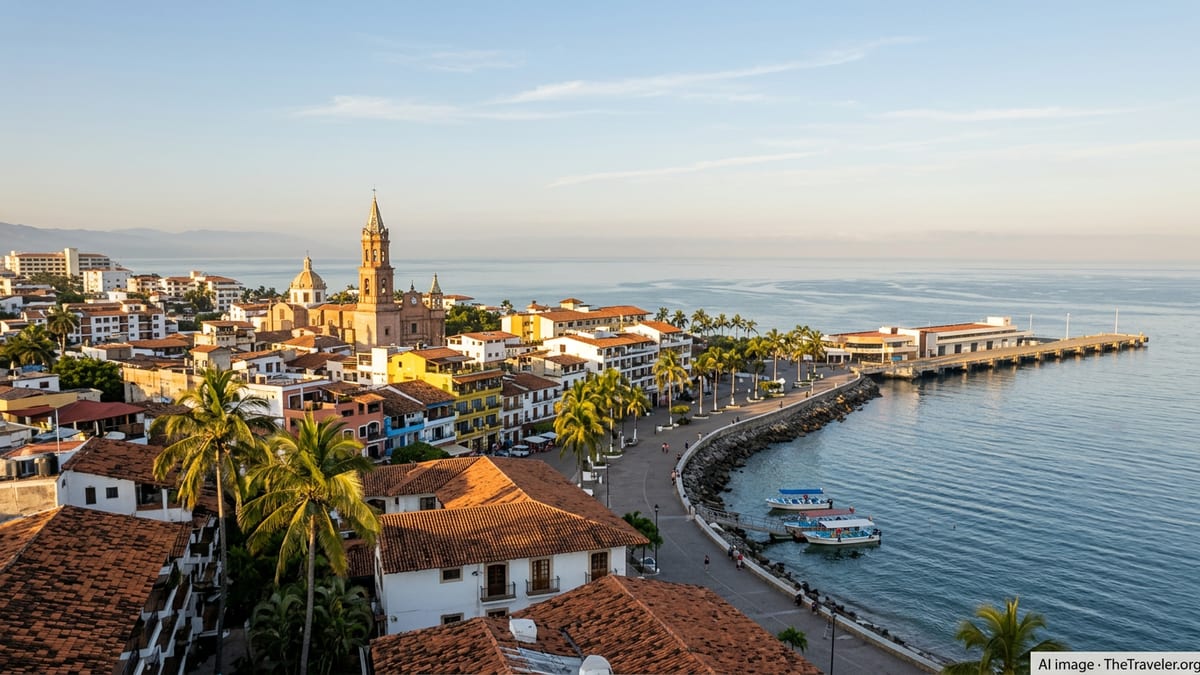
Security Shockwaves Hit a Flagship Mexican Port
The abrupt pullback began in late February after a high-profile security operation left cartel leader Nemesio Oseguera dead and triggered days of unrest across Jalisco and neighboring states, including roadblocks, arson and clashes that dominated local headlines. In the days that followed, Norwegian Cruise Line, Carnival Corporation brands and Holland America Line moved to cancel or modify scheduled calls in Puerto Vallarta, citing passenger and crew safety.
Norwegian Bliss, sailing a popular Mexican Riviera route from the U.S. West Coast, dropped its planned late-February call, substituting an extra day at sea and notifying guests that the change was directly related to intensified security operations and a fresh U.S. travel advisory for parts of Mexico. Holland America’s Zuiderdam and Princess Cruises’ Royal Princess similarly skipped or reworked Puerto Vallarta visits, in some cases opting to extend time in Cabo San Lucas or redirect to Mazatlán.
While federal and state authorities in Mexico moved quickly to restore order and stress that Puerto Vallarta’s resort zones remained calm, cruise line statements left little doubt that perception now matters as much as on-the-ground realities. Brands framed the decisions as precautionary, but industry watchers note that large operators tend to be conservative once security risks dominate international coverage.
For Puerto Vallarta, the timing is especially harsh. The port had been riding a post-pandemic rebound, welcoming more than half a million cruise passengers in 2024 and emerging as a key beneficiary of surging North American demand for warm-water itineraries. Each missed call ripples through the local economy, hitting guides, drivers, restaurants, artisans and excursion providers who rely heavily on ship traffic.
Quiet Itinerary Changes Mask a Deeper Retrenchment
For many travelers, the scale of the pullback has been easy to miss. Rather than headline-grabbing season-long suspensions, most lines have adjusted schedules sailing by sailing, often with little more than an onboard announcement or an email from the captain explaining that Puerto Vallarta has been dropped in favor of an extra sea day or an alternate Pacific port.
Booking pages for Mexican Riviera cruises still paint an enticing picture of sunlit calls in Cabo San Lucas, Mazatlán and Puerto Vallarta, and some sailings later in the spring continue to list the Jalisco resort on their day-by-day itineraries. Royal Caribbean’s Navigator of the Seas, for example, is still advertising late April and early May calls that include a full day docked in Puerto Vallarta, suggesting that at least on paper, planners are hoping the disruption will be short-lived.
Behind the scenes, however, commercial teams and port agents are revisiting risk assessments voyage by voyage. Cruise itineraries are typically set years in advance, but capacity and port times are frequently tweaked as conditions evolve. Security concerns now sit alongside port congestion, fuel costs and new Mexican passenger taxes in the matrix of factors that can tip a ship away from one Pacific stop and toward another that feels more predictable.
Veteran cruisers trading notes in online forums report receiving updated schedules that reorder or quietly remove Puerto Vallarta, sometimes with little explanation beyond a generic reference to operational reasons. That piecemeal approach is standard practice in the industry but can obscure the broader pattern emerging along Mexico’s Pacific coast.
Local Economy Braces as Spending Evaporates
The immediate impact is already being felt on the waterfront. Puerto Vallarta’s cruise terminal, which only weeks ago was handling a steady procession of large vessels, has seen several high-profile absences on days that were expected to bring thousands of visitors ashore. For local vendors, the difference between a ship day and a non-ship day can mean the difference between a profitable week and a painful one.
In 2024, cruise calls generated hundreds of millions of pesos in visitor spending, according to port and tourism officials. Passengers typically fan out into the historic center, the Malecón, nearby beaches and surrounding countryside for excursions that support small family businesses, transportation cooperatives and independent guides. Even a temporary pause in calls translates into lost wages and stalled bookings.
Tour operators say cancellations began landing within hours of the first itinerary changes, as would-be guests learned their shore excursions were no longer needed. Some businesses have shifted focus to overnight visitors staying in Puerto Vallarta’s extensive hotel and resort inventory, but those travelers do not fully replace the concentrated bursts of demand that accompany a cruise arrival.
Local authorities have responded with a public-relations push, highlighting increased patrols, coordinated security operations and the rapid normalization of services in tourism zones. Business leaders are urging cruise executives to send assessment teams back to the destination, arguing that the city remains a safe, well-managed port accustomed to handling international travelers even amid broader regional challenges.
Mexican Riviera Routes Adjust but Do Not Collapse
Despite the headlines, the broader Mexican Riviera is far from empty. Cabo San Lucas and Mazatlán are still seeing strong cruise traffic, and some lines have expanded calls or lengthened port stays there as they temporarily sidestep Puerto Vallarta. The Pacific route from Southern California remains a workhorse for the industry, valued for its proximity to major North American markets and its blend of beaches, culture and warm weather.
Industry data also show that Mexico as a whole continues to post robust cruise arrival numbers, buoyed by heavyweight Caribbean ports such as Cozumel and Costa Maya on the country’s east coast. A new national per-passenger tax, which rose this year after being introduced in 2025, does not appear to have cooled demand significantly, at least not yet. That resilience underlines that the current crunch in Puerto Vallarta is more about localized security perceptions than a systemic rejection of Mexico by cruise travelers.
Still, the rebalancing has consequences. Alternative Pacific ports such as La Paz and Manzanillo are emerging as winners in the short term, picking up calls displaced from Puerto Vallarta and marketing themselves as lower-profile, lower-risk stops. For ships already committed to Mexican Riviera routes, simply swapping one Pacific port for another can meet safety needs without sacrificing the promise of a Mexican coastal experience.
For Mexico’s federal tourism officials, the challenge now is to prevent a patchwork of itinerary changes from hardening into a longer-term pattern that sidelines one of the country’s marquee Pacific destinations. If Puerto Vallarta remains on the wrong side of cruise risk models for too long, ships could be permanently reassigned to other regions, from Alaska in the summer to Caribbean circuits in winter.
Is a Tourism Crisis Looming or a Temporary Setback?
Whether this moment becomes a true tourism crisis for Puerto Vallarta depends largely on what happens over the coming weeks. Cruise executives are watching for clear signs that cartel-related unrest has subsided, that emergency advisories are eased and that public order has been firmly restored across Jalisco’s key travel corridors.
Analysts note that cruise brands have navigated similar shocks before, from political instability in parts of the Mediterranean to civil unrest in Caribbean nations. In many cases, ports sidelined for security reasons have returned to itineraries once conditions improved, though the process can take seasons rather than weeks. Rebuilding trust among risk managers, insurers and consumers is often slower than rebuilding infrastructure.
For now, Puerto Vallarta finds itself in a delicate holding pattern. Large ships that once symbolized the city’s global appeal are, at least temporarily, docking elsewhere, even as promotional materials and long-range schedules continue to market the destination. Hoteliers, restaurateurs and tour operators are pressing for transparent communication from both authorities and cruise partners so they can plan staffing, marketing and investment decisions around more than just hope.
The Mexican Riviera is not empty, but its balance is shifting. If Puerto Vallarta can quickly demonstrate stability and reassure jittery executives that recent violence was an extraordinary episode rather than a new normal, the current retreat may be remembered as a sharp but short-lived detour. If not, one of Mexico’s showcase Pacific ports risks losing its hard-won place on the world’s cruise maps just as global demand for ocean travel surges to new highs.