


More news on this day
A powerful offshore earthquake in the Caribbean Sea has rocked cruise ships sailing near Cuba, unsettling thousands of passengers and renewing scrutiny of how the region’s booming cruise industry prepares for rare but intense seismic events.
Get the latest news straight to your inbox!
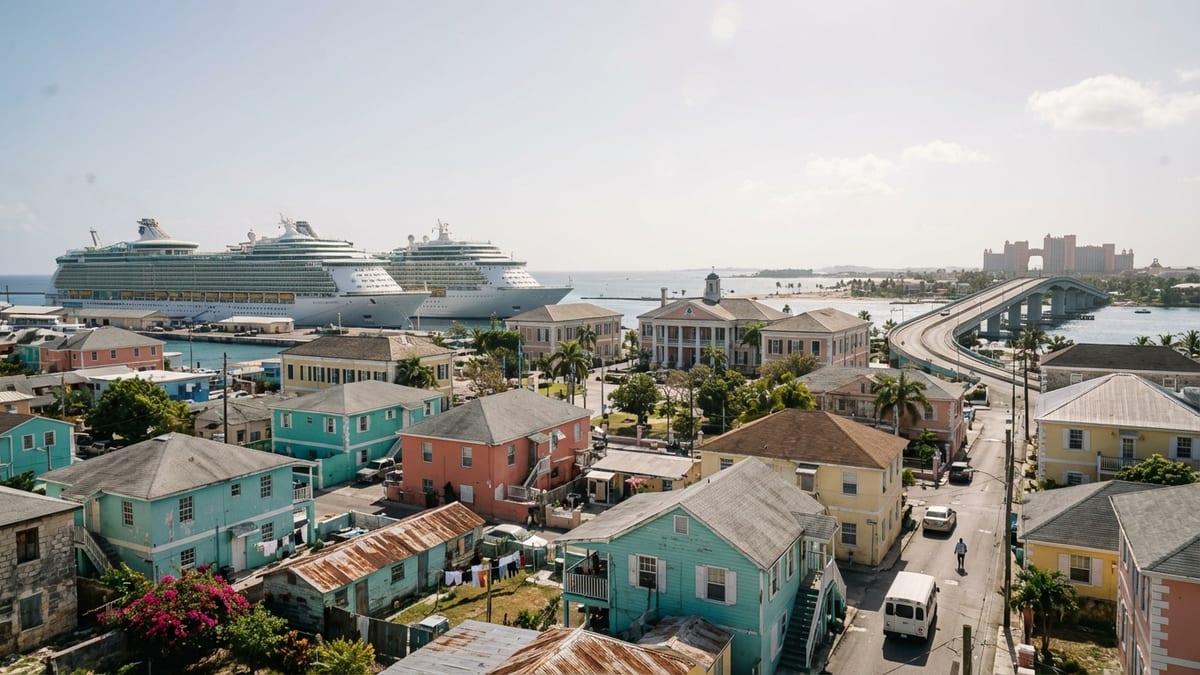
Strongest Cuban-Linked Quake in a Century Jolts Busy Sea Lanes
Seismic monitoring centers reported a major earthquake beneath the Cayman Trough, the deep underwater trench that runs between Cuba, Jamaica and the Cayman Islands. The tremor, described by regional agencies as the strongest quake associated with Cuba in more than 100 years, struck beneath a part of the Caribbean that is normally marketed for tranquil seas and predictable winter sunshine.
Preliminary readings from international geological services placed the magnitude in the upper 7 range, with the epicenter in international waters north of the Cayman Islands and to the southwest of Cuba’s eastern provinces. That location put the shaking directly under some of the region’s busiest cruise corridors at a time of year when ships are typically sailing at or near full capacity.
Historical catalogues show that Cuba has experienced damaging earthquakes in the past, but events of this size are rare. Researchers who track seismicity along the northern Caribbean plate boundary note that the 2020 magnitude 7.7 event between Cuba and Jamaica was already considered one of the most powerful in modern records for the region, and preliminary analyses indicate the latest quake is comparable or stronger in terms of energy release.
Because the rupture occurred far offshore and at depth, early assessments from regional risk facilities suggest that widespread structural damage on land has been limited. Even so, the strength of the shaking over open water was more than enough to set large passenger vessels trembling.
Cruise Passengers Report Sudden Shaking and Alarming Vibrations
Reports from recent sailings indicate that at least one Margaritaville at Sea vessel and several other large cruise ships in the vicinity of western Cuba and the Cayman Islands felt the quake as it rippled through the sea. Passengers described abrupt, unfamiliar movement that did not match the usual rhythm of waves or engine vibrations.
According to published coverage from regional broadcasters and U.S. local outlets that spoke with returning travelers, some guests initially feared a mechanical issue or collision as furniture rattled and decks shuddered. Others reported that public announcements later attributed the sensation to an earthquake centered in the waters between Cuba and the Cayman Islands.
Publicly available voyage data show that multiple major-brand ships were transiting standard western Caribbean itineraries at the time, including routes linking Florida with ports in Cozumel, George Town in the Cayman Islands and various Cuban coastal waypoints. Many of those tracks pass within a few hundred kilometers of the quake’s epicenter zone, placing large vessels well within the area where strong shaking was recorded by instruments.
While there have been no confirmed reports of serious injuries on board, the incident has quickly become a talking point among cruise enthusiasts and on social media forums, where travelers are sharing videos of swaying light fixtures and clattering glassware said to have been filmed in the minutes after the tremor.
Minimal Physical Damage but Heightened Focus on Preparedness
Early impact summaries from disaster management agencies in the wider Caribbean indicate that tsunami alerts were issued on a precautionary basis for parts of Cuba, the Cayman Islands and neighboring territories, but these advisories were later lifted after only minor sea-level fluctuations were observed. Port facilities across the region temporarily checked for damage, and some harbors conducted brief inspections of piers and fuel terminals.
Cruise lines operating in the western Caribbean adjusted itineraries in the hours after the quake, according to publicly available schedule data and port agent notices. Some ships reduced speed or altered course to allow for undersea cable checks and harbor soundings, while others delayed arrivals to give local authorities time to confirm that navigation channels were clear of landslide debris or sinkholes.
Experts who study maritime risk note that large, modern cruise ships are designed to withstand significant motion at sea, and that deep-ocean quakes most often manifest as a short-lived but intense shudder rather than a breaking wave. Even so, the psychological impact on passengers, particularly those unfamiliar with earthquakes, can be profound when cabins and public spaces begin to vibrate without warning.
Travel industry analysts suggest that the episode is likely to prompt renewed discussion about how cruise operators incorporate seismic scenarios into safety briefings, crew training and contingency plans, particularly on routes that run close to major underwater fault systems.
Seismic Hotspot Beneath a Flagship Tourism Region
The waters between Cuba, Jamaica and the Cayman Islands sit above a complex boundary where the Caribbean and North American tectonic plates slide past each other. Scientific studies describe the area as one of the most active seismic zones in the northern Caribbean, with the Cayman Trough capable of producing large magnitude earthquakes at infrequent intervals.
Historical research compiled by regional geophysicists documents significant earthquakes affecting Cuba in the eighteenth, nineteenth and early twentieth centuries, but many of those events occurred before modern instrumentation. In contrast, the recent major quakes in 2020 and 2025 near the Cayman Islands and Jamaica have been closely recorded by global seismic networks, helping scientists refine models of how stress accumulates and releases along the fault system.
For the travel sector, the key question is not whether earthquakes will continue to occur, but how often such major events intersect with peak traffic on sea and in port. The Caribbean remains one of the world’s most heavily cruised regions, with dozens of large ships routinely sailing near the plate boundary on any given winter day.
Risk specialists point out that, while the overall probability of a strong quake striking during any one voyage is low, the potential for disruption across a large number of itineraries is significant when such an event does occur. Port closures, temporary evacuations and inspections of underwater infrastructure can ripple through schedules and add logistical complexity for lines and passengers alike.
What the Quake Means for Future Caribbean Cruises
Travel advisers and cruise commentators say the latest earthquake is unlikely to deter most travelers from booking Caribbean sailings, but it may influence the questions guests ask about safety protocols. Some agencies report increased interest in understanding how ships would respond to both earthquakes and any resulting tsunami risk, particularly on voyages that include smaller ports with limited harbor infrastructure.
Publicly available planning documents from Caribbean disaster management bodies already highlight the need for coordinated response frameworks that bring together national authorities, port operators and cruise companies. The experience of this quake, which briefly rattled both island communities and ships at sea, is expected to feed into updated drills and communication strategies.
For now, cruise ships that experienced the shaking continue to operate on their scheduled routes, and major homeports in Florida and the wider region remain open. The episode stands as a vivid reminder that beneath the postcard-blue waters and carefully choreographed itineraries of the Caribbean lies a restless tectonic landscape capable of producing some of the most powerful earthquakes in the Atlantic basin.
As bookings for late 2026 and 2027 western Caribbean sailings continue to grow, industry observers note that the long-term impact of the quake is more likely to be seen in fine-tuned safety messaging, revised risk assessments and greater public awareness than in any large-scale shift away from one of the world’s most popular cruise playgrounds.