

More news on this day
Cyprus, long marketed as a sun-drenched safe haven on Europe’s southeastern fringe, has been thrust into the front line of regional turmoil as the U.S. State Department escalates its travel advisory to “Level 3: Reconsider travel,” citing the threat of armed conflict and growing security risks linked to the widening war between the United States, Israel and Iran.
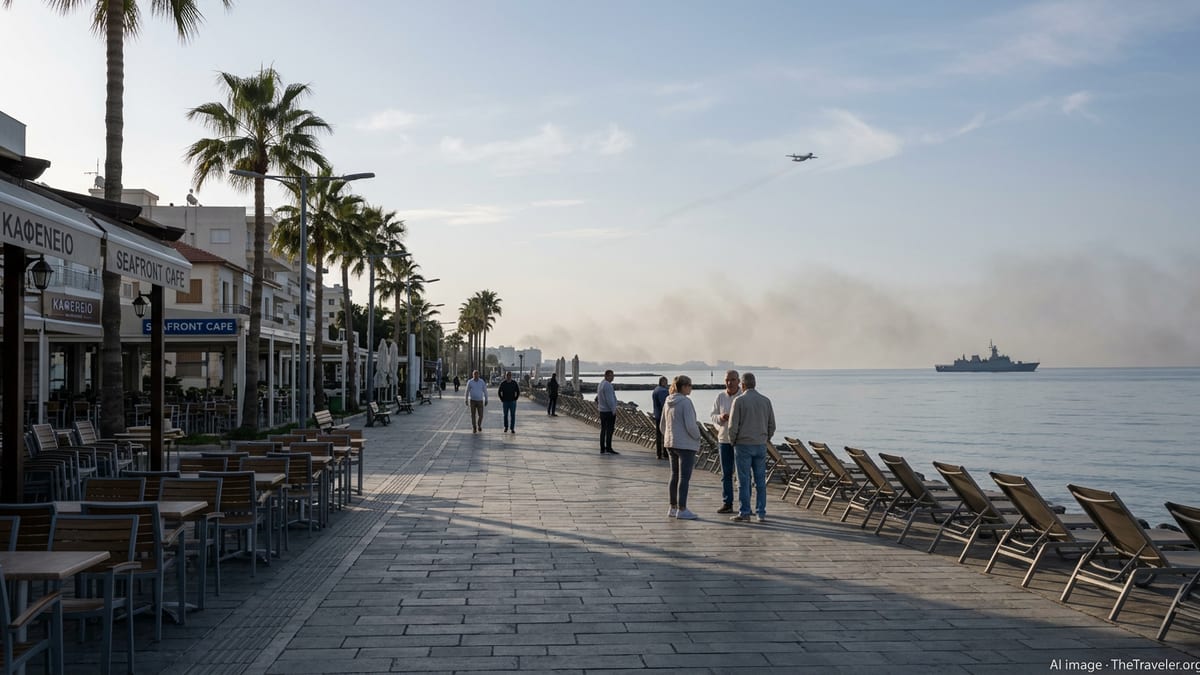
U.S. Raises Cyprus to Level 3 as Regional War Spills Into the Eastern Mediterranean
The State Department this week raised its Cyprus advisory from “exercise normal precautions” to Level 3, urging Americans to reconsider travel to the island. The move followed an update on March 3 that formalized the voluntary departure of non-emergency U.S. Embassy staff and eligible family members, a step Washington typically reserves for countries facing sustained instability or the risk of rapid deterioration.
Officials say the decision reflects mounting concern over the island’s exposure to the expanding conflict, rather than any confirmed plot targeting tourists. The advisory explicitly cites the threat of armed conflict in the region and warns that assistance to U.S. citizens could be limited, particularly in the Turkish Cypriot–administered north where American consular access is already constrained.
Diplomatic sources in Nicosia have tried to frame the shift as a precautionary recalibration rather than a sign that Cyprus itself has become a war zone. They emphasize that the authorized departure of personnel is voluntary, not mandatory, and stress that there is no intelligence pointing to an imminent attack on civilian areas. Nevertheless, the optics of Washington’s decision have significantly altered global perceptions of the island’s safety.
Drone Strike on British Base Underscores New Security Reality
The heightened American warning came just days after a drone struck within the United Kingdom’s Sovereign Base Areas at Akrotiri and Dhekelia, British military enclaves on Cyprus that host critical RAF and allied operations. Cypriot President Nikos Christodoulides confirmed that a Shahed-type drone, believed to be linked to Iran or one of its regional proxies, caused material damage at a British installation on March 2.
The incident followed earlier missile and drone salvos tied to reprisals over U.S. and Israeli strikes on Iranian targets, underscoring how quickly the Eastern Mediterranean has been drawn into the broader confrontation. Local communities around the bases reported sudden evacuations, low-flying jets and intensified military traffic, deepening unease among residents who have long lived in the shadow of foreign installations but rarely felt directly threatened.
In response, the United Kingdom has reinforced its presence on the island, dispatching additional air assets and a destroyer to bolster defenses around its bases. France and Greece have also moved warships and fighter jets into the area and raised readiness levels. For civil aviation and tourism operators, the sight of allied forces surging into Cyprus has become a stark visual reminder that the island now sits within an active theater of operations.
Flights Disrupted and Bookings Slump as Tourism Grapples With Shock
While commercial flights into Cyprus have not been universally grounded, the ripple effects of the advisory and the regional airspace closures have already hit travelers. Airlines including British Airways, Lufthansa, EasyJet and Austrian Airlines have suspended or cancelled selected services to and from Larnaca and Paphos, with Cypriot airport officials reporting dozens of scrapped arrivals and departures in a single day.
Tour operators say the advisory has triggered a wave of cancellations and a sharp slowdown in new bookings, particularly from North American travelers monitoring the situation closely. Industry groups representing hoteliers and resort operators warn that early summer occupancy is falling, and some coastal properties are beginning to brace for substantial revenue losses at the start of what should be peak planning season.
Tourism leaders have appealed for calm, calling the U.S. language “unfair” and arguing that daily life in major resorts remains largely unaffected. They insist that beaches, hotels and cultural sites are operating normally and highlight that Cyprus, a member of the European Union, continues to coordinate closely with partners on security. Still, for would-be visitors evaluating their options, the combination of a higher U.S. warning level and images of military build-up is proving hard to ignore.
Cypriot Officials Push Back While Quietly Preparing for Evacuations
The Cypriot government has moved quickly to counter the perception that the island is unsafe, engaging U.S. diplomats and publicly stressing that the advisory does not reflect an identified, immediate threat to civilians. Officials say they will press Washington to revisit the Level 3 assessment, arguing that Cyprus is being penalized for its geographic proximity and its role as a staging ground for Western operations against Iran and allied groups.
At the same time, Nicosia is quietly stepping up contingency planning for a different role Cyprus has played repeatedly in previous Middle East crises: an evacuation hub for foreign nationals fleeing nearby war zones. U.S. officials have requested Cypriot cooperation for possible humanitarian transit operations, including the potential deployment of U.S. Marines tasked with assisting civilians leaving conflict-affected countries in the wider region.
Authorities on the island are reviewing port and airport capacity, as well as security perimeters around likely reception centers, mindful of past operations in which thousands of evacuees transited through Cyprus in a matter of days. The government insists that any increased military presence would be strictly for evacuation and logistical support, not offensive deployments, but acknowledges that such activity adds to public anxiety and complicates the tourism message.
Travelers Caught Between Caution and Confidence
For American travelers weighing Cyprus against other Mediterranean destinations, the evolving picture is complex. On one hand, the U.S. advisory is explicit in calling for reconsideration of non-essential trips and urges those who do go to maintain contingency plans, monitor news and have a clear route off the island if circumstances deteriorate. On the other, Cyprus remains outside the direct front lines of fighting, and daily life in cities like Nicosia, Limassol and Paphos continues with relatively limited disruption beyond heightened security and intermittent flight changes.
Travel security analysts note that Level 3 advisories do not equate to blanket bans on tourism but are a strong signal that the risk environment is fluid and could change quickly. They advise prospective visitors to pay close attention to where on the island they intend to stay, how dependent they are on tight flight connections and their personal risk tolerance for being near a region experiencing active military operations.
For now, Cyprus finds itself in an uneasy limbo: still selling sun, sea and history, yet forced to confront its strategic role as a forward platform for Western militaries and a potential lifeline for civilians fleeing a widening Middle East war. How long that balancing act can hold will depend on developments far beyond its shores, leaving travelers and tourism operators alike watching the horizon with growing apprehension.