

Phnom Penh gets under your skin quickly, with its riverside buzz, gilded pagodas and heavy recent history. Once you have walked the palace grounds, drifted along the Tonle Sap at sunset and faced the Khmer Rouge era at Tuol Sleng, the temptation is to move on.
But some of Cambodia’s most rewarding experiences sit just beyond the capital’s edge. If your time is limited, covering the main things to do in Phnom Penh first helps decide which day trips are realistic. The challenge is knowing which day trips are genuinely worth leaving the city for, and which are better saved for a longer itinerary elsewhere. This guide compares the most popular day trips from Phnom Penh so you can decide what to prioritise with limited time.
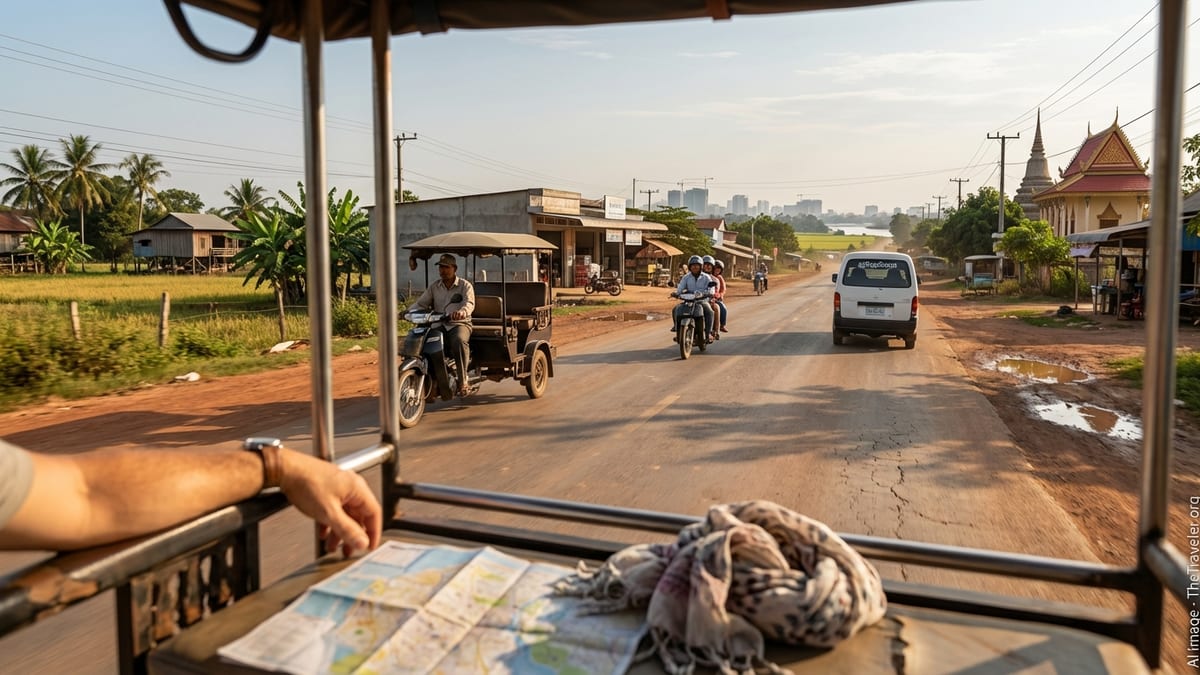
How to Choose the Right Day Trip From Phnom Penh
Trip planning often depends on realistic expectations, which is why travelers reassess if Phnom Penh is worth visiting for more than a short stay. Before picking a destination, it helps to be realistic about distances, road conditions and what kind of day you actually enjoy.
Phnom Penh is surrounded by rice fields, low hills and river islands, but traffic in and out of the city can be slow and chaotic. A journey advertised as one hour can easily stretch to ninety minutes, especially during rush hours and public holidays. Build in buffer time so you are not watching the clock instead of the scenery.
Think first about your priorities. Many visitors come wanting to deepen their understanding of Cambodia’s history, in which case the Killing Fields at Choeung Ek and the former royal capital of Oudong are compelling choices. Others are looking for a break from motorbike noise and concrete, and will be happier pedalling around shaded lanes on Silk Island, or sipping coffee in the quieter streets of Kampong Cham. There are also specialised trips to weaving collectives, ecotourism projects and wildlife centres that reward travellers willing to look beyond the standard tour desk menu.
Transport and budget shape the experience as well. Tuk tuks are ideal for short hops within an hour or so of the city, but become tiring for long highway stretches. Private cars and vans are faster and more comfortable for the two to three hour journeys that open up provincial towns such as Takeo or Kampong Chhnang. Group tours keep costs down and take the stress out of logistics, but they run on fixed timetables. Independent travellers have more flexibility to linger in a village café or watch sunset from a pagoda balcony.
Seasonality matters too. In the dry months from November to February, roads are generally in good condition and daytime temperatures, while hot, are more bearable. By April, the heat builds and open tuk tuks can feel punishing in the middle of the day. During the rainy season, cloud cover takes the edge off the sun, but sudden downpours can drench dirt tracks and disrupt river activities. Matching your destination with the time of year can mean the difference between a comfortable outing and a slog.
Killing Fields of Choeung Ek: Essential but Emotionally Heavy
For many visitors, the most important day trip from Phnom Penh is also the closest. Around 10 to 15 kilometres south of the city, Choeung Ek Genocidal Centre occupies the site of one of the Khmer Rouge regime’s most notorious execution grounds. More than eight thousand sets of remains have been exhumed here, and the memorial stupa filled with skulls has become an unmistakable symbol of Cambodia’s tragedy. It is a confronting, quiet place that rewards slow, thoughtful exploration rather than hurried sightseeing.
Choeung Ek operates daily, typically from early morning until late afternoon, with a single combined ticket and audio guide priced around six US dollars per person. The audio tour, available in several languages, leads visitors along a path past mass graves, fragments of clothing still surfacing from the soil, and the central stupa. Most travellers spend between 60 and 90 minutes following the narrative, though those who pause to reflect often stay longer. With traffic, the round trip from central Phnom Penh plus time on site usually makes this a half day outing.
Getting there is straightforward. A tuk tuk or taxi booked through your hotel, a ride hailing app or a trusted driver typically costs between 15 and 25 US dollars for a return journey, including waiting time. Travel time depends heavily on traffic patterns, but forty five minutes each way is a reasonable expectation. There is limited shade along the paths, so bringing a hat, water and sun protection is sensible, especially in the dry season. Modest clothing is encouraged as a sign of respect.
Is it worth the time? For travellers who want to understand modern Cambodia, the answer is almost always yes. Choeung Ek, in combination with the Tuol Sleng Genocide Museum back in the city, offers an experience that shapes how you see the people and the country long after you leave. However, it is emotionally exhausting. Many visitors choose to keep the rest of the day light, perhaps returning to the riverfront for a quiet evening, rather than trying to squeeze in additional sightseeing or nightlife straight after such a heavy experience.
Silk Island (Koh Dach) and Nearby River Isles: Rural Calm Close to the City
When the city’s heat and horns start to feel overwhelming, the river islands north of Phnom Penh offer an immediate change of pace. Just a short ferry ride across the Mekong, Koh Dach, commonly called Silk Island, is a patchwork of stilted wooden houses, vegetable gardens and small family workshops where silk weaving is still practiced. Paths lined with palm trees and banana plants make it an easy place to explore by bicycle or motorbike.
Reaching Silk Island usually involves a tuk tuk or taxi to the ferry landing, then a local ferry crossing that takes only a few minutes. These ferries run regularly throughout the day and charge a small fee per passenger or vehicle. Once on the island, you can hire a bicycle, negotiate with a driver to take you around, or simply wander on foot if you stick to a smaller area. Travel time from central Phnom Penh to your first village stop is often under an hour, traffic and ferry queues permitting.
The draw here is not dramatic scenery but a glimpse of everyday rural life within sight of the capital’s skyline. Visitors sit under the shade of wooden looms, watching weavers work bright threads into scarves and sarongs. Simple eateries serve grilled fish, fresh coconut and iced coffee, and children wave from doorways as you pass. There are small pagodas to visit and sandy riverbanks where you can watch local boats slide by. It is a gentle, low pressure outing that contrasts sharply with the intensity of Phnom Penh’s historic sites.
For most travellers, Silk Island is well worth a half or full day, particularly if you enjoy cycling or photography. It does not demand significant emotional energy, and its proximity means less time spent in traffic. The experience, however, depends on your expectations. Those looking for a remote, untouched village may find it more developed than they imagine, while travellers content with a quiet, scenic break from the city will find it rewarding. In recent years, some of the weaving has shifted to other provinces, but a number of households still work the looms and welcome visitors.
Oudong, Former Royal Capital: Stupas, Hills and Wide Views
About forty kilometres northwest of Phnom Penh, the low ridge of Oudong rises above rice fields and roadside villages. Once the royal capital of Cambodia, this hilltop complex of stupas and temples is now one of the most attractive day trips for travellers interested in both history and landscape. A flight of steep stairs leads up to a series of structures that house relics and offer panoramic views across the countryside.
Travel to Oudong by road typically takes between one and one and a half hours each way, depending on traffic leaving and returning to Phnom Penh. Tuk tuks are possible, but a private car or shared tour van is more comfortable, especially in the hotter months. Many organised tours combine Oudong with stops in the city or at Choeung Ek, turning it into a full day itinerary. Independent travellers can negotiate with a driver to wait several hours while they climb and explore.
Once there, expect to spend at least an hour or two on the hill itself. The staircases are long and can be taxing in the midday heat, so morning or late afternoon visits are more pleasant. At the top, you will find a mix of older structures and newer stupas, some still under maintenance or construction, along with shrines frequented by local worshippers. The atmosphere is generally relaxed, with families picnicking under trees and vendors selling drinks and snacks near the base.
Is Oudong worth the time? For travellers with two or more full days in Phnom Penh, it usually is. The site gives a sense of Cambodia’s pre colonial royal history that you do not get from the capital’s modern skyline alone, and the views provide a welcome reminder that Phnom Penh sits at the heart of a broader agricultural landscape. Those with only one extra day, however, may find more impact in combining Choeung Ek and Tuol Sleng or in heading to the river islands. Oudong is a good choice if you enjoy temple architecture and modest hikes and are ready to trade some hours in transit for big skies and relative quiet.
Kampong Chhnang and Tonle Sap Life: Longer but More Immersive
For travellers who want to see life along the Tonle Sap River and are willing to spend more time on the road, Kampong Chhnang makes for a compelling, if longer, day trip. This provincial town, roughly ninety kilometres northwest of Phnom Penh, is known for its pottery traditions and the floating and stilted communities that line the riverbanks. In practice, it is a full day commitment and best suited to travellers who are not in a rush and who value a more immersive look at rural Cambodia.
By car or minivan, the journey takes around two hours in each direction under normal conditions, sometimes a little longer if traffic is heavy leaving Phnom Penh. There are also public buses running between the capital and Kampong Chhnang, but their timetables and travel times make them less practical for a single day return unless you are very flexible and comfortable with a long day. Hiring a car and driver gives you the greatest control over your schedule and enables stops in roadside markets or villages along the way.
Once in the area, travellers often combine a visit to a pottery village with a boat trip to see life on the water. Local families have been producing earthenware pots and jars for generations, and some workshops allow visitors to watch or try their hand under guidance. On the river, wooden boats push between houses on stilts and floating structures, offering a view of how people adapt to seasonal rises and falls in water level. Ethical considerations are important here; choose operators who treat residents respectfully and avoid invasive photography, particularly of children.
Is Kampong Chhnang worth it as a day trip? That depends on your appetite for driving. If your time in Cambodia is otherwise limited to Phnom Penh and Siem Reap, a day out here can add valuable context about life along the waterways that tie the country together. If, however, your itinerary already includes longer stays in provincial towns around the Tonle Sap or Mekong, you may prefer to keep your Phnom Penh days focused on closer excursions. Many travellers find that Kampong Chhnang shines even more as an overnight stop, giving time for sunrise or sunset on the river without racing the clock back to the capital.
Takeo, Phnom Tamao and Weaving Villages: Niche but Rewarding Choices
South of Phnom Penh, Takeo province offers a mix of quiet countryside, pre Angkorian temple ruins and community projects that appeal to travellers interested in culture and conservation. The town of Takeo itself sits around eighty kilometres from the capital and can be reached in roughly two to two and a half hours by road. That makes it a long but doable day trip, or an easy overnight if you want to move at a slower pace.
One of the most rewarding options for a themed outing is a visit to a weaving initiative or social enterprise in the Takeo area. These workshops employ local women to produce handwoven textiles for ethical fashion brands, often reinvesting profits into education and community development. Travellers can tour the studio, learn about natural dyes and techniques, and purchase scarves or garments directly from the makers. For visitors who value meaningful souvenirs and fair economic impact, dedicating a day to such a project can feel more satisfying than browsing generic markets in the city.
Closer to Phnom Penh, around an hour and a half to the south, sits Phnom Tamao Wildlife Rescue Centre. Home to animals rescued from the illegal wildlife trade, it offers a chance to see sun bears, gibbons and other species while supporting rehabilitation work. The centre is spread over a large forested area, and visiting involves walking between enclosures under often strong sun. It is best suited to travellers who do not mind basic facilities and want to understand Cambodia’s conservation challenges beyond the national parks.
These outings are not on every traveller’s must do list, but for visitors with three or more full days in Phnom Penh, they can be excellent ways to add variety. They demand more planning than simply booking a city tour, and roads to smaller villages can be bumpy, especially after heavy rain. In return, you get an experience that feels further from typical tourist circuits and closer to everyday Cambodian life. If your schedule is tight, prioritise Choeung Ek and perhaps one easier rural excursion. If you have time to spare, a day focused on weaving, wildlife or temple ruins in Takeo can be deeply worthwhile.
Further Afield: Kampong Cham, Mekong Islands and Overnight Extensions
A handful of destinations sit just beyond comfortable day trip range but still tempt travellers based in Phnom Penh. Kampong Cham, a mellow provincial city on the Mekong about three hours by road from the capital, is one of them. Its riverside promenade, colonial era architecture and nearby bamboo bridges make it a pleasant place to wander, but by the time you factor in six hours of transport for a return trip, an overnight stay begins to look far more appealing than a rushed day.
The same logic applies to more distant Mekong and Bassac river islands, which are gaining attention as low key ecotourism spots. Some can technically be visited in a day if you are willing to leave at dawn and return after dark, but the rhythm of island life does not match a clock watching schedule. Homestays and small resorts allow travellers to settle in, watch both sunrise and sunset over the water and join in fishing, farming or cooking activities at a natural pace. If you find yourself tempted by promotional photos of hammocks and lotus ponds, consider building an overnight escape into your broader itinerary rather than forcing a long day trip.
For travellers short on time, organised full day tours that bundle several sites can seem like a neat compromise. For example, some operators offer itineraries that combine Tuol Sleng, Choeung Ek and Oudong in a single, long day. These programmes reduce the need to coordinate multiple drivers and can be reasonably priced, but they are intense. You spend many hours on the road, and the emotional toll of visiting two major genocide related sites plus another stop should not be underestimated. Such tours are most appropriate for those who are physically fit, used to full days of travel and aware of how they tend to react to heavy historical content.
In weighing these further afield options, ask yourself what you will truly remember. A single unhurried evening in a riverside town or on a quiet island can leave a stronger impression than a checklist day of hurried snapshots. If Phnom Penh is only one part of a longer journey through Cambodia, it may be wiser to save distant towns for other legs where they fit more naturally, focusing your capital based days on the genuinely accessible and enriching trips nearby.
The Takeaway
Day trips from Phnom Penh range from short, solemn journeys that deepen your understanding of Cambodia’s past to tranquil forays into rural life within easy reach of the city. The Killing Fields at Choeung Ek stand out as the most essential excursion for travellers seeking historical context, though the visit is emotionally demanding and best treated as the main focus of a half or full day. In contrast, Silk Island and other nearby river isles offer a gentle antidote to urban noise, delivering scenes of weaving, village life and river rhythms with minimal transit time.
Oudong hill rewards those willing to climb for wide views and a sense of royal history before Phnom Penh’s modern era, while longer outings to Kampong Chhnang, Takeo or wildlife and weaving projects suit visitors with extra days and an interest in more specialised themes. Places further afield, such as Kampong Cham and distant Mekong islands, generally shine as overnight destinations rather than as rushed day trips from the capital.
When deciding what is worth your time, let your interests and energy levels guide you more than any checklist. Factor in realistic travel times, the emotional weight of genocide related sites and the season’s impact on heat and road conditions. In most cases, two well chosen excursions, balanced between history and countryside, will leave you with a richer, more nuanced picture of Cambodia than trying to cram in every option. Phnom Penh’s surroundings reward those who slow down, choose carefully and allow space for reflection between the sights.
FAQ
Q1. Can I visit the Killing Fields and Tuol Sleng in a single day trip from Phnom Penh?
Yes, many travellers visit both sites in one day. A common pattern is to spend the morning at Tuol Sleng Genocide Museum in the city, then travel to Choeung Ek in the early afternoon. Expect the combined experience to take at least four to six hours including transport, and be prepared for an emotionally heavy day.
Q2. Is Silk Island (Koh Dach) worth visiting if I only have one free afternoon?
Silk Island is one of the best options for a short escape from Phnom Penh, especially if you enjoy cycling or photography. Travel time is relatively low and you can get a feel for rural life, visit weaving households and relax by the river in just a few hours.
Q3. Should I book a day trip from Phnom Penh in advance or arrange it on arrival?
If you are travelling in the cooler high season or have a very tight schedule, booking in advance can give peace of mind and clear timings. At other times of year, many travellers simply arrange tuk tuks or cars through their accommodation a day before, which allows more flexibility with weather and energy levels.
Q4. Is Oudong Hill suitable for all fitness levels?
Oudong involves climbing long staircases to reach the main stupas and viewpoints. Travellers with moderate fitness can usually manage it, especially if they take breaks and avoid the midday heat. Those with mobility issues may find the climb challenging, though it is still possible to appreciate some of the temples and atmosphere nearer the base.
Q5. Are Kampong Chhnang’s floating villages ethical to visit on a day trip?
Visiting can be responsible if done thoughtfully. Choose boat operators who seem respectful of residents, avoid pointing cameras into homes or at children without permission and remember that you are moving through people’s living spaces, not a theme park. Taking these steps helps ensure your presence is less intrusive.
Q6. What is the best season for countryside day trips from Phnom Penh?
The cooler, drier months from November to February are generally the most comfortable, with clearer skies and less intense heat. During the rainy season, the landscape is greener and rivers fuller, but sudden showers can affect unpaved roads and outdoor activities, so more flexibility is needed.
Q7. Can I rely on public transport for day trips from Phnom Penh?
Public buses connect Phnom Penh with many provincial towns, but timetables and travel times often make same day returns impractical, especially if you want to do more than see one or two central sights. For most day trips, hiring a tuk tuk, car or joining an organised tour is more efficient.
Q8. How much should I budget for a typical day trip from Phnom Penh?
For nearby sites such as Choeung Ek or Silk Island, a reasonable budget is around 20 to 40 US dollars per person, covering transport, entry fees, simple meals and drinks if you share costs with a companion. Longer trips that require a private car, boat hire or guided tours will cost more, particularly if you travel solo.
Q9. Are day trips from Phnom Penh suitable for children?
Some excursions, such as Silk Island, river islands and certain wildlife or weaving visits, can be enjoyable for children, offering space to move and interesting sights. In contrast, genocide related sites like Tuol Sleng and Choeung Ek contain graphic and distressing material and are generally not recommended for younger visitors.
Q10. If I only have one day free, which day trip from Phnom Penh should I choose?
If your priority is understanding Cambodia’s recent history, visiting Choeung Ek together with time at Tuol Sleng in the city is the most impactful choice. If you prefer a lighter, more relaxing experience, consider spending that day on Silk Island or another nearby river isle, where you can enjoy rural scenery and local life without a long journey.