


More news on this day
Passengers travelling through London Gatwick on Monday, 18 May 2026 are experiencing a patchy day of disruption, with publicly available flight data showing clusters of delays and a small but growing number of cancellations on both departures and arrivals.
Get the latest news straight to your inbox!
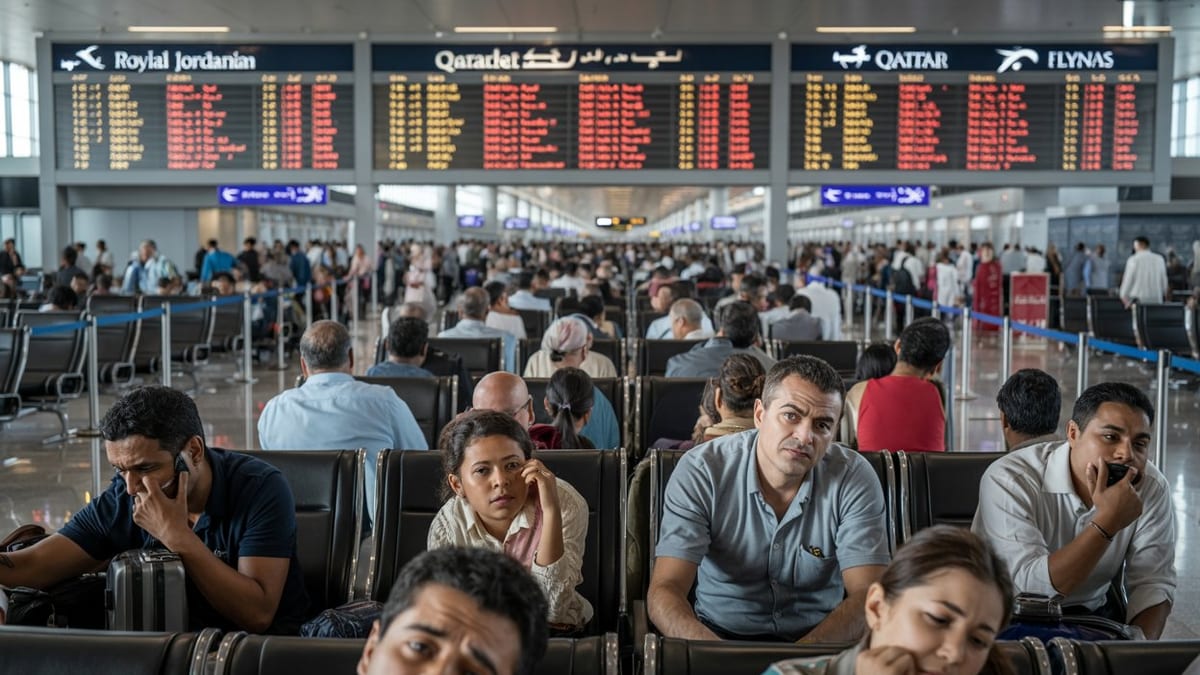
Morning departures hit by knock-on delays
Early morning departures at London Gatwick began the day with relatively light disruption, but flight-tracking boards soon showed delay patterns building across several short-haul routes. Publicly available schedules indicate that a number of departures to popular European city and leisure destinations left behind schedule, in many cases by 30 to 60 minutes.
The delays appear to be concentrated among low-cost and leisure carriers operating high-frequency rotations, where even minor schedule slippage on first-wave services can cascade through the day. Industry reporting over recent months has highlighted how tight turnarounds and busy spring schedules at Gatwick can quickly translate into wider timetable strain when aircraft or crews arrive late from earlier sectors.
Weather across southern England on Monday has not been reported as a primary driver of disruption, with no widespread storm systems or visibility alerts in effect comparable to episodes that badly affected Gatwick and Heathrow in April. Instead, the pattern resembles a familiar mix of minor operational hold-ups and congestion in the wider European network, as described in recent performance analyses of London airports.
For travellers, the immediate impact has included extended waits at departure gates and some last-minute gate changes, though security and check-in operations are reported to be flowing broadly in line with seasonal norms. Advice from travel providers continues to emphasise allowing extra time at the airport and monitoring airline apps for gate and timing updates.
Scattered cancellations emerge across the schedule
Alongside the delays, publicly accessible flight-status boards for Gatwick show a modest number of outright cancellations building into the Monday schedule. These have been spread across a mix of short- and medium-haul routes, with no single carrier or destination accounting for the majority of the disrupted services.
Some of the cancellations appear linked to aircraft and crew being out of position following recent days of weather-related and technical issues across parts of Europe, as documented in recent aviation industry coverage. When aircraft rotations are compressed by earlier storms, air traffic control restrictions or technical inspections, operators sometimes consolidate lightly booked services or reroute aircraft to protect the busiest departures.
In other cases, cancellations are understood to relate to ongoing resource challenges within the air traffic system. Recent reports from AirHelp and Eurocontrol have underlined the sensitivity of UK airports, including Gatwick, to staffing constraints and sector capacity limits elsewhere in Europe, which can force airlines to trim schedules or accept longer routings that disrupt aircraft planning.
Passengers booked on affected flights are being offered standard options of rebooking on later services, rerouting via alternative airports, or receiving refunds, according to airline customer information pages. Consumer-rights organisations continue to remind travellers that entitlement to meals, accommodation and compensation depends on the cause of the disruption and whether it falls within airline control.
Arrivals feel the effect of wider European congestion
On the arrivals side, Monday’s picture at Gatwick reflects both local and continental pressures. Flight-tracking data shows a run of inbound services landing behind schedule, particularly from busy hubs in western and southern Europe where airspace congestion has been a recurring issue this spring.
Recent performance analyses have pointed to a combination of factors behind these inbound delays, including en-route air traffic flow restrictions, temporary capacity limits at overseas airports, and weather diversions that force aircraft to hold or extend routings. Gatwick, as one of Europe’s busiest single-runway airports, is structurally vulnerable to such knock-on effects because even a modest sequence of late arrivals can compress runway and stand availability for subsequent movements.
While the majority of Monday’s arrivals are still landing within an hour of their scheduled times, pockets of longer disruption are producing some extended waits at baggage reclaim and at onward transport links. Ground-handling teams are reported to be working within standard operating patterns, but the bunching of flights into shorter windows can strain equipment and staffing plans.
For arriving passengers with onward rail or coach connections, rail-industry updates show that separate issues on the regional network can further complicate journeys. Recent notices from operators serving the Gatwick corridor, including previous disruption to Southern, Thameslink and Gatwick Express services, highlight how closely airport punctuality and surface access are intertwined for travellers heading into London and the wider south-east.
Recent incidents highlight sensitivity of Gatwick operations
Monday’s rolling delays and cancellations come against a backdrop of recent incidents underlining how finely balanced operations at Gatwick can be. In recent days, media reports detailed an easyJet aircraft returning to the airport shortly after take-off following a lightning strike, adding an unscheduled movement into an already busy afternoon schedule and illustrating how safety-driven diversions can ripple through runway use.
Earlier this spring, aviation-performance analyses also recorded higher-than-normal levels of delay across several major European hubs, with Heathrow and Gatwick among the airports most affected. Reports pointed to the combined impact of unsettled weather, air traffic control staffing pressures and residual route restrictions linked to geopolitical tensions, all contributing to a more fragile operating environment than in typical pre-pandemic seasons.
Longer-term studies of Gatwick’s operations have repeatedly emphasised the implications of running close to capacity on a single main runway. Noise and airspace forums associated with the airport have noted that even small timetable disturbances can lead to late-running arrivals into the evening period, as airlines work to recovery schedules and return aircraft to their overnight bases.
These structural factors mean that days like Monday, where disruption remains limited but persistent, can be a bellwether for the months ahead as peak summer traffic approaches. Industry observers are watching closely to see whether operational lessons from previous years, including enhanced coordination between airlines, air traffic providers and ground handlers, translate into more resilient performance.
What today’s disruption means for passengers
For passengers at Gatwick on Monday, the current pattern of disruption is inconvenient rather than extreme, but it still demands flexibility and careful planning. With delays scattered across the board and a small number of cancellations in play, travellers are being urged by airlines and travel agents to keep a close eye on live flight status tools rather than relying solely on printed or early-morning schedules.
Travel advice from consumer and passenger-rights organisations typically recommends checking in online where possible, arriving with additional time to spare, and travelling with hand luggage only if practical to reduce the impact of missed connections or aircraft swaps. For those facing longer delays, documenting expenses and retaining receipts can help if a later claim under UK air passenger regulations becomes possible.
Looking beyond Monday, analysts note that Gatwick is entering a critical period as airlines ramp up seasonal services to Mediterranean and long-haul leisure destinations. Recent scheduling data and airport briefings have presented 2026 as a transformative year for the hub, with new routes and increased frequencies planned, but also with a renewed focus on punctuality and resilience after several challenging summers.
How well Gatwick weathers days of rolling disruption such as today is likely to be a key test of those efforts. For now, publicly available information suggests that while Monday, 18 May 2026 has delivered a choppy experience for many travellers, the airport’s operations are continuing to function, with airlines working through a manageable but persistent backlog of late-running services.