


More news on this day
Flight disruptions centered on Las Vegas are rippling across the United States after Harry Reid International Airport registered 99 delayed departures and arrivals and five cancelled flights, affecting operations on key routes to and from Los Angeles, Dallas, Austin and other major cities.
Get the latest news straight to your inbox!
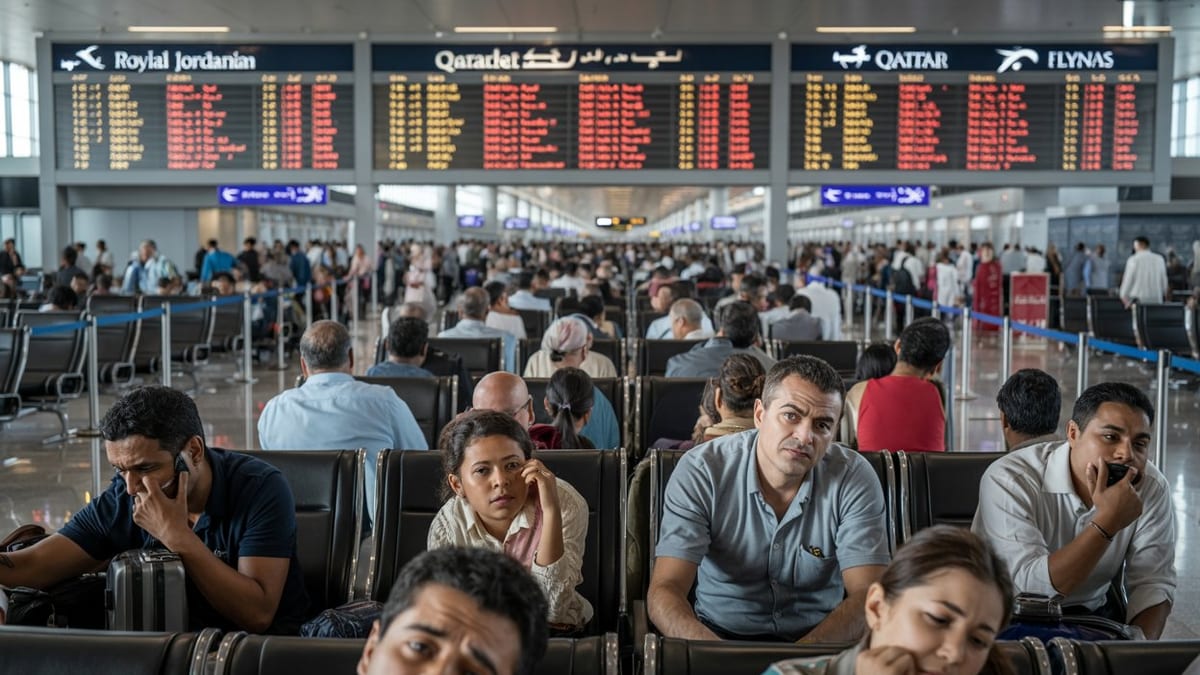
Harry Reid Delays Underscore Network Fragility
Operational data compiled from flight-tracking and airport-status platforms on May 18 indicate that Harry Reid International Airport in Las Vegas has logged 99 flight delays and five cancellations over the course of the day, placing sustained pressure on the tightly scheduled networks of several US carriers. The disruption has affected departures and arrivals throughout the afternoon and evening peak periods, when leisure and connecting traffic is typically heaviest.
Publicly available information shows that Southwest Airlines, Alaska Airlines, JSX and other operators with a strong presence at Las Vegas are among those most exposed to the slowdown. With Las Vegas serving as a popular origin, destination and through-point for West Coast and transcontinental travel, even a modest number of cancellations has amplified knock-on delays across the broader domestic system.
Aviation analytics dashboards for Harry Reid International Airport highlight a pattern of rolling delays across both mainline and regional services rather than a single, short-lived outage. The figures point to elongated turnaround times on the ground and tighter spacing in departure banks, creating challenges for maintaining on-time performance as the day progresses.
Southwest, Alaska and JSX Face Cascading Schedule Pressures
Southwest Airlines, one of the dominant operators at Harry Reid, appears to be experiencing the largest share of schedule disruption, according to real-time tracking services. Even when individual flights are listed as operating, extended departure and arrival intervals have been reported on routes linking Las Vegas with California, Texas and the Mountain West, reducing the buffer for crews and aircraft later in the day.
Alaska Airlines, which uses Las Vegas as part of its broader West Coast and transborder network, is also contending with delays, particularly on services connecting to coastal hubs. Public status boards show selected departures arriving behind schedule into Las Vegas, compressing connection windows and increasing the risk that subsequent legs may push into delay categories as crews reach duty limits.
JSX, the semi-private carrier that operates point-to-point routes with smaller aircraft, has more limited frequencies but can still be significantly affected by schedule disruptions in Las Vegas. With fewer daily departures on each route, the cancellation of even a single flight can strand passengers or force rebookings a day or more later, especially on niche city pairs that lack abundant alternatives.
Key Routes to Los Angeles, Dallas and Austin Affected
The effects of the Las Vegas disruptions are especially visible on heavily trafficked corridors linking Harry Reid International Airport with Los Angeles, Dallas and Austin. Monitoring tools tracking flights between Las Vegas and the greater Los Angeles basin, including Burbank and other secondary airports, show scattered delays that are contributing to congestion in Southern California airspace.
Connections between Las Vegas and Dallas, served through both Dallas Love Field and Dallas Fort Worth, are also experiencing pressure. Flight-status platforms indicate that longer-than-normal taxi and turnaround times in Las Vegas are combining with intermittent weather and air-traffic-management constraints in North Texas, creating a feedback loop that slows operations in both directions.
On routes involving Austin, published coverage and traveler reports describe late-evening and overnight arrivals that are running behind schedule, in some cases by more than an hour. Because many of these flights are part of longer itineraries linking smaller cities through Las Vegas and Texas hubs, a delay on one leg can effectively unravel carefully planned connection sequences for dozens of passengers.
Weather, Congestion and Tight Schedules Among Likely Drivers
Although a single root cause has not been identified publicly, the pattern of delays at Harry Reid International Airport and on related US routes is consistent with a mix of localized weather constraints, heavy traffic volumes and tight aircraft and crew utilization. Recent spring systems in the western and central United States have periodically reduced visibility and required wider separation between arriving and departing aircraft at multiple hubs.
Industry analyses published in recent months note that airlines continue to run high load factors and closely spaced schedules, particularly on leisure-heavy routes. This approach can improve efficiency in normal conditions but leaves limited room to absorb disruption when even a small number of flights encounters extended taxi times, minor maintenance checks or air-traffic-control flow restrictions.
Publicly available guidance from regulators and airline-facing advisories also highlights ongoing construction and airspace-management projects at a number of large US airports. While such work is routine, it can temporarily limit runway or taxi capacity at peak hours, intensifying the impact of any unexpected disturbance on days with strong passenger demand, such as weekends and holiday-adjacent periods.
Travelers Urged to Monitor Status and Build Extra Time
Travel resources that track day-of-operations performance across US airports are advising passengers booked through Las Vegas and affected hubs to monitor their flight status closely and to allow additional time for check-in and security. With Harry Reid International Airport registering dozens of delays and multiple cancellations in a single day, even flights that remain “on time” at booking may experience last-minute schedule changes.
Observers also note that disruptions centered on a high-traffic airport like Las Vegas can take many hours to fully resolve, even after the underlying trigger has passed. Aircraft and crews that begin the day in one city may end it in another, so a delay on a morning departure can lead to schedule adjustments well into the evening across distant airports such as Los Angeles, Dallas and Austin.
For now, operational data suggests that airlines are attempting to stabilize their networks by adjusting departure times, swapping aircraft where possible and consolidating lightly booked services. However, with passenger volumes remaining robust and weather patterns still unsettled in key regions, further day-to-day volatility in departure and arrival times remains a possibility for travelers moving through Las Vegas and its major connecting markets.