


More news on this day
Al Maktoum International Airport in Dubai has reported a fresh wave of schedule disruption, with 12 delays and three cancellations affecting services to major hubs including Dubai, London and Cairo, as regional airspace constraints and operational pressures continue to reverberate through airline networks.
Get the latest news straight to your inbox!
Cluster of Disruptions at Dubai’s Second Hub
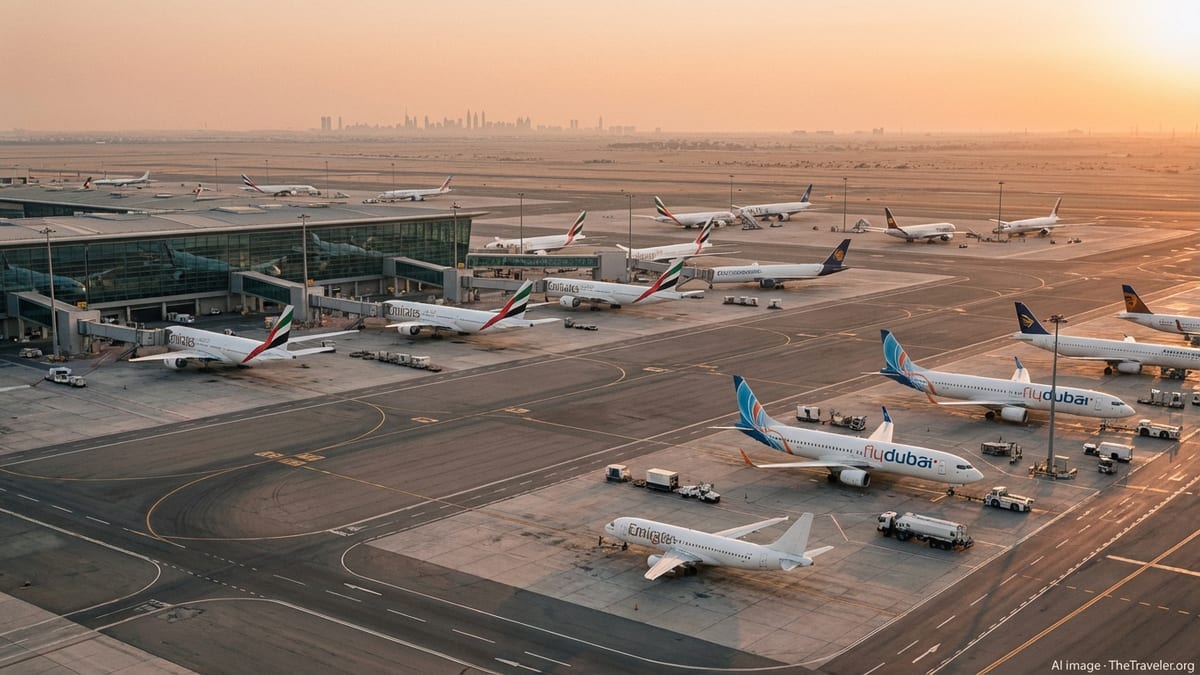
Al Maktoum International Airport, also known as Dubai World Central, has emerged as a key pressure point in the latest round of operational turbulence across Gulf aviation. Publicly available flight information indicates that a group of 15 services linked to the airport were disrupted within a short window, with 12 departures and arrivals delayed and three flights cancelled outright.
The affected services include links between Dubai and major international gateways such as London and Cairo, along with additional regional and long haul routes. The pattern highlights the growing role of Al Maktoum as a spillover hub when nearby airspace is constrained and when carriers adjust networks serving Dubai International Airport.
While the disruption is modest compared with the widespread suspensions seen earlier this year across the Gulf, the clustering of delays and cancellations at a single airport underscores how even limited constraints can propagate quickly through tightly scheduled airline operations.
Al Maktoum International, designed to become Dubai’s primary global hub over the coming decade, has been handling a mix of passenger, cargo and diversion traffic as operators balance their schedules between Dubai’s two main airports.
Emirates and British Airways Among Affected Carriers
The latest operational data shows that the disruptions at Al Maktoum involved a cross section of airlines, with Emirates, British Airways and EgyptAir among the carriers adjusting schedules. Emirates, which has increasingly used Al Maktoum for both passenger and cargo services alongside its core operation at Dubai International, has been managing rolling changes to departures and arrivals as it navigates regional airspace limitations and fleet rotations.
British Airways, which has previously adjusted its Middle East schedules in response to route planning and security assessments, appears among the operators experiencing timing changes on London bound services linked to Dubai. EgyptAir services connecting Cairo and the Gulf have also been subject to revisions in recent months, reflecting broader instability in regional air corridors and the knock on effects this has on punctuality.
None of the major airlines involved has attributed the latest Al Maktoum disruptions to a single cause. However, recent months have seen carriers across Europe and the Middle East publish advisories citing airspace restrictions, rerouting, and operational constraints as key drivers behind schedule volatility, particularly on services transiting the Gulf and eastern Mediterranean.
For travellers, the result is a patchwork of departures that may operate close to time, operate with extended delays, or be cancelled at relatively short notice, depending on how operational conditions evolve across the day.
Regional Airspace Constraints Continue to Ripple Through Schedules
Al Maktoum’s latest delays and cancellations come against the backdrop of a turbulent first half of 2026 for Gulf aviation. Reports from aviation outlets and regional media describe a period marked by intermittent airspace closures and restrictions following episodes of regional tension, which earlier in the year forced Dubai’s airports to suspend or sharply curtail operations before gradually restoring limited services.
Although Dubai International and Al Maktoum have since moved back toward regular operations, publicly available information continues to show constrained capacity and complex rerouting patterns on some corridors. The need for airlines to detour around restricted zones can lengthen flight times, disrupt crew schedules and reduce slack in aircraft rotations, leaving networks more vulnerable to knock on delays.
The use of Al Maktoum as a supplementary hub has been central to Dubai’s strategy for maintaining connectivity during these periods. The airport’s design capacity and available slots have allowed airlines to divert or rebase select services there when Dubai International faces congestion or temporary suspensions.
However, the latest cluster of 12 delays and three cancellations demonstrates that this buffer is not immune to wider regional pressures. Even when the airport itself remains fully operational, upstream disruptions and route changes can still trigger schedule revisions on flights into and out of the facility.
Impact on Passengers Traveling Between Dubai, London and Cairo
The disruptions at Al Maktoum have been felt most immediately by passengers traveling between Dubai and key markets such as the United Kingdom and Egypt. London bound travellers, in particular, face heightened uncertainty as airlines juggle demand on one of the world’s busiest long haul city pairs while working within altered routing options.
Cairo services have also been sensitive to changing conditions. EgyptAir and other operators have periodically updated timetables and published guidance on handling cancellations or reroutings, reflecting the importance of this link for both business and migrant travel connecting North Africa with the Gulf.
Travel analysts note that even a limited number of cancellations, when concentrated on heavily booked routes, can produce a ripple effect as displaced passengers vie for seats on subsequent departures or on alternative routings via regional hubs. With many Gulf and European carriers still operating with leaner spare capacity than before recent disruptions, reaccommodation options can quickly become constrained.
Passengers transiting through Dubai on multi leg itineraries are particularly exposed, as a delay or cancellation on a single Al Maktoum segment can cause missed onward connections across Europe, Asia or Africa, resulting in overnight stays or complete rebookings of complex journeys.
What Travellers Should Expect in the Coming Weeks
Travel industry observers suggest that intermittent disruption at Al Maktoum and other Gulf airports may remain a feature of the region’s aviation landscape in the near term. While there have been gradual improvements in capacity and routing flexibility compared with the most acute phase of closures earlier this year, published updates from airports and airlines still refer to dynamic conditions that can shift on short notice.
For passengers planning trips involving Al Maktoum, either as an origin, destination or transfer point, this means building additional time into itineraries and monitoring schedule updates closely in the days and hours before departure. Rebooking windows, reaccommodation policies and the availability of alternative routings can vary by carrier and by ticket type.
Publicly available guidance from airlines operating through Dubai continues to emphasize the importance of checking the latest flight status and remaining flexible about routing and timing, particularly on services linking the Gulf with London, Cairo and other high demand cities. As Al Maktoum expands its role within Dubai’s long term aviation strategy, its performance during periods of regional stress is likely to remain under close scrutiny from both industry analysts and passengers.
In the meantime, the latest wave of 12 delays and three cancellations serves as a reminder that even incremental disruptions can significantly reshape a day of flying at one of the Gulf’s emerging megahubs, with consequences that extend far beyond the runways of Jebel Ali.