


On paper, the Emirates Skywards Rewards World Elite Mastercard looks like a niche airline card aimed only at hardcore Emirates loyalists. After putting it side by side with other popular travel cards and running through real booking scenarios, I realized I had underestimated it in a few important ways. The surprises are not where most people expect to find value in an airline card, and that is exactly what makes this product interesting if you fly Emirates even semi-regularly from the United States.
Get the latest updates straight to your inbox!
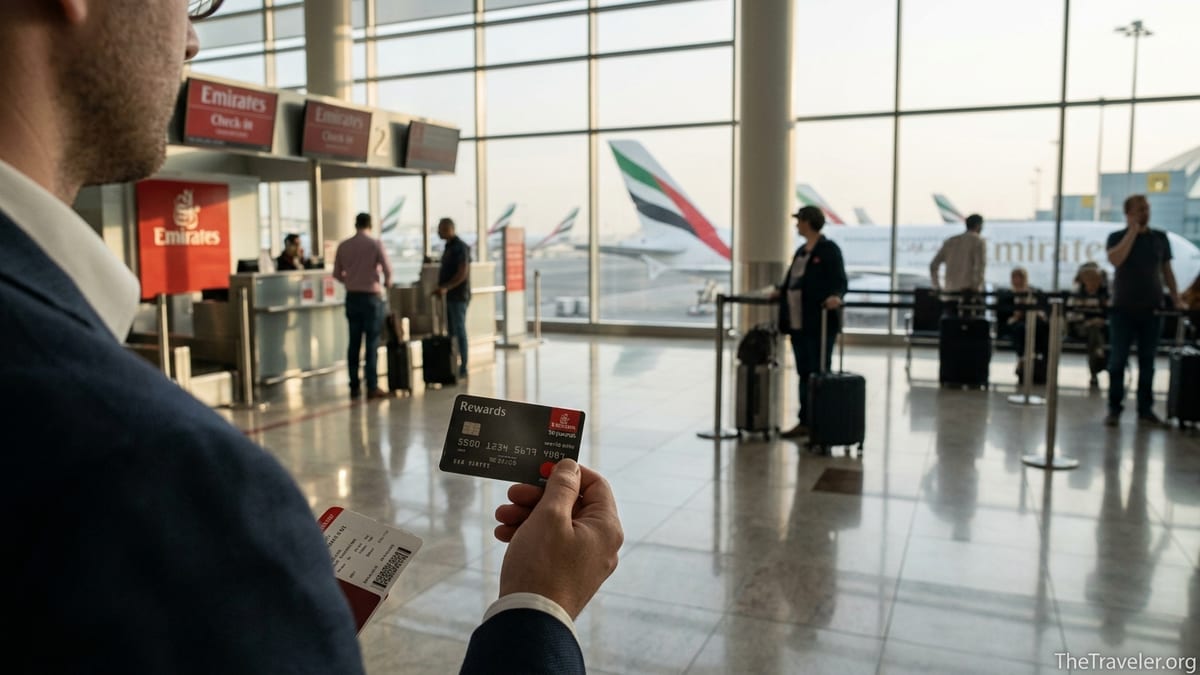
What This Card Actually Offers, Once You Read the Fine Print
The Emirates Skywards Rewards World Elite Mastercard is the lower-fee sibling in Emirates’ U.S. credit card lineup, issued by Barclays. As of mid-2026, it typically carries a 99 dollar annual fee and a welcome bonus in the ballpark of 30,000 Skywards Miles after you meet a minimum spend in the first 90 days. That bonus alone can get you close to a one-way economy ticket on shorter regional routes, or meaningfully reduce the cash cost of a longer trip when you top it up with miles from flying.
Earning is tilted toward Emirates and travel spending. You generally earn the highest rate on Emirates purchases made directly with the airline, a middle tier on broader travel like hotels and rental cars, and a base rate on everything else. If you regularly charge a couple of international trips and a few domestic hotel stays each year, you may be surprised how quickly balances climb compared with using a non-bonus general cash-back card.
The rewards structure becomes more appealing when you factor in Skywards’ flexible redemption options and the ability to keep miles from expiring as long as you hold the card and your account remains open. That detail is easy to overlook but crucial if you are a once-a-year Emirates flyer who does not want to see hard-earned miles vanish because you did not have a second trip on the calendar.
Where the card quietly differentiates itself from many general travel cards is in how tightly it is integrated with the Skywards program. Buying miles at a discount, linking to the Skywards Everyday app for U.S. card-linked offers at retailers, and using the card to pad balances between big trips makes this feel less like a single-purpose airline card and more like a long-term companion to your Skywards membership.
Comparing It to the Premium Emirates Card and General Travel Staples
Most people considering the Emirates Skywards Rewards World Elite quickly bump into a fork in the road: Do you pay significantly more for the Emirates Skywards Premium World Elite Mastercard, or do you opt for a flexible bank card like the Chase Sapphire Preferred, Capital One Venture, or a premium American Express card instead? The instinct is often to go straight to the big general travel cards and ignore airline co-brands with lower earn rates on everyday spend.
In side-by-side comparisons, the Premium version of the Emirates card commands a steep annual fee, roughly five times that of the Rewards card, in exchange for automatic Emirates Skywards Gold status in the first year, lounge access benefits through Priority Pass, and credits toward programs like Global Entry or TSA PreCheck. Those perks are powerful if you pass through Dubai several times a year and want guaranteed access to Emirates Business Class lounges plus better baggage and check-in treatment. If you only fly Emirates once every year or two, however, the lower-fee Rewards card can actually deliver better value because you are not paying hundreds of dollars up front for benefits you will barely touch.
When stacked against a flexible card like Chase Sapphire Preferred, the Emirates card usually loses on pure earning velocity for non-airline purchases and on the breadth of redemption partners. What surprised me is how quickly the math flips for travelers who are already committed to booking Emirates for trips to Dubai, India, Southeast Asia, or Africa. A family of four from New York to Dubai in economy, for example, can easily generate tens of thousands of Skywards Miles on its own, especially when paid with the co-branded card. Combining that with the sign-up bonus can cover one or more one-way upgrades from economy to business on selected routes, something a general bank card cannot do directly.
If your goal is to collect the most flexible points possible for a variety of airlines and hotel chains, this card will never be your only tool. But if your upcoming travel calendar is already studded with Emirates segments, it acts as a powerful accelerator for a specific dream, like flying business class on the A380 with the onboard bar or securing a lie-flat seat from Houston to Dubai on a peak holiday flight without paying full cash price.
Where the Card Surprised Me in Real Travel Scenarios
The most unexpected value I found did not come from glamorous perks like international lounge access or automatic elite status. It came from the combination of discounted mileage purchases, mileage protection, and targeted Emirates redemptions. With the card, you typically receive a 25 percent discount when you buy or gift Skywards Miles during regular sales. That means if you are 10,000 to 20,000 miles short of a premium cabin reward, you can often top up at a more reasonable price rather than shelving the idea until you have flown several more trips.
Consider a very real example. A solo traveler based in Chicago books a paid economy round-trip to Dubai at around 1,100 dollars. By crediting those flights to Skywards and paying with the co-branded card, they may walk away with roughly 10,000 to 15,000 miles from the trip plus whatever they earn on incidentals. Add the card’s sign-up bonus, and they are within striking distance of upgrading one long-haul segment to business class with miles, especially if they catch one of Emirates’ periodic mileage promotion windows.
Another scenario where the card punched above its weight was for an infrequent flyer whose Skywards balance was about to expire. Because holding the Emirates Skywards Rewards World Elite keeps miles active as long as your account is open and in good standing, they avoided losing a five-figure mileage balance a few months before finally booking a long-postponed trip to Johannesburg via Dubai. In that sense, the card acts as low-cost insurance for your miles, something that is not always obvious from marketing copy.
Finally, the no foreign transaction fee feature, standard with many travel cards today, took on specific value when used on the ground in destinations like Dubai, Bangkok, and Cape Town. Compared with carrying a domestic cash-back card that quietly charges around 3 percent in foreign fees, using the Emirates card for hotel folios, restaurant bills along Jumeirah Beach, or local rideshares in Bangkok effectively turned what would have been a hidden surcharge into miles earned instead.
How the Benefits Compare When You Fly Emirates Only Occasionally
A common assumption is that an airline card only pays for itself if you are a road warrior. After comparing the Emirates Skywards Rewards World Elite against mainstream airline cards from U.S. carriers, I was surprised how reasonable the break-even point can be for occasional Emirates flyers. Because the annual fee is around 99 dollars and the welcome bonus itself can be worth a couple of hundred dollars or more in realistic redemptions, the first year is often a clear win if you have one Emirates trip planned.
Take a couple from Boston planning their first big Emirates trip to the Maldives via Dubai in economy. Their round-trip tickets total roughly 3,000 dollars. Using the card for the purchase, plus hotels in Dubai and the Maldives and incidental travel expenses, might put 4,000 to 5,000 dollars on the card within a few months. With Emirates and travel categories earning bonus miles, and the welcome offer layered on top, the couple could generate enough Skywards Miles to cover at least one one-way upgrade on a shorter regional segment or meaningfully discount a future ticket to Europe on an Emirates codeshare.
For someone who flies Emirates only once every two or three years, the calculus is more nuanced. In that case, the best use might be timing the card application to coincide with a major trip, maximizing the sign-up bonus and travel-category earnings in year one, then reevaluating before the second annual fee posts. If you know your next Emirates flight is years away, you can close or downgrade the card after your big trip and still have extracted more value than the fee in the form of miles and waived foreign transaction costs.
Even without flying, a cardholder in the United States who spends a large portion of their budget on travel, dining, or online purchases can layer in Emirates Skywards Everyday partners where available. While earn rates at U.S. retailers are not as rich as the airline’s own flights, they add a slow but steady trickle of miles between larger international trips, which is especially helpful for keeping balances active and moving toward a specific Emirates redemption goal.
What You Give Up: The Tradeoffs You Need to Accept
The flipside of this card’s focus is that you give up some of the luxuries associated with more expensive premium travel cards. The Rewards World Elite version does not come with complimentary Priority Pass membership, automatic Emirates Gold status, or built-in Global Entry and TSA PreCheck fee credits. Those features are reserved for the Premium World Elite sibling with its far higher annual fee, or for flagship general travel cards from issuers like American Express, Chase, and Capital One.
For many travelers, the lack of broad lounge access is the single biggest drawback. If you frequently connect through non-Emirates hubs such as Frankfurt, London Heathrow, or Singapore and do not have status with another alliance, you might be better served by a bank card that opens the doors to a wide portfolio of lounges across airlines and independent operators. The Emirates Skywards Rewards card is more about amplifying the value of your time in the Emirates ecosystem than blanketing your entire journey in lounges.
The earn rates on non-travel purchases can also feel underwhelming compared with modern no-fee or low-fee cash-back cards that offer flat 2 percent or higher rewards on everything. If most of your spending is grocery stores, gas stations, and utilities in the United States, this is not the most efficient card to put at the front of your wallet on a daily basis. It shines when you lean into its strengths: Emirates tickets, hotel stays, rental cars, and foreign purchases where you would otherwise be paying a fee anyway.
Finally, Skywards redemptions are not always straightforward. Emirates does not publish a simple fixed award chart; instead, you work with online calculators and dynamic mileage requirements. In practical terms, that means the value of your miles can swing significantly depending on route, cabin, and date. For flexible travelers who can adjust their trip by a day or two, this is a manageable complexity. For those locked into school holiday dates or specific conference schedules, it can be frustrating, and you may sometimes get better value using a flexible bank currency on another airline entirely.
Who Will Get the Most Value From This Card
After weighing the surprises and the shortcomings, a clear profile emerges of who is most likely to come out ahead with the Emirates Skywards Rewards World Elite Mastercard. At the top of the list are travelers who know they will book at least one Emirates or Emirates-partner long-haul trip each year and who want that travel to eventually lead to premium-cabin experiences. If you dream about business class on the A380 but mostly buy economy, this card is a structured path to make that dream more affordable through a mix of miles from flying, miles from spending, and discounted mileage top-ups.
Another strong candidate is the U.S.-based traveler whose family or work ties pull them regularly to Emirates-heavy regions: the Gulf, India, Pakistan, East Africa, or Southeast Asia. A New Jersey family visiting relatives in Karachi every other summer with a Dubai stopover, for example, can use this card to consolidate value in a single program that repeatedly serves their actual routes, instead of scattering points across multiple U.S. airline programs they only fly domestically.
Finally, this card suits those who are already invested in the Skywards ecosystem through other channels. If you transfer points from a flexible bank program to Skywards, subscribe to Skywards+ for extra perks, or earn miles via hotel partners and car rentals, the co-branded World Elite card acts as glue that keeps your miles active and adds another stream of earning. The 99 dollar fee becomes easier to justify when you view it as the cost of maintaining and accelerating a program you genuinely use, rather than as a speculative bet on an airline you fly once in a decade.
On the other hand, if your travel is primarily within North America, or you mostly choose whichever airline is cheapest on a flight search engine, you will likely be better off with a flexible points card that does not lock so much value into a single foreign carrier. The Emirates card works best when it has a clear, recurring purpose in your travel life.
The Takeaway
Going in, I expected the Emirates Skywards Rewards World Elite Mastercard to be a narrow, almost vanity product mainly for fans of Emirates’ cabins and branding. After comparing it closely with its own premium sibling and with the major flexible travel cards, I came away with a more nuanced view. The real strength of this card lies in how it supports realistic travel patterns for people who already use Emirates and Skywards, not in headline perks like unlimited lounge access or automatic top-tier status.
The modest annual fee combined with a useful welcome bonus, discounted mileage purchases, and the protection of your Skywards balance can create outsized value in very specific scenarios: a single big trip every year or two, an aspirational upgrade to business class on a bucket-list route, or the need to keep miles alive while your travel plans keep shifting. The tradeoff is giving up the universal lounge access and rich everyday earn rates of some competing products.
If your calendar shows at least one Emirates flight in the next 12 months and your long-term plans include returning to Dubai or beyond, this card deserves a closer look than its fairly understated marketing invites. It may not be the flashiest travel plastic in your wallet, but under the right circumstances, it delivers more than you might expect.
FAQ
Q1. What is the annual fee for the Emirates Skywards Rewards World Elite Mastercard?
The annual fee is typically around 99 dollars, which is significantly lower than the fee charged by the Premium World Elite version of the card.
Q2. How many miles can I earn as a welcome bonus?
As of 2026, the public welcome offer is generally in the region of 30,000 Skywards Miles after you meet a minimum spending requirement in the first 90 days, though exact terms can change.
Q3. Does this card offer airport lounge access?
The Rewards World Elite version does not include broad lounge access like Priority Pass. For lounge entry tied to Emirates Skywards status and Priority Pass membership, you would need the higher-fee Premium World Elite card or another premium travel product.
Q4. Are there foreign transaction fees when I use the card abroad?
No, the Emirates Skywards Rewards World Elite Mastercard does not charge foreign transaction fees, which makes it a practical choice for spending in destinations like Dubai and other international markets served by Emirates.
Q5. Will my Skywards Miles expire if I hold this card?
One of the key benefits is that your Skywards Miles will generally remain active as long as your card account stays open and in good standing, reducing the risk of losing a balance between trips.
Q6. Is this card better than a general travel card like Chase Sapphire Preferred?
It depends on your goals. General travel cards usually win for flexible points and broad lounge access, while the Emirates card can be more valuable if most of your long-haul trips are on Emirates and you want to maximize Skywards-specific redemptions.
Q7. Can I use the miles I earn to upgrade from economy to business class?
Yes, Skywards Miles earned with the card can be used to upgrade eligible paid tickets on Emirates, subject to availability and route rules, which is often where travelers find the most satisfying value.
Q8. How does this card compare with the Emirates Skywards Premium World Elite Mastercard?
The Premium version carries a much higher annual fee but adds benefits such as automatic Gold status in the first year, lounge access, and credits for programs like Global Entry or TSA PreCheck. The Rewards card is more about low-cost mileage earning than luxury perks.
Q9. Is this card worth it if I only fly Emirates once every couple of years?
If you can time the welcome bonus and higher travel spending to a single big trip, the first year can still offer solid value. After that, you should reassess whether you will fly Emirates often enough to justify keeping it.
Q10. Can I combine Skywards Miles earned from this card with miles from flights and other partners?
Yes, all miles earned from the Emirates Skywards Rewards World Elite Mastercard pool together in your Skywards account alongside miles from flying, hotel partners, car rentals, and bank transfer partners, giving you a single balance to redeem from.