


More news on this day
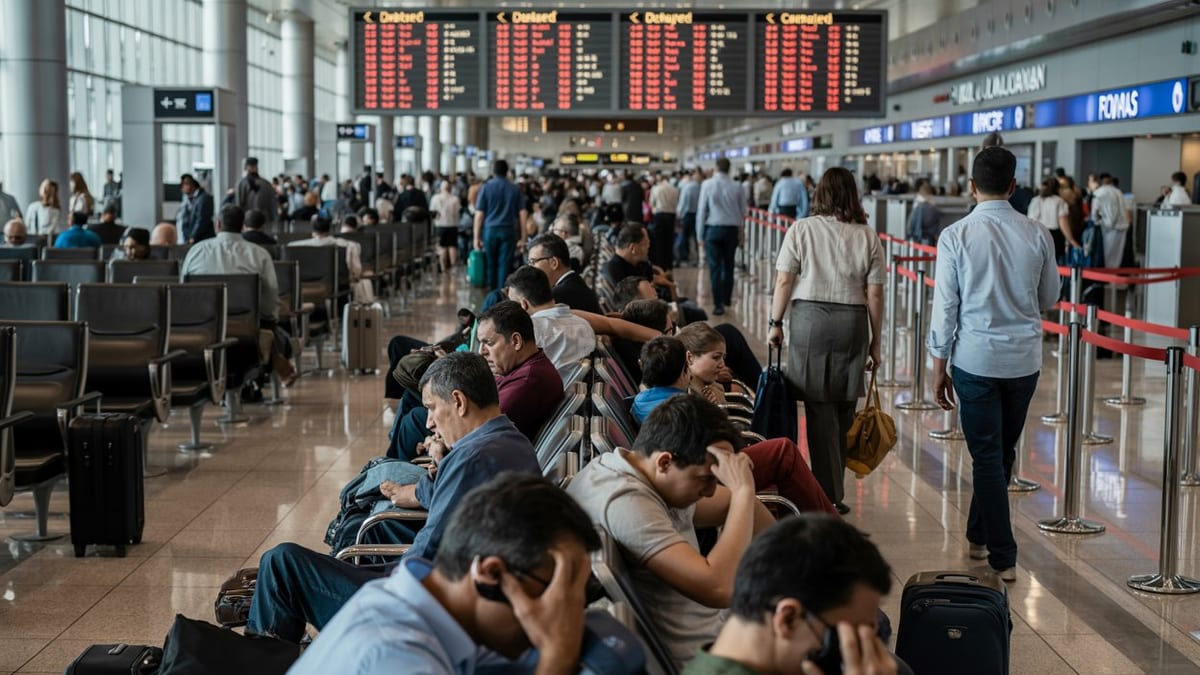
Passengers traveling through Marka International Airport in Amman on July 1 faced unexpected disruption as multiple domestic and regional services were delayed or canceled, affecting Royal Jordanian and several smaller regional airlines operating across Jordan and neighboring Middle Eastern destinations.
Get the latest news straight to your inbox!
Operational Disruptions at Amman’s Secondary Airport
Marka International Airport, also known as Amman Civil Airport, has been gradually returning to scheduled passenger operations in 2026 after years focused mainly on general aviation. Publicly available airport and aviation data for July 1 indicate a cluster of irregular operations, with four departures or arrivals delayed and four services canceled across the day’s schedule.
The affected flights were largely short-haul services, including domestic sectors within Jordan and regional hops to nearby Middle Eastern cities that typically rely on narrowbody jets and turboprops. These routes form an important feeder network for Amman, complementing longer-haul services that continue to operate primarily from Queen Alia International Airport.
The disruptions at Marka were reported during a period of broader operational sensitivity in Jordan’s airspace, following months of heightened regional tensions and intermittent schedule adjustments published by carriers serving the country. Although the country’s main air gateway at Queen Alia has been operating largely as normal, smaller fields such as Marka appear more exposed when airlines fine-tune their schedules.
While detailed, flight-by-flight causes are not published in a centralized form, schedule monitoring platforms show irregular timings and cancellations concentrated over a relatively short operating window, magnifying the impact for travelers relying on same-day connections and time-sensitive trips.
Royal Jordanian and Regional Carriers Adjust Short-Haul Schedules
Royal Jordanian, the national airline, has been steadily rebuilding and reshaping its regional network in 2026, with most flights anchored at Queen Alia International Airport. However, some domestic and short regional operations are planned to be supported by Marka as passenger services resume. On July 1, the airline’s schedule overview and route data showed minor short-notice adjustments, including timing changes and selective cancellations affecting regional sectors.
According to publicly accessible timetable aggregators, these adjustments primarily touched services linking Amman with nearby Middle Eastern hubs and leisure destinations, such as points along the Eastern Mediterranean and the Gulf. For travelers, this translated into longer-than-expected ground time at Marka or, in the case of cancellations, the need to be rebooked onto alternative same-day departures from Queen Alia or the following day’s flights.
Other regional operators that typically serve secondary Jordanian routes from Marka also appeared in daily logs with irregular operations. In several cases, flights were marked with extended departure delays attributed in schedules to operational reasons or “rotational” issues, aviation shorthand for disruptions carried over from earlier legs in the aircraft’s daily pattern.
For both Royal Jordanian and its regional counterparts, the disruptions underscore how finely balanced short-haul networks can be when aircraft utilization is high and turnarounds are tight. A single late inbound aircraft or crew timing constraint early in the day can quickly propagate through multiple Marka rotations, especially when there is limited spare capacity on the ground.
Impact on Domestic and Middle East Travelers
The immediate impact for passengers at Marka International Airport was a familiar one to frequent flyers: longer waits in the departure lounge, rescheduled boarding times, and, for some, the prospect of an overnight stay or lengthy surface transfer to Queen Alia International Airport. Reports from flight-status platforms indicated that delays on the four affected flights stretched from roughly one hour to several hours, while the four cancellations removed key options on already thinly served routes.
Domestic travelers connecting between Amman and other Jordanian cities were among those most exposed. With comparatively few daily frequencies on many internal routes, a single cancellation can erase half or more of the day’s options, particularly at a secondary airport where airlines are still calibrating demand. In practical terms, that left some passengers choosing between shifting onto later flights via Queen Alia or postponing their trips.
Regional passengers bound for neighboring Middle Eastern capitals also faced missed onward connections, especially when their Marka flights were intended to feed longer international sectors operated from other hubs. In such cases, publicly available guidance from airlines emphasizes the importance of flexible tickets and up-to-date contact details, allowing automated rebooking tools to offer new itineraries where possible.
With peak summer travel underway across the region, even small clusters of disruptions can place added strain on customer service channels. Travelers who experienced cancellations on July 1 were often competing for rebooking options on flights that were already heavily booked, prompting some to consider alternative dates or routings via different regional hubs.
Context: Jordanian Airspace and Airport Capacity
The pattern of disruption at Marka comes against a backdrop of evolving airspace management in Jordan. Earlier in 2026, regulatory announcements documented temporary, time-limited restrictions in Jordanian airspace in response to regional security assessments. Although these measures have since been relaxed, carriers operating in and out of the country have continued to fine-tune their schedules to reflect operational and risk-management considerations.
Industry analysis notes that Jordan’s aviation system is anchored by Queen Alia International Airport, which handles the vast majority of international and long-haul flights. Marka’s role, by contrast, is more specialized, with a focus on general aviation, charter, and a limited but growing number of scheduled passenger services. This differing profile can make disruptions at Marka more visible, as there are fewer parallel services and infrastructure options compared with the larger hub.
Aviation data providers also point to the complexity of running mixed operations at smaller city airports, where military, training, business aviation, and scheduled commercial flights may share facilities. Any adjustment to one segment of activity, such as changes in training schedules or visiting charter movements, can have knock-on effects on gate availability and runway slots for scheduled flights.
In that context, the cluster of delays and cancellations on July 1 fits into a broader narrative of a secondary airport still working to re-establish its place within Jordan’s wider aviation network, as airlines experiment with route patterns and operating times that best match demand and operational constraints.
What Travelers Using Marka Airport Should Expect Next
Looking ahead to the coming weeks, schedule information and capacity outlooks suggest that airlines serving Marka International Airport are likely to continue operating relatively lean timetables, with a focus on carefully selected domestic and regional routes. This structure allows carriers to monitor demand closely and adjust quickly, but it also means passengers have fewer backup options when irregular operations occur.
Travel planners monitoring Jordan’s aviation sector highlight several practical implications. Passengers choosing flights from Marka, particularly those connecting onward to long-haul services abroad, may wish to build in longer connection windows than they might normally allow at larger hubs. Similarly, those with time-sensitive commitments could consider daytime flights earlier in the schedule, when there is more scope to reroute to alternative services if problems emerge.
Publicly available advisories from airlines and airport-focused services also consistently recommend that travelers keep a close watch on real-time flight-status tools and to ensure that mobile numbers and email addresses in their bookings are current. During disruption events like those seen on July 1, automatic notifications and self-service rebooking platforms can significantly reduce the time spent queuing at airport counters.
While the number of affected flights at Marka International Airport was relatively small, the ripple effects across domestic and regional itineraries illustrate how sensitive secondary airports can be to even modest timetable changes. For travelers planning to use Marka in the coming months, building in a margin of flexibility and staying closely informed about operational conditions remain the most reliable strategies to navigate potential disruptions.