


More news on this day
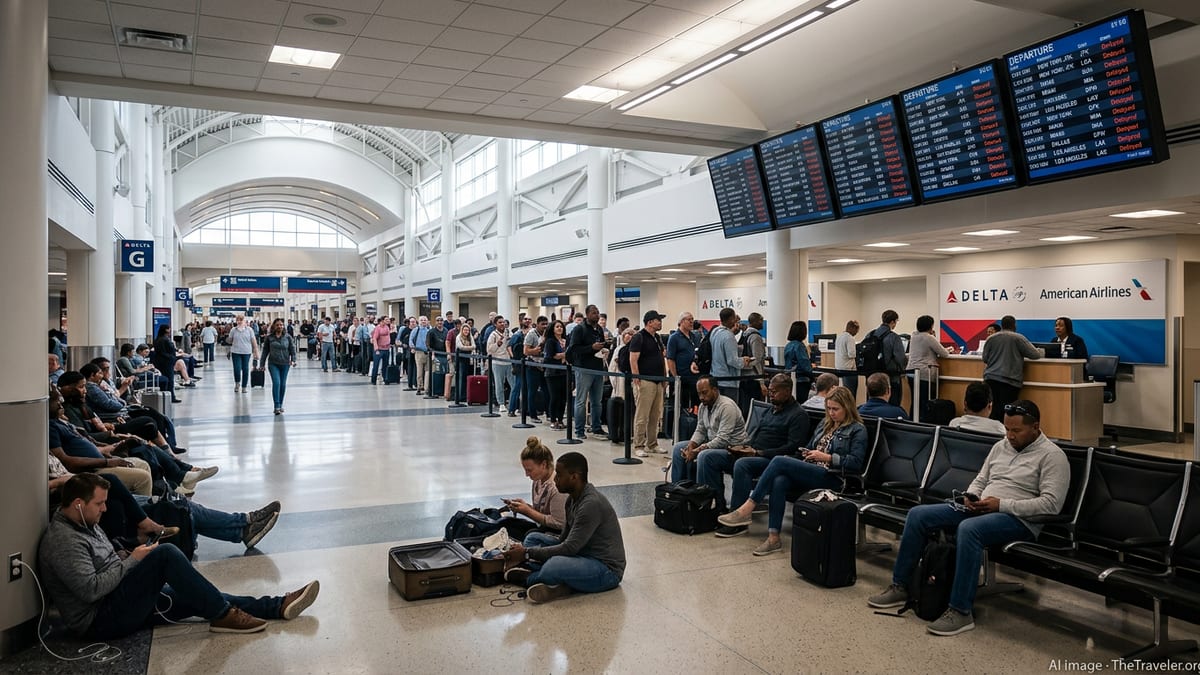
One of the busiest summer travel days at Hartsfield-Jackson Atlanta International Airport turned into a grinding ordeal on July 1, as 198 flight delays and a handful of cancellations rippled through Delta Air Lines and Southwest Airlines schedules, stranding passengers at the world’s busiest hub and across the national network.
Get the latest news straight to your inbox!
Peak-Summer Gridlock Hits the World’s Busiest Hub
Publicly available aviation-tracking data for Atlanta on July 1 show 198 flights delayed and four canceled, a relatively small share of the airport’s hefty daily schedule but enough to trigger hours of disruption for travelers. With Hartsfield-Jackson serving as the main connecting point for much of the southeastern United States, even modest percentages translate into thousands of disrupted journeys as missed connections cascade throughout the day.
The timing could hardly be worse. The disruption is unfolding in the run-up to the Independence Day holiday period, when Atlanta is already bracing for millions of passengers and urging domestic travelers to arrive at least two and a half hours before departure. Early-summer storms, tight aircraft rotations and high load factors mean there is little slack in the system when operations start to slip.
Reports from passengers on social platforms describe long lines at security and crowded gate areas, with many travelers attempting to rebook at customer-service counters or through airline apps. While airport operations are continuing, the day has taken on the hallmarks of a rolling gridlock: flights pushing back late, crews and aircraft out of position, and knock-on delays appearing at other airports that rely on Atlanta connections.
Delta’s Dominant Hub Bears the Brunt
Delta Air Lines, which operates its largest hub and headquarters in Atlanta, is at the center of the disruption. Data services that compile schedules and movements list Delta as by far the most active carrier at Hartsfield-Jackson, supplying the majority of daily departures and connections through the airport’s sprawling concourses. When delays mount in Atlanta, Delta’s nationwide network feels the impact.
The current wave of setbacks continues a difficult run for the carrier, which has already navigated significant operational strain in 2026. Earlier in the year, weather systems and staffing pressures contributed to repeated bouts of cancellations and delays at Delta hubs, including Atlanta and Minneapolis. Analysts note that a hub-and-spoke structure offers efficiency during normal operations but can magnify the effects of local disruptions once flights begin to back up.
Travelers connecting through Atlanta on Delta are reporting missed onward flights and overnight stays as seat availability tightens on later departures. Many are being advised through public information channels to monitor the airline’s app closely, accept automatic rebookings where possible and consider rerouting through alternative hubs when connections look tight.
Southwest Passengers Face Added Strain Amid Network Retrenchment
Southwest Airlines, the second major player affected in Atlanta, is also grappling with delays even as it gradually scales back its footprint at the airport. Industry schedule data published in recent weeks show that Southwest has been trimming nonstop routes from Atlanta, reflecting the difficulty of competing with Delta’s dominant position and reallocating aircraft to other focus cities.
Despite the network adjustments, Southwest still carries substantial passenger volume through Atlanta, particularly on domestic leisure routes. On July 1, those customers found themselves caught up in the same wave of congestion, facing late departures from both Atlanta and feeder airports where Southwest flights connect into the hub.
For Southwest passengers, the disruption underscores a changing role for Atlanta in the carrier’s system. With fewer nonstop options available, more itineraries now involve connections through other Southwest cities, which can complicate rebooking during a disruption. Publicly available guidance emphasizes the importance of checking flight status frequently and making use of self-service tools to switch to earlier or later flights when space permits.
Systemic Vulnerabilities Exposed by 198 Delays
Operational experts point to Atlanta’s role as a central node in both Delta and broader U.S. air travel as a key reason why 198 delayed flights can feel like a much larger crisis on the ground. Each late departure or arrival risks stranding crews, pushing aircraft beyond their scheduled turns and forcing airlines to reshuffle planes across multiple cities to restore balance to the network.
Recent travel seasons have highlighted how fragile that balance can be. Previous episodes in 2026 saw thunderstorms and a government funding standoff slow traffic into and out of major hubs, with Atlanta repeatedly at the center of nationwide ripple effects. Those events prompted renewed scrutiny of staffing levels in air traffic control, airline crew scheduling practices and the resilience of ground operations during extreme weather.
In this latest disruption, early indications from available weather and federal airspace data suggest that there are no broad, nationwide ground stop programs in effect for Atlanta, pointing instead to a mix of localized operational challenges and the sheer strain of peak travel demand. Observers note that when airports operate close to capacity for extended periods, even minor slowdowns on the ramp or at security checkpoints can propagate throughout the day.
Consumer advocates continue to urge passengers to build longer layovers into itineraries that pass through Atlanta, particularly during busy summer and holiday weekends, and to familiarize themselves with airline policies on rebooking and compensation when disruptions occur.
What Travelers Can Expect Through the Holiday Period
Looking ahead to the remainder of the Independence Day travel window, travelers using Atlanta are likely to face tight flight loads and limited flexibility on popular routes. Historical patterns and current booking trends suggest that spare seats will be scarce on peak days, making same-day rebooking challenging for those whose flights are severely delayed or canceled.
Publicly available information from airport and airline channels advises arriving early, allowing extra time at security and at the gate, and having contingency plans in mind in case of missed connections. Travelers with critical timelines, such as cruise departures or international meetings, are frequently encouraged by travel professionals to consider flying a day earlier than strictly necessary when routing through Atlanta at busy times.
For Delta and Southwest, the events of July 1 will likely feed into ongoing discussions about network resilience at Atlanta. Some analysts expect carriers to continue adjusting schedules, thinning marginal frequencies and building in more buffer time between turns where possible, particularly during months when afternoon storms are common in the Southeast.
While the current tally of 198 delays and four cancellations may not match the headline-grabbing meltdowns seen in past years, the scenes at Hartsfield-Jackson underline how quickly massive travel chaos can unfold at a fortress hub. For passengers starting or connecting in Atlanta, this latest episode is a reminder that in peak season, even a routine summer day can tip into disruption with little warning.