


More news on this day
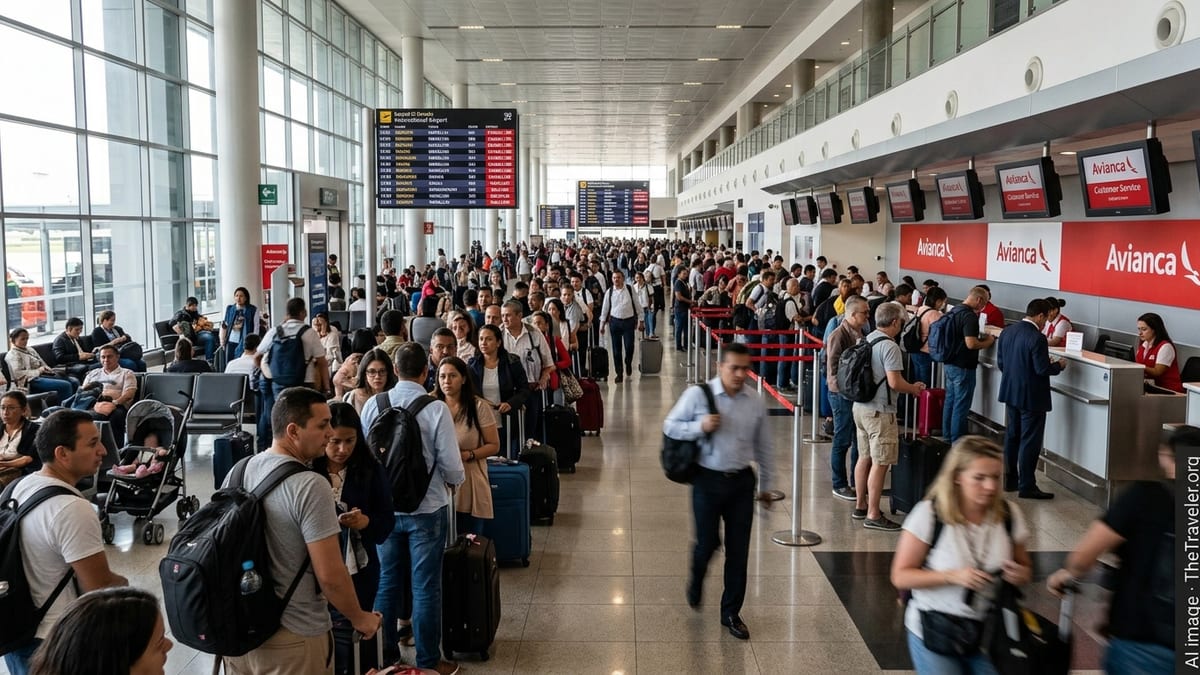
Travelers passing through Bogotá’s El Dorado International Airport on June 28 faced mounting disruption as Avianca and LATAM Colombia reported seven flight cancellations and 116 delays, disrupting key routes to Caracas, New York, Miami, Toronto, Madrid and Barcelona.
Get the latest news straight to your inbox!
Operational Turbulence Hits Major International Routes
The latest disruption at El Dorado International Airport underscores how quickly operations can snarl at one of Latin America’s busiest hubs. Publicly available airport and flight-tracking data for June 28 highlight a cluster of delays across Avianca and LATAM Colombia routes, concentrated on high-demand international corridors. Services to Caracas, New York, Miami, Toronto, Madrid and Barcelona were among those affected, leaving passengers facing long waits at departure gates and uncertainty about onward connections.
The seven cancellations reported for the day removed capacity entirely on some links, while 116 delayed flights rippled through the schedule. Even when a specific flight eventually departed, late pushbacks and missed departure slots translated into missed connections for travelers heading beyond Bogotá. The combination of cancellations and rolling delays effectively throttled traffic on some of El Dorado’s most important long-haul and regional routes.
The disruption also came at a time when El Dorado is seeing robust demand on transatlantic services to Spain and on North American routes. Avianca schedules show daily operations between Bogotá and Madrid, Barcelona, Miami, New York and Toronto, meaning that any systemic delay can quickly affect hundreds of passengers on a single aircraft rotation.
For some travelers, Bogotá’s role as a transfer hub magnified the impact. Passengers starting their journeys in other Colombian or Latin American cities and connecting through El Dorado found their itineraries disrupted before they could even leave the country.
Caracas, North America And Spain Among The Worst Hit
Published coverage of the June 28 disruption indicates that connectivity from Bogotá to Caracas experienced particular stress. Recent weeks have already seen scrutiny of flights in and out of Venezuela due to broader regional conditions, and carriers operating in that market have been updating policies for affected passengers. The latest cancellations at El Dorado added a fresh layer of uncertainty for those traveling between the Colombian and Venezuelan capitals.
Beyond Caracas, the largest passenger flows affected appear to be on North American and European routes. Avianca operates multiple daily frequencies to Miami and New York, while Toronto is served as a key Canadian gateway. A delayed departure on any of these flights often means missed cruise departures, meetings or tight onward connections at the destination, making schedule reliability especially important to international travelers.
On the long-haul side, Bogotá’s ties to Madrid and Barcelona form one of the most heavily trafficked transatlantic links from Colombia. Even a single cancellation or a multi-hour delay on these routes can strand wide-body loads of passengers at El Dorado. Travelers connecting onward to other European cities through Spanish hubs are particularly exposed, as missed bank connections can require overnight stays and rebookings on later waves of flights.
Domestic and regional itineraries also felt the knock-on effects. Reports from Colombia highlight that flights to other cities in the region have recently contended with weather variability and airspace constraints, so when a hub like Bogotá experiences extensive delays, the resulting congestion can stretch well beyond the headline intercontinental routes.
Weather, Congestion And Network Complexity Fuel Knock-On Delays
While a single cause for the June 28 disruption has not been clearly identified in public reporting, operational patterns at El Dorado point to several familiar pressure points. Bogotá’s altitude and weather can complicate approaches and departures, and low-visibility conditions have been known to trigger holding patterns or slow the arrival flow. When this happens during peak banks, even modest delays can cascade into broader schedule instability.
Congestion at the airport’s terminals and runways further enlarges the impact. As the primary hub for Avianca and an important base for LATAM Colombia, El Dorado handles a dense wave schedule in the morning and evening. When aircraft arrive late, they often depart late in turn, compressing ground times and complicating crew rotations and maintenance windows. A backlog in one bank of flights can therefore spill over into subsequent waves.
Network complexity magnifies the challenge for carriers. A wide-body aircraft operating a Bogotá to Madrid rotation, for example, may be scheduled to continue on another long-haul segment or to reposition for a different route after returning. If that aircraft leaves late, the delay can echo across the next 24 hours of its planned operations, affecting destinations far from Bogotá.
For passengers, the experience often translates into long queues at customer service desks, uncertainty around rebookings and concerns about baggage handling. Travelers transiting Bogotá have shared a range of experiences in recent months regarding tight connection windows and the risk that even moderate delays can make an itinerary unworkable, especially on international-to-international transfers.
Airline Policies And Passenger Options During Disruptions
When flights are delayed or cancelled, Avianca and LATAM Colombia apply disruption policies that set out passenger options for rebooking, refunds and care. Public documents from Avianca describe scenarios in which travelers may be rerouted on the next available flight, reprotected on alternative services or, in some circumstances, refunded for unused portions of their tickets once delays pass certain thresholds. LATAM Colombia publishes similar guidelines covering flexibility for itinerary changes during operational disruptions.
In mass disruption events, however, the practical exercise of those rights can be complicated by limited seat availability, strained call centers and long in-person wait times at the airport. Carriers may prioritize rebooking passengers with imminent travel needs or those with through itineraries involving long-haul segments, while others are placed on standby lists for later departures.
Regulatory frameworks also shape what passengers can expect. Colombia’s consumer protection rules and international conventions require airlines to maintain certain standards of care, which can include assistance with meals, communications and, in some circumstances, accommodation. The extent of that support often depends on the cause of the disruption, the length of the delay and whether a traveler is on a domestic or international itinerary.
For travelers, carefully tracking flight status, keeping boarding passes and receipts, and documenting communications with the airline are practical steps that can make it easier to seek compensation or reimbursement after the fact. Those on complex itineraries involving multiple carriers or separate tickets can face additional challenges, as responsibility for missed connections may not rest with a single airline.
What Travelers Through Bogotá Should Watch In The Coming Days
The scale of the June 28 disruption at El Dorado International Airport serves as a reminder that Bogotá’s role as a high-altitude, high-traffic hub comes with inherent operational sensitivities. Travelers with upcoming itineraries on Avianca or LATAM Colombia, particularly on routes to Caracas, North American gateways or Spain, may wish to monitor their flight status closely in the short term as schedules stabilize.
Experts generally recommend building extra buffer time into connections through Bogotá, especially when mixing domestic and international segments or when onward travel involves non-flexible commitments such as cruises, tours or important meetings. Opting for longer layovers can reduce the risk that a delay on the first leg will jeopardize the rest of the trip.
Passengers can also benefit from having contingency plans. This may include knowing alternative routings through other regional hubs, understanding the conditions of their fare and travel insurance, and being prepared to request specific solutions at the airport, such as rebooking via different cities or accepting overnight accommodation when necessary.
As Avianca and LATAM Colombia work through the backlog from the latest wave of cancellations and delays, the situation at El Dorado will remain a focus for travelers across the Americas and Europe. The episode highlights how intertwined global air networks have become and how disruption at a single major hub can rapidly affect journeys spanning multiple continents.