


More news on this day
Via Rail passengers traveling through Winnipeg say a long, unexplained delay that ended in a last-minute train cancellation left them stranded, out of pocket and questioning the reliability of Canada’s national passenger rail service.
Get the latest news straight to your inbox!
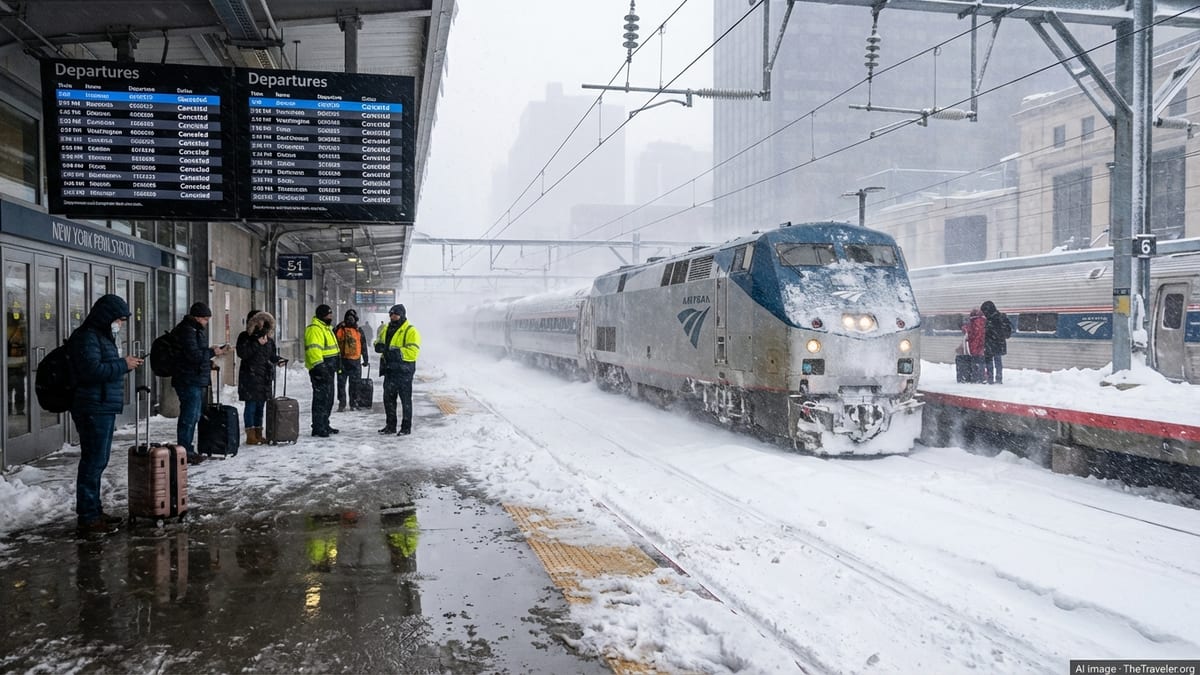
Hours of delays end in abrupt cancellation
Accounts shared on local news outlets and social media indicate that the disruption involved a westbound long-distance Via Rail service that arrived in Winnipeg already significantly behind schedule. Passengers reported that the train had departed eastern Canada late and continued to accumulate delays as it moved across the Prairies.
By the time the service reached Winnipeg, the delay had stretched beyond 30 hours in some cases, according to coverage from regional broadcasters and online discussion forums. Many travelers believed they were finally on the verge of continuing their journeys toward western destinations such as Edmonton and Vancouver.
Instead, reports describe an abrupt announcement that the remaining leg of the trip would be cancelled, with passengers told they would not be transported further by train. For some, this meant unexpected overnight stays in Winnipeg, while others scrambled to find last-minute flights, rental cars or intercity buses at their own expense.
Several travelers have characterized the experience as confusing and stressful, saying that they received limited advance notice about the possibility of a full cancellation after already enduring extensive delays on board.
Confusion, communication gaps and limited options
Publicly available information and passenger accounts suggest that communication throughout the disruption was a major source of frustration. Travelers say updates on the length of the delay were sporadic and often vague, both during the slow journey toward Winnipeg and after the train stopped there.
Some passengers have described being unsure whether they should arrange their own onward transport or wait for further instructions from the rail operator. In online posts, a number of travelers reported difficulty reaching customer service in a timely way, especially as they tried to confirm refund eligibility or clarify whether any alternative transportation would be offered.
Others highlighted practical challenges in finding accommodation at short notice, particularly for families and older passengers unaccustomed to navigating late-night hotel bookings in an unfamiliar city. People with tight connections to work, cruises or events further west said they faced particularly stark choices once it became clear that the train would not continue.
While some travelers acknowledged that long-distance rail journeys across Canada are vulnerable to mechanical and operational problems, many questioned why there appeared to be no clear contingency plan for such an extended disruption, especially on one of Via Rail’s flagship routes.
Mechanical problems and a pattern of disruptions
Coverage from Winnipeg-based outlets indicates that Via Rail attributed the disruption in part to mechanical issues affecting the train. The company has faced similar situations in other parts of its network over the past year, including mechanical failures and infrastructure problems that have caused major delays and cancellations on corridor and remote routes.
National reporting over the past several months has highlighted broader reliability challenges for Via Rail, including declining on-time performance on key routes and recurring conflicts with freight traffic over shared tracks. Industry data compiled by independent observers show that some long-distance services now arrive late a significant proportion of the time, occasionally by many hours.
Earlier analyses by transportation watchdogs and Canada’s auditor general have pointed to punctuality and service resilience as ongoing weaknesses, even while acknowledging improvements in internal management. Passenger advocates argue that repeated incidents of lengthy delays and strandings risk eroding public confidence in rail as a practical alternative to driving or flying across the country.
The Winnipeg incident is being cited in that broader context, with travelers and commentators suggesting it reflects systemic fragilities in equipment maintenance, network capacity and contingency planning rather than an isolated mishap.
Refunds, credits and questions about passenger care
According to information shared with news outlets, Via Rail has indicated that affected passengers on the Winnipeg service will receive refunds for the unused portion of their journey as well as travel credits intended to compensate for the disruption. The company’s publicly posted policies state that when a train is cancelled for operational reasons, tickets are refunded automatically or rebooked at no additional cost.
In this case, however, many stranded travelers say the immediate costs of the incident went beyond the value of their rail tickets. People who booked hotels, replacement transportation or missed prepaid reservations at their destinations have raised concerns that standard refunds and credits do not fully address the financial and personal impact of being left in limbo far from home.
Advocacy groups and online commentators have also questioned how well passenger comfort was managed during the long delay leading up to the cancellation. Past disruptions elsewhere on the network have prompted criticism over access to food, water and timely updates during extended onboard holds, and some travelers see echoes of those problems in the Winnipeg experience.
Transportation policy specialists note that, unlike in commercial aviation, Canada does not have a detailed, mode-specific passenger rights framework for rail journeys. As a result, expectations about compensation and care during major rail disruptions are often shaped by company policy rather than binding national standards.
Renewed scrutiny of Canada’s passenger rail future
The events in Winnipeg are contributing to renewed scrutiny of how Canada’s passenger rail system is managed and funded, particularly on the long-distance routes that are marketed as iconic cross-country journeys. In parliamentary committee work and policy papers, federal decision-makers have been weighing options to modernize rolling stock, improve coordination with freight operators and clarify passenger protections.
Recent government responses to previous high-profile strandings have outlined steps that Via Rail is expected to take in improving incident management, customer communications and contingency planning. These initiatives include new internal protocols for major disruptions and updated training intended to prioritize passenger welfare when things go wrong.
However, critics point to ongoing complaints like those emerging from Winnipeg as evidence that on-the-ground experiences have not yet caught up with policy commitments. They argue that until there are visible improvements in reliability and disruption handling, travelers will remain wary of relying on long-distance rail for time-sensitive trips.
For the passengers who found themselves unexpectedly stuck in Winnipeg after a delay measured in days rather than hours, the episode has already reshaped their view of rail travel. Their accounts are likely to feed into a continuing national debate over whether Canada’s passenger rail system can deliver on its promises of comfort, sustainability and dependable cross-country mobility.