


More news on this day
Des Moines International Airport experienced another day of disrupted operations on Tuesday as publicly available tracking data showed 11 delayed departures and arrivals and 2 flight cancellations affecting American Airlines, United Airlines and Southwest Airlines services to and from major U.S. hubs including Dallas, Denver and Minneapolis.
Get the latest news straight to your inbox!
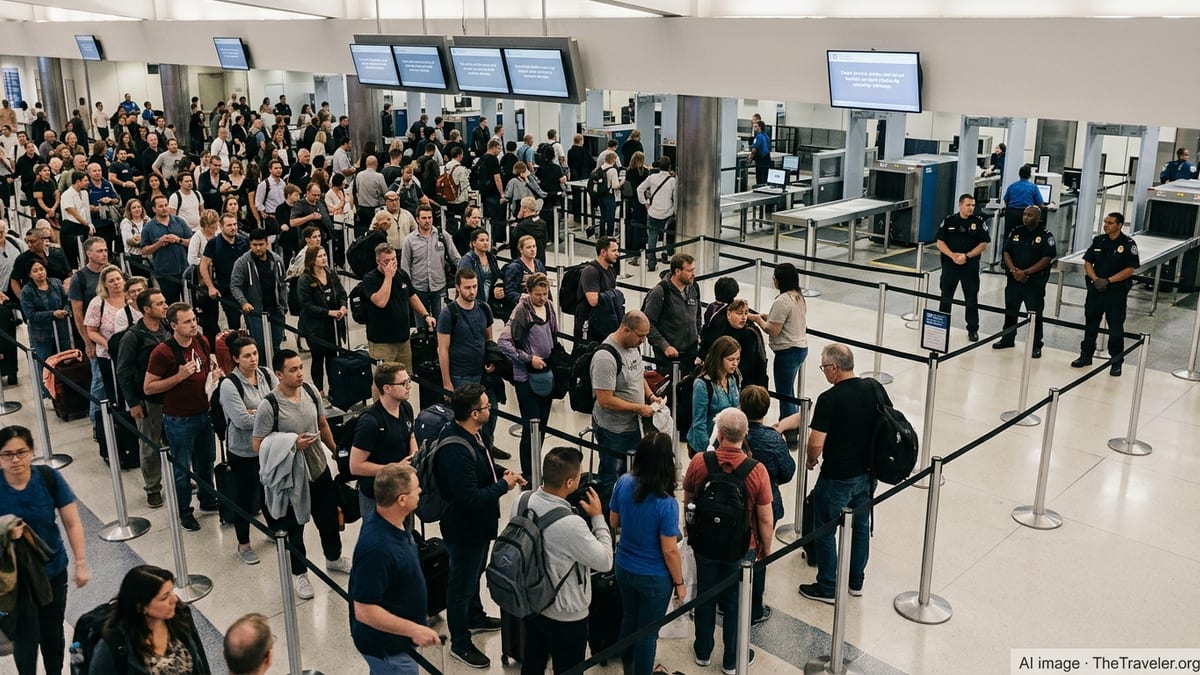
Chain Reaction Across Major U.S. Hubs
Flight status boards at Des Moines International Airport reflected a familiar pattern of rolling disruptions, with services to key hubs such as Dallas Fort Worth, Denver International and Minneapolis–Saint Paul among those most affected. Publicly accessible tracking platforms indicated that regional conditions and congestion at large connecting airports contributed to knock-on delays for aircraft operating in and out of central Iowa.
American Airlines and United Airlines flights linking Des Moines with their hub airports in Dallas and Denver showed delay times ranging from modest schedule slippages to longer holds that pushed departures well past their original slots. Southwest Airlines services connecting through other large U.S. cities, including Chicago and additional Midwestern hubs, were also impacted, reflecting broader strain across the national air network.
Aviation data available on national dashboards shows that thousands of flights across the United States typically experience some form of delay on busy travel days, and Des Moines is not immune. When major hubs slow down, smaller airports like Des Moines often see delayed inbound aircraft, which in turn delays subsequent departures and can ultimately lead to isolated cancellations.
While local weather around Des Moines remained largely manageable, conditions and operational constraints at distant hubs can still ripple through, leaving aircraft and crews out of position. This dynamic has become familiar to many travelers who connect through the country’s largest airports, where even short ground holds can cascade into broader schedule disruptions by late afternoon and evening.
Impact on American, United and Southwest Operations
The 11 reported delays and 2 cancellations at Des Moines on Tuesday were spread among three of the airport’s primary network carriers: American Airlines, United Airlines and Southwest Airlines. Each of these airlines relies on Des Moines as a spoke in larger hub-and-spoke systems centered on airports such as Dallas Fort Worth for American, Denver for United and multiple focus cities for Southwest.
For American Airlines, disruptions on routes between Des Moines and Dallas can have outsized consequences for passengers with onward connections to coastal and international destinations. Even a single cancelled or heavily delayed departure from Iowa may force itinerary changes for dozens of travelers, as limited daily frequencies reduce the number of immediate alternatives.
United Airlines flights linking Des Moines with Denver and other western gateways play a similar role, feeding passengers into a dense web of domestic and transcontinental routes. When Denver experiences congestion or weather-related slowdowns, knock-on delays frequently appear at smaller airports on its network, including Des Moines.
Southwest Airlines, which operates point-to-point service through Midwestern and national cities, can see its network affected when specific stations experience volume spikes or localized weather. Although the carrier does not rely on a single dominant hub in the same way as some legacy airlines, operational challenges at large airports still influence its ability to keep aircraft cycles on schedule, sometimes contributing to localized disruptions in Des Moines.
Traveler Experience and On-the-Ground Challenges
For passengers at Des Moines International Airport, the pattern of delays and cancellations created a range of practical obstacles, from missed connections to unplanned overnight stays in transit cities. Publicly available coverage and traveler accounts from previous disruption events in the region illustrate how quickly a single schedule change can upend business plans, family visits and medical or academic travel.
As departures slipped later into the day, gate areas at Des Moines reportedly grew busier, with travelers seeking real-time updates from departure boards and airline mobile applications. Many passengers have become accustomed to monitoring multiple sources of information, including airline apps, independent flight-tracking services and airport displays, in an effort to anticipate schedule changes as early as possible.
Operationally, airport staff and airline ground teams must navigate a narrow margin for error when a dozen or more flights are running behind schedule or adjusted on short notice. Turnaround times for aircraft can tighten, gates must be reassigned, and baggage and ramp crews are required to respond rapidly to shifting plans, all while maintaining safety and regulatory standards.
At an airport the size of Des Moines, there is limited slack in the system compared with large hubs. When two cancellations occur on the same day alongside numerous delays, the available pool of spare aircraft, crews and open seats can shrink quickly, leaving some travelers waiting for the next day’s flights to secure viable rebooking options.
Weather, Congestion and Systemic Pressure
Data from national air-traffic coordination centers and real-time delay trackers show that the United States continues to experience elevated levels of congestion, particularly along heavily traveled corridors that connect Midwestern and coastal hubs. Even when Des Moines itself is not under a weather advisory, thunderstorms, low visibility or strong winds at Dallas, Denver, Minneapolis or Chicago can prompt ground delay programs and rerouting that reverberate across airline networks.
Industry analyses frequently note that today’s tightly scheduled operations leave little buffer for irregular events. When multiple hubs simultaneously experience volume constraints, airlines often respond with rolling delays, schedule compression and, in some cases, preemptive cancellations designed to reset the system. The two cancellations linked to Des Moines on Tuesday fit within this broader pattern of strategic schedule trimming to restore reliability later in the day or week.
In addition to weather, staffing levels among air traffic controllers and ground personnel can contribute to operational strain. Public reports from federal agencies and industry groups in recent months have highlighted ongoing efforts to bolster staffing at key facilities, but surges in summer travel demand and holiday peaks continue to test capacity.
These systemic pressures mean that travelers passing through regional airports like Des Moines may experience disruptions even on days that appear calm locally. A single storm cell over a major hub or a constraint at a busy air traffic sector can prompt flow-control measures that affect flights hundreds of miles away, including those serving Iowa’s capital city.
What Passengers in Des Moines Can Do
Travel industry guidance suggests several practical steps for passengers flying through Des Moines when disruptions become likely. Monitoring airline mobile apps and signing up for text or email alerts can provide early notice of gate changes or revised departure times. In many cases, airlines also enable self-service rebooking tools within their apps or websites when a flight is significantly delayed or cancelled.
Experts commonly recommend that travelers with time-sensitive commitments build additional buffer into itineraries involving connections through major hubs such as Dallas, Denver or Minneapolis, especially during peak travel seasons or when forecasts call for thunderstorms or winter weather. Booking longer layovers or selecting earlier flights in the day may increase the chance of reaching a final destination on time if the network begins to slow.
Passengers departing from Des Moines can also benefit from checking real-time delay information for their connecting airports before leaving home. If national dashboards show elevated delays or ground stops at a hub airport, travelers may have advance warning that their itineraries are at higher risk of disruption.
While Tuesday’s 11 delays and 2 cancellations represent a relatively small share of Des Moines International Airport’s total daily operations, they underscore how closely the airport is tied to the performance of larger hubs across the United States. For travelers, staying informed and planning with disruption in mind remains the most reliable strategy in an increasingly complex air travel environment.