

On this tiny, spectacular stretch of the French Riviera between Nice and Monaco, two neighboring villages compete for travelers’ hearts: Beaulieu-sur-Mer and Villefranche-sur-Mer. Both offer pastel facades, palm-lined promenades, and easy rail access along the coast, yet the experience on the ground feels very different. Choosing the right one can shape your entire Riviera stay, from how crowded your morning swim feels to what you spend on dinner and where you catch the sunset.
Get the latest updates straight to your inbox!
First Impressions: Two Villages, Two Very Different Vibes
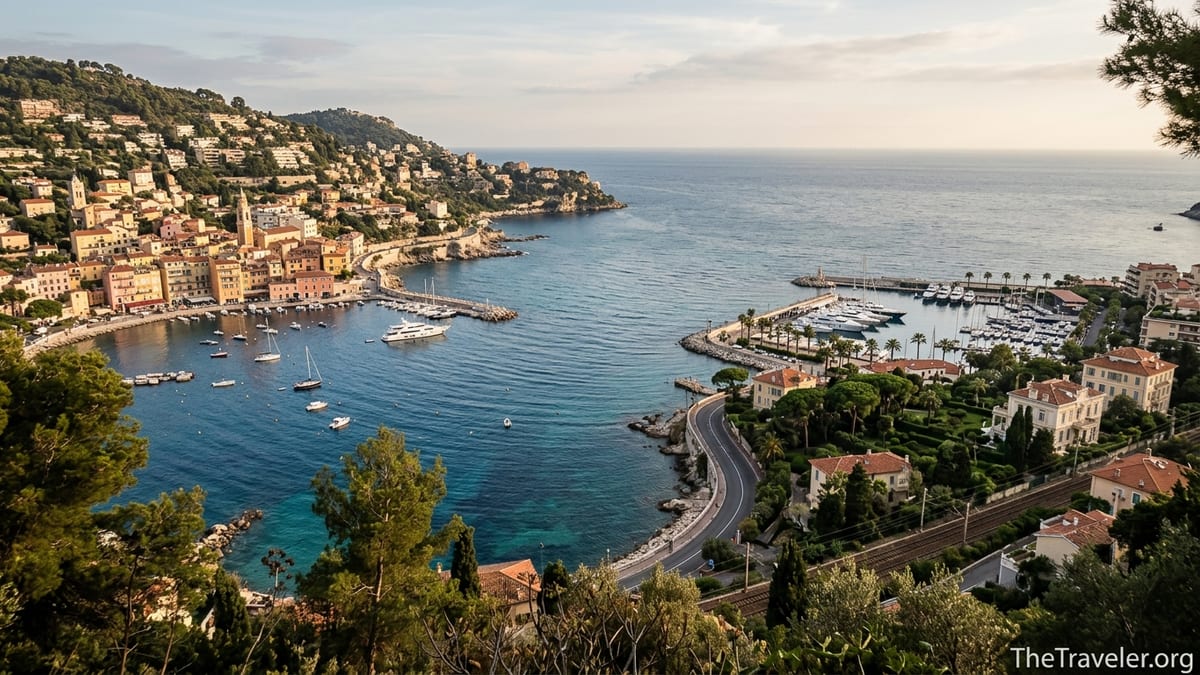
Even though Beaulieu-sur-Mer and Villefranche-sur-Mer sit barely five minutes apart on the coastal train line, the atmosphere in each village contrasts sharply. Villefranche curves around one of the Mediterranean’s deepest natural bays, with steep lanes tumbling down to the water and cruise tenders shuttling day-trippers ashore. The old town feels instantly dramatic: ochre and terracotta buildings stacked above the harbor, church bells echoing off the hills, fishing boats and shiny tenders bobbing side by side.
Beaulieu-sur-Mer, by contrast, feels flatter, airier, and more residential. Here the palm-lined Avenue du Maréchal Leclerc and the elegant marina set the tone. Instead of a medieval jumble, you get grand Belle Époque façades, modern apartment blocks, and a polished seafront that locals use every day. Travelers who stay in Beaulieu often describe it as a “small town where people actually live” rather than a postcard-perfect cove built around visiting cruise passengers.
That difference in vibe shows up from your very first stroll. In Villefranche, you might pause every few steps in the old town as photo tours and day-trippers clog the narrow lanes, especially when a large ship is anchored in the bay. In Beaulieu, the busiest place on a weekday morning is often the covered market and the bakery queues, with commuters drifting to the train and parents walking children to school past orange trees and jacarandas.
Both villages are beautiful. The real question is whether you want the intensity of a famous bay framed by steep hills or the quieter feel of a sunlit seaside town that blends more smoothly into everyday Riviera life.
Getting There and Getting Around
Logistically, there is little to separate Beaulieu-sur-Mer and Villefranche-sur-Mer. Both sit on the main Marseille–Ventimiglia coastal rail line and are only a few minutes apart by train. From Nice-Ville, local TER trains reach Villefranche-sur-Mer in roughly 7 minutes and Beaulieu-sur-Mer in about 10 minutes. As of mid 2026, one-way tickets on this route typically cost around 3 to 4 euros if bought at the station machines or online in advance, and there are dozens of departures per day from early morning until late evening.
For many visitors based in Nice, that convenience turns each village into an easy half-day escape. You can ride out for a late-morning swim at Villefranche’s Plage des Marinières, then continue a few minutes further to Beaulieu for an afternoon coffee by the marina before heading back to Nice for dinner. Buses also connect the two villages with Saint-Jean-Cap-Ferrat and Èze-sur-Mer, so it is entirely possible to build a car-free itinerary that hops between beach, coastal trail, and hilltop village.
If you are flying into Nice Côte d’Azur Airport, plan on about 35 to 45 minutes total to reach either village: a tram or bus into central Nice, followed by a short train ride. Travelers with heavy luggage often find Beaulieu slightly easier on arrival because the village is flatter and many hotels and apartments lie on level streets within 10 minutes’ walk of the station. In Villefranche, most accommodation in the old town is uphill from the station, which can mean stairs and steep lanes before you reach your front door.
Once you are settled, both villages are highly walkable. It takes roughly 15 to 20 minutes to cross Villefranche from the top of the old town down to the far end of Plage des Marinières, while Beaulieu’s main streets, market, and beaches sit in a compact grid. If you like to explore on foot, both make excellent bases for car-free days out along the Riviera.
Beach Life: Plage des Marinières vs Beaulieu’s Bays
For many travelers, the beach is the deciding factor. Villefranche’s Plage des Marinières curves for about a kilometer along the sheltered inner bay, just below the railway line. It is the town’s largest and most popular beach, a long ribbon of coarse sand and small pebbles that slopes into usually calm, clear water. Families love the gentle gradient, while day-trippers appreciate that you can step off the train and be in the sea within a couple of minutes.
The trade-off is crowding, especially in July and August or when cruise ships anchor in the bay. On a midsummer afternoon, much of Plage des Marinières is a patchwork of towels, parasols, and rented loungers, and the promenade buzzes with visitors browsing snack stands and simple beach cafés. If you are looking for easy access and a lively crowd, this suits perfectly. If you crave quieter swims, you will want to time your visits for early morning or later in the day.
Beaulieu-sur-Mer offers two main beaches: Plage des Fourmis near Saint-Jean-Cap-Ferrat and the broader, more urban Plage de la Petite Afrique near the marina, backed by tall pines and cliffs. The shoreline here is mostly small pebbles, and the water tends to be deep and startlingly clear only a few steps from shore. In high summer, you will still find people on every stretch of the beach, but the overall feel is a touch calmer than Villefranche’s main bay, with more space between towels and more locals taking lunchtime dips.
Both villages host private beach clubs most seasons, where two sunbeds and a parasol can run from roughly 30 to 60 euros per day depending on the month and front-row positioning. In Villefranche, spots on the busiest section of Plage des Marinières can book out at weekends, while in Beaulieu you may find slightly better last-minute availability, especially outside August. For free beach days, bring water shoes if you are not used to pebbles, and expect paid locker and shower facilities to be limited in both places.
Where You Will Spend and Where You Might Save
The Riviera is rarely a budget destination, and both Beaulieu-sur-Mer and Villefranche-sur-Mer reflect that reality. Yet there are subtle differences in how your money disappears. Beaulieu, with its luxury marina, Belle Époque palaces, and proximity to Saint-Jean-Cap-Ferrat, tends to skew toward higher-end stays. Five-star properties such as La Réserve de Beaulieu, with its sea-view pool and fine dining, price rooms well into the high hundreds of euros per night in peak season, and upscale four-star hotels often sit between roughly 300 and 500 euros per night in July and August.
Villefranche-sur-Mer, while still expensive by broader European standards, offers a more mixed range of accommodation. Along the lanes behind the old harbor, you will find small family-run hotels and modest apartments with partial sea views starting from around 150 to 250 euros per night in shoulder seasons like May and late September, climbing higher in midsummer. Properties facing directly onto the bay, especially with balconies above the water, command Riviera-level premiums comparable to but rarely exceeding the top end of Beaulieu’s luxury segment.
Restaurant prices can also vary. In both villages, a casual lunch of a salade niçoise, a plate of socca or pizza, and a glass of wine in a midrange brasserie will often fall around 20 to 30 euros per person. Beaulieu’s marina-side establishments are more likely to feature fresh seafood towers, whole grilled fish priced by the kilo, and polished service, pushing typical dinner bills for two, with wine, into the 90 to 140 euro range. In Villefranche, you will certainly find refined waterfront spots with similar bills, but you will also stumble across small pizzerias and bistros a few streets back offering mains in the 15 to 22 euro bracket, where two people can dine decently for closer to 60 to 80 euros.
For travelers watching their budget, self-catering can level the playing field. Both villages have small supermarkets and bakeries where a picnic of fresh baguette, cheese, olives, and fruit might cost 10 to 15 euros. Beaulieu’s weekly market, typically featuring produce, cheese, and prepared foods, is particularly good for stocking up if you have an apartment. In either village, remember that beach extras add up: a sun lounger for the day, a couple of rounds of chilled rosé, and ice creams for the kids can easily double what you thought you were spending on a “simple beach day.”
Character, Culture, and Things to Do Beyond the Beach
Villefranche-sur-Mer is the more immediately photogenic village, and it leans into its history. The 16th century Citadel Saint-Elme, overlooking the harbor, houses small museums and often hosts summer events and open-air performances. Wander through the vaulted Rue Obscure, a covered medieval lane running under the houses, and you get a strong sense of how long this bay has been inhabited and defended. The town’s calendar still features traditions such as the winter “combat naval fleuri,” a flower-decorated boat procession in the bay that mirrors Nice’s flower battles during carnival season.
Art lovers gravitate to Villefranche for its connection to painters and writers who loved the light of the bay. While many of the most famous works are displayed in Nice and beyond, it is not hard to imagine the appeal as you sit on a café terrace in the old harbor quarter, watching the colors shift on the water. The bay’s depth has also made it important for maritime research, and the local oceanographic observatory continues that role today, lending a subtly academic air to the town.
Beaulieu-sur-Mer’s cultural appeal is quieter but distinctive. Its standout sight is the Villa Kérylos, an early 20th century recreation of an ancient Greek villa perched on a rocky outcrop above the sea. Walking through its mosaicked halls and colonnaded terraces, you get an unusual window into both classical inspiration and Belle Époque luxury. The townscape itself is dotted with period villas and palm-filled gardens that speak to its history as a winter resort for European high society, from royals to industrialists.
Neither village is packed with conventional museums, but both are ideally positioned for day trips. From Beaulieu, it is a short, scenic walk or quick bus ride to Saint-Jean-Cap-Ferrat, where you can visit the Villa Ephrussi de Rothschild, with its themed gardens and sea views, then return along coastal paths to Beaulieu’s beaches. From Villefranche, frequent trains and buses whisk you to Nice for its markets and art museums, or up to Èze, a hilltop village where cactus gardens and stone lanes overlook the sea. In practice, many travelers split their time between lounging on the beach and these simple excursions.
Who Will Feel Most at Home in Villefranche-sur-Mer
If you picture yourself waking to bells from an old church, winding down cobbled lanes to buy a coffee, then swimming below pastel terraces in a sheltered bay, Villefranche-sur-Mer will likely feel like the Riviera you have imagined. It suits travelers who prioritize atmosphere and romance over flat streets and convenience. Couples on short breaks often choose Villefranche for its cinematic views, particularly if they can secure a balcony overlooking the harbor, where evening light glows on the colored houses and the masts in the marina.
The town also works well for visitors without a car who want a straightforward beach day. The station sits directly above Plage des Marinières, so you step off your train with a clear view of the sand and sea. Parents with strollers or beach toys appreciate the short distance, and older travelers who prefer to minimize walking find that they can enjoy the bay without navigating too many steep climbs if they remain along the water.
On the other hand, Villefranche can feel crowded in high season and slightly quiet at night once the last cruise tenders have departed. If you are sensitive to crowds, you might plan a stay in shoulder months like late May, June, or September, when the water is still warm but the promenade is less congested. Evening dining here leans to romantic terrace restaurants and understated bars; if you crave nightclubs or late closing times, you will probably end up riding the train back to Nice.
Villefranche is a good choice if you want to feel like you are inside a classic Riviera postcard, if your priority is a easily accessible long beach with a soft, sheltered bay, and if your days are built around sun, swims, and simple village wandering rather than extensive shopping or nightlife.
Who Will Feel Most at Home in Beaulieu-sur-Mer
Beaulieu-sur-Mer tends to attract travelers seeking a calmer, more polished base with a daily rhythm shaped more by residents than by cruise schedules. If your idea of a perfect morning is picking up fruit at the market, grabbing an espresso at a local café where staff recognize regulars, and strolling along a level promenade before a swim, Beaulieu is likely to suit you well. The marina, with its yachts and sailboats, gives the town a quietly upscale feel without tipping into ostentation.
Families with small children often appreciate Beaulieu’s flat streets and accessible services. Supermarkets, pharmacies, and practical shops are slightly more visible and concentrated than in Villefranche’s old town, and pushing a stroller along the seafront paths is easier than in steeper, more stepped villages. The broad curve of Plage de la Petite Afrique offers generous space for children to play at the water’s edge, shaded by pines at the back of the beach in the hottest part of the day.
Beaulieu also appeals strongly to travelers who enjoy longer stays and day trips. From the station, frequent local trains make it easy to visit Monaco, Menton, Antibes, and Cannes without feeling as though you must weave through cruise passengers to reach the platform. Walkers value the paths from Beaulieu around Saint-Jean-Cap-Ferrat, where you can circle headlands, explore small coves, and finish with a late lunch back in town. In the evening, you can opt for a glass of wine at a quiet bar off the main street or dress up for a more formal dinner overlooking the harbor.
If your priorities are ease of logistics, a slightly less touristy atmosphere, and a stronger sense of living among locals rather than in a preserved old quarter, Beaulieu-sur-Mer will likely feel like the more comfortable base, especially for a week or longer on the coast.
The Takeaway
Choosing between Beaulieu-sur-Mer and Villefranche-sur-Mer is less about which village is “better” and more about which one matches the Riviera you are hoping to experience. They are so close that you can easily visit both in a single day, yet the tone of your trip will change depending on which one you call home. Villefranche wraps you in a natural amphitheater of steep streets and sea, with an instantly photogenic old town and a long, sheltered beach right below the train station. It is ideal for romantic escapes, first-time visitors chasing that classic postcard image, and travelers who place a premium on atmosphere and views.
Beaulieu-sur-Mer, by contrast, offers a quieter, more residential take on the Riviera, framed by Belle Époque villas, a handsome marina, and level seaside promenades. You trade the drama of a walled old town for the easy rhythms of a lived-in coastal community, with very good access to nearby headlands, neighboring villages, and the rest of the coast by train. Costs can be slightly higher at the top end, but the payoff is space, calm, and a daily environment that feels less shaped by the cruise calendar.
If you have the time, consider splitting your stay: a few nights in Villefranche to enjoy its evening light and harbor views, followed by several days in Beaulieu to settle into a slower, more local routine. If you must choose only one, let your priorities decide. For views and romance, base in Villefranche. For ease, calm, and a subtle sense of everyday Riviera life, choose Beaulieu. In either case, the good news is that the “other” village is never more than a short, scenic train ride away.
FAQ
Q1. Is Beaulieu-sur-Mer or Villefranche-sur-Mer better for a first visit to the French Riviera?
For a first visit, many travelers prefer Villefranche-sur-Mer because it delivers the classic Riviera image of pastel houses above a sheltered bay and a long, easily accessible beach. Beaulieu-sur-Mer feels more low-key and everyday, which can be wonderful once you know the area, but Villefranche often makes the stronger initial impression.
Q2. Which village has the better beach?
It depends on what you value. Villefranche’s Plage des Marinières is longer and very sheltered, ideal for straightforward swimming and families who want shallow, calm water. Beaulieu’s main beaches, especially Plage de la Petite Afrique, offer very clear, deeper water and a slightly quieter feel, with pine trees and cliffs giving more of a natural backdrop.
Q3. Where will I spend less on accommodation, Beaulieu or Villefranche?
At the very top end, Beaulieu-sur-Mer can work out more expensive because it hosts some particularly luxurious properties by the marina and seafront. Villefranche-sur-Mer offers a broader range of midrange hotels and apartments, especially just behind the old harbor, so budget-conscious travelers often find slightly more options there, particularly outside peak summer.
Q4. Is one village better than the other for travelers without a car?
Both villages are excellent without a car thanks to their train stations on the main coastal line. Villefranche-sur-Mer has the advantage of its station sitting directly above the main beach, which is very convenient for a simple swim-and-sun day. Beaulieu-sur-Mer offers flatter streets and easy connections to Saint-Jean-Cap-Ferrat, which walkers and long-stay guests often appreciate.
Q5. Which is quieter in peak season?
In July and August, both villages feel busy, but in general Beaulieu-sur-Mer maintains a slightly calmer, more residential atmosphere, while Villefranche-sur-Mer can feel more crowded around the old harbor and Plage des Marinières, particularly when cruise ships are in the bay. Early mornings and evenings tend to be peaceful in both places.
Q6. Are there good day trips from each village?
Yes. From either Beaulieu or Villefranche you can easily reach Nice, Monaco, Menton, Antibes, and Cannes by train. Beaulieu has especially convenient access to Saint-Jean-Cap-Ferrat for coastal walks and villa visits, while Villefranche is slightly closer for hilltop excursions to Èze. Many travelers base in one village and build day trips around the shared rail line.
Q7. How do food and restaurant scenes compare?
Both villages have plenty of places to eat, with seafood and Mediterranean dishes dominating menus. Beaulieu-sur-Mer leans a bit more toward upscale marina-side restaurants and classic hotel dining rooms, where bills can climb quickly with wine and fish. Villefranche-sur-Mer balances its waterfront spots with simpler pizzerias and bistros tucked back in the lanes, giving more variety at midrange price points.
Q8. Which village is better for families with young children?
Families with strollers and very young children often favor Beaulieu-sur-Mer for its flat streets and practical layout. The beaches provide space to play, and everyday shops are close at hand. That said, Villefranche’s sheltered bay and straightforward train-to-beach access also work very well for families, provided you are comfortable with some hills and stairs in the old town.
Q9. Is there much nightlife in Beaulieu-sur-Mer or Villefranche-sur-Mer?
Neither village is a nightlife hub. Evenings center on long dinners, wine bars, and relaxed seaside strolls. If you are looking for clubs or very late-opening bars, you will likely ride the train into Nice and return to your village base to sleep. Travelers who prioritize quiet nights usually see this as a benefit rather than a drawback.
Q10. If I have only one day, which village should I visit?
If you can visit only one, choose based on your priorities. For a dramatic bay, old town atmosphere, and a one-stop beach day, Villefranche-sur-Mer is the better single-day choice. If you prefer a calmer feel, elegant seafront promenades, and perhaps a visit to Villa Kérylos or a walk toward Saint-Jean-Cap-Ferrat, Beaulieu-sur-Mer will be more rewarding. Because they are only a few minutes apart by train, you can realistically sample both if you plan your time carefully.