


More news on this day
Airline operations across Australia and New Zealand came under strain today as flight-tracking data showed 249 delayed services and three cancellations affecting major hubs in Melbourne, Sydney and Auckland, disrupting travel plans for hundreds of passengers on Virgin Australia, Jetstar, Qantas, Air New Zealand and other carriers.
Get the latest news straight to your inbox!
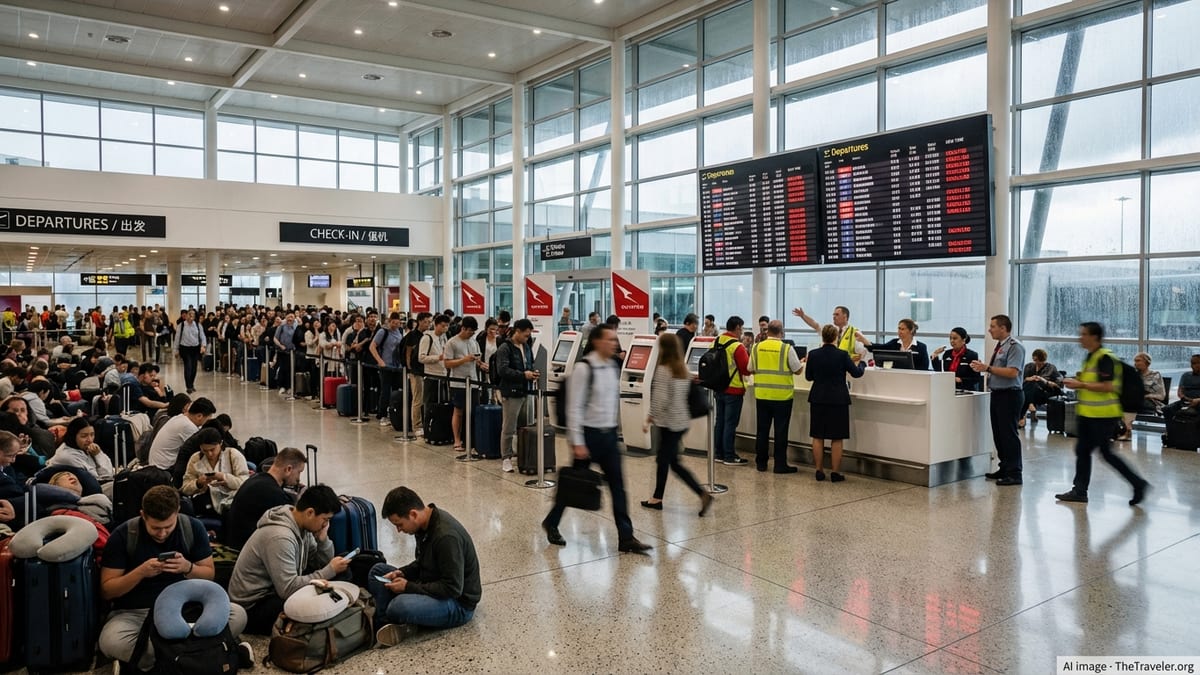
Wide-Ranging Disruptions Across Key Trans-Tasman Hubs
The latest disruption figures reflect a challenging operating day on some of the busiest corridors in the Australia–New Zealand market, with delays concentrated on routes linking Melbourne, Sydney and Auckland. Publicly available flight-status boards and tracking platforms show knock-on effects across both international and domestic sectors as aircraft and crew are moved to cover late-running services.
Melbourne and Sydney, the two largest Australian gateways, together handle millions of passengers a year on routes to and from Auckland, Queenstown and Christchurch, and recent traffic data highlights how critical these city pairs are to regional connectivity. When delays build on these links, the impact quickly ripples into connecting services for long-haul flights to North America, Asia and Europe, leaving travellers with missed connections and extended layovers.
Auckland, the main international gateway for New Zealand, is seeing similar pressure. Delayed departures and arrivals on trans-Tasman flights are feeding into the wider domestic network, affecting services to centres such as Wellington, Christchurch and Queenstown. Industry reporting on on-time performance shows that even modest schedule slippages on these trunk routes can significantly reduce overall reliability across the network.
While only three flights were recorded as cancelled, aviation performance reports note that even a small number of cancellations can cause disproportionate disruption when aircraft are tightly scheduled and load factors are high, particularly during school holidays or peak business travel periods.
Major Carriers Feel the Strain
Virgin Australia, Jetstar, Qantas and Air New Zealand, which collectively dominate trans-Tasman and trunk domestic routes in the region, all appear among the airlines affected by today’s disruption figures. Historical performance summaries from aviation regulators and transport ministries show that these carriers typically operate dense schedules between Melbourne, Sydney and Auckland, leaving limited slack when operational challenges arise.
On-time performance bulletins for recent months have highlighted varying reliability across the main airlines, with some carriers experiencing elevated delay and cancellation rates on key city pairs such as Melbourne to Sydney and Melbourne to Queenstown. These reports indicate that congestion, weather variability and air traffic control constraints have all contributed to pressure on schedules, particularly around Sydney, where previous analyses flagged repeated disruption periods.
Flight-tracking services for specific flights in and out of Auckland, Melbourne and Sydney in recent days show a mix of minor and more substantial delays. Some trans-Tasman sectors operated by the major carriers have been departing later than scheduled, while still arriving close to on time thanks to built-in buffer in flight times. Others have arrived significantly behind schedule, pushing crew and aircraft rotations out of alignment and complicating recovery operations later in the day.
Industry data on average delay times for several long-haul and regional services to and from Australia in June 2026 suggest that late operations are not isolated incidents but part of a broader pattern of pressure on airline and airport capacity, especially when adverse weather or operational constraints coincide.
Weather, Traffic and Operational Challenges Combine
While no single cause fully explains today’s 249 delays and three cancellations, publicly available aviation analyses from recent months point to a familiar mix of contributing factors. Weather patterns across southeastern Australia and the Tasman Sea can quickly affect visibility and crosswind limits at Melbourne and Sydney, leading to reduced runway capacity and inbound holding. When this occurs during busy bank periods, delays cascade rapidly through the schedule.
Air traffic control capacity has also been cited in recent regulatory and industry reporting as a source of timetable pressure, particularly at Sydney, where runway configuration, curfews and airspace complexity restrict flexibility. Even short restrictions during peak periods can push back departure times and compress turnarounds, leaving airlines little room to recover their schedules.
Operational factors within airlines further compound the situation. Maintenance requirements, crew duty limits and aircraft availability can all affect a carrier’s ability to respond quickly to disruption. Analyses of on-time performance published by competition and transport authorities across 2025 and into early 2026 note that some airlines have maintained relatively low cancellation rates, but often at the cost of longer departure delays as they prioritise operating services rather than cancelling them outright.
In today’s case, the balance of 249 delays to only three cancellations suggests that most airlines chose to operate flights later rather than remove them from the schedule, leading to extended waiting times for passengers but preserving overall connectivity across the network.
Knock-On Effects for Passengers and Connections
The consequences for travellers are significant, particularly for those relying on tight connections in Melbourne, Sydney or Auckland. Advice shared by frequent flyers and travel forums in recent weeks has highlighted growing concern about short transfer windows on itineraries that involve domestic links feeding into trans-Tasman or long-haul services, especially via Sydney where disruption risks are often perceived as higher.
Delayed arrivals from Melbourne into Sydney, for example, can place pressure on onward passengers booked to Auckland on the same ticket. While airlines typically rebook affected travellers on later flights, the high utilisation of aircraft on these routes can limit same-day alternatives. Where seats are available, passengers may still arrive many hours later than planned, disrupting business commitments and holiday itineraries.
In Auckland, late-running jets from Australia can also affect domestic services, as aircraft are turned around for flights to other New Zealand cities. Aviation punctuality reports from New Zealand’s transport authorities show that when trans-Tasman routes underperform, domestic on-time performance often slips in parallel, particularly at peak travel times in the morning and late afternoon.
For travellers caught up in today’s disruption, options typically include accepting revised itineraries, seeking meal or accommodation assistance where policies allow, or exploring rebooking on alternative flights or carriers. Consumer advocacy material summarising airline compensation and assistance policies for Australia and New Zealand notes that entitlements vary depending on the cause of disruption and whether a flight is domestic or international.
What Travellers Can Do on Disruption-Heavy Days
With 249 delays and three cancellations recorded across Australia and New Zealand today, the episode underscores the value of building additional time into itineraries, especially when connecting through Melbourne, Sydney or Auckland. Guidance from travel industry commentators and frequent-flyer communities consistently recommends avoiding tight connections on these routes where possible and considering longer layovers to reduce the risk of missed onward flights.
Passengers are also encouraged to monitor flight status through airline apps and airport boards from several hours before departure. Publicly available resources from airlines across the region indicate that many carriers now offer free same-day changes or flexible rebooking options when significant disruption is expected, allowing some travellers to shift to earlier or later services to improve their chances of an on-time journey.
Travel insurance remains another layer of protection. Product disclosures reviewed by consumer groups show that some policies will reimburse additional accommodation, meals and transport costs arising from long delays or cancellations, provided documentation such as airline delay notices and receipts is retained.
For the airline industry, today’s disruption snapshot adds to mounting pressure to improve reliability across the trans-Tasman and domestic networks serving Melbourne, Sydney and Auckland. As passenger numbers continue to rebound and new routes and frequencies are added, balancing growth with operational resilience is likely to remain a central challenge for Virgin Australia, Jetstar, Qantas, Air New Zealand and their competitors in the region.