


More news on this day
Hong Kong travel and employment agencies are warning clients to expect continued disruption on flights between Jakarta and the city, despite Indonesia’s main international gateway reopening after a powerful eruption of Mount Anak Krakatau covered air routes with volcanic ash and halted thousands of journeys.
Get the latest news straight to your inbox!
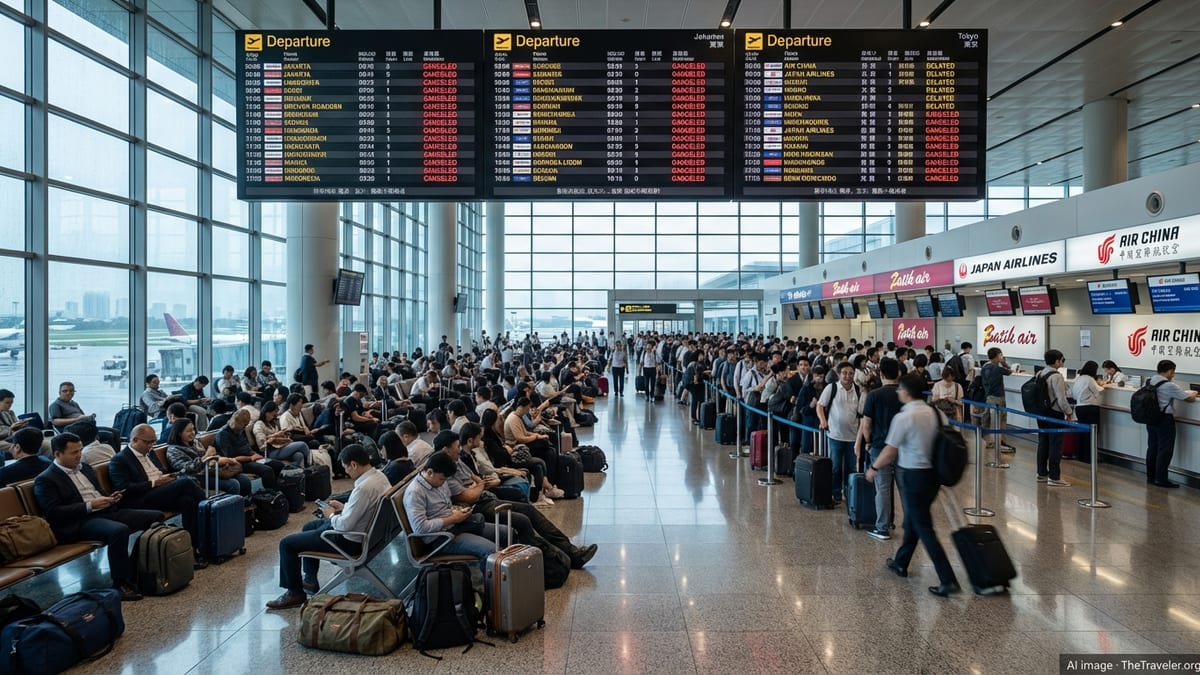
Backlogs persist after Soekarno-Hatta reopens
Indonesia’s Transport Ministry has confirmed that Jakarta’s Soekarno-Hatta International Airport and several affected regional airports have resumed operations after days of closures triggered by the Anak Krakatau eruption and its drifting ash cloud. Published coverage indicates that more than 200 flights at Soekarno-Hatta alone were cancelled, delayed or rescheduled during the shutdown, with hundreds more affected nationwide as ash contaminated key air corridors over western Indonesia.
Although runways and airspace around Jakarta are again open, airlines continue to clear a significant backlog of stranded passengers and reposition aircraft. Regional media reports describe a rolling recovery, with airlines adding relief services and altering schedules as they work through days of accumulated cancellations and missed connections. Industry observers note that even when take-offs resume, it can take several days for wide-body and regional fleets to return to normal patterns, particularly on popular routes linking Jakarta with major hubs including Hong Kong and Singapore.
According to published flight data and regional news coverage, some international carriers serving Jakarta have begun operating at reduced frequencies while monitoring further volcanic activity. Operators are also adjusting routings to avoid residual ash at cruising altitudes, which can force longer flight paths and narrower departure windows. This combination of operational constraints and high passenger demand is expected to keep pressure on seat availability in the short term.
Hong Kong helpers and families face extended waits
The disruption is having a pronounced impact on Hong Kong households awaiting the arrival or return of domestic workers from Indonesia, one of the city’s largest sources of migrant helpers. Recent reporting from Hong Kong outlets indicates that up to 200 helpers bound for the city remain stranded across Indonesia after the Anak Krakatau eruption forced widespread cancellations, with some now told to expect delays of at least a week.
Employment agencies in Hong Kong and Indonesia are responding by postponing new bookings and seeking alternative routings via less affected airports. Some firms are steering workers to depart from Surabaya or other eastern Indonesian cities where flight schedules have proved more stable, then connect onward to Hong Kong. Others are choosing to hold off on new ticket purchases altogether, citing concerns that further changes in volcanic activity could result in repeat cancellations and additional costs for families.
These delays come on top of the weeks-long administrative process required to secure work visas and complete pre-departure training. For Hong Kong employers, the eruption has introduced an extra layer of uncertainty, forcing some families to extend temporary childcare arrangements or pay additional agency fees associated with itinerary changes. Agencies are advising clients to brace for rolling adjustments to arrival dates until airlines clear backlogs and Indonesia’s aviation authorities signal a sustained period of stable operations at Soekarno-Hatta.
Travel advice urges vigilance as ash risk continues
Hong Kong’s Security Bureau has updated its outbound travel information for Indonesia to reflect the Anak Krakatau eruption, highlighting that ash emissions affected the capital region and disrupted local air traffic. The bulletin urges Hong Kong residents planning trips to Indonesia to monitor conditions closely, heed local announcements and stay in regular contact with airlines and tour operators regarding potential changes.
Indonesia’s own geological and disaster management agencies continue to track the volcano after what scientists describe as a continuous eruption lasting more than 24 hours. Public advisories cited in regional reporting emphasize that the probability of further eruptions remains elevated in the near term, with an exclusion zone of several kilometres maintained around the island volcano located in the Sunda Strait between Java and Sumatra.
Aviation authorities stress that even moderate ash emissions can prompt rapid changes to flight plans when winds push particles into busy air corridors. Volcanic ash is considered a significant threat to jet engines and onboard systems, and international safety protocols call for avoiding any visible or forecast ash cloud. As a result, routes linking Jakarta with other Asian hubs may continue to see short-notice schedule changes whenever new activity is detected at Anak Krakatau.
Airlines adjust schedules and deploy relief flights
Carriers across the region have begun deploying relief capacity and revising schedules to stabilise travel flows in and out of Indonesia. Singapore Airlines, for example, has announced a series of additional flights between Singapore and Jakarta to help move stranded passengers after Soekarno-Hatta reopened, while also advising customers to check online flight status tools frequently due to the fluid situation.
Flight-tracking data and regional media coverage show that services to and from Jakarta remain uneven, with some long-haul and regional departures cancelled or consolidated as airlines juggle crew duty times, maintenance requirements and aircraft positioning. Routes linking Jakarta with Hong Kong, Doha, Sydney and other long-haul destinations were among those initially affected when ash first spread into the airspace around the Indonesian capital.
Airlines are also re-evaluating their contingency plans for Indonesia’s busy western air corridor. Industry commentary suggests operators may keep additional aircraft on standby in nearby hubs or build greater slack into schedules during the current period of elevated volcanic risk. For travellers, this means that even confirmed bookings may be subject to last-minute changes, particularly on days when volcanic activity increases or wind patterns shift ash plumes closer to established flight paths.
What Hong Kong-bound travellers should do now
For travellers in Hong Kong with imminent plans involving Jakarta, publicly available guidance from aviation and consumer bodies recommends closely monitoring airline notifications, mobile apps and airport advisories. Passengers are being encouraged to reconfirm flight status before leaving for the airport and to consider flexible tickets or travel insurance purchased before the current eruption was classified as a known event.
Travel industry analysts note that passengers connecting through Jakarta to secondary Indonesian cities or onward to other parts of Asia are especially vulnerable to disruption while airlines prioritise clearing local backlogs. Where possible, some agencies are advising Hong Kong travellers to explore itineraries that route through alternative Indonesian gateways or neighbouring hubs in the coming days, particularly if their journeys are time-sensitive.
With Anak Krakatau’s activity still under close observation, forecasts suggest that operations at Soekarno-Hatta could oscillate between normal and reduced capacity depending on ash levels and wind direction. Hong Kong agencies therefore expect a period of lingering disruption on Jakarta routes, even as Indonesia’s main international airport regains momentum and airlines gradually restore their usual timetables.
South China Morning Post: Hong Kong agencies warn of lingering Jakarta flight delays Hong Kong Security Bureau: Outbound Travel Alert for Indonesia CNA: Jakarta airport suspends flights due to Mount Anak Krakatau ash Bernama: Anak Krakatau eruption disrupts flights at Soekarno-Hatta airport AP News: Flights to and from Indonesia resume after volcanic eruption