


More news on this day
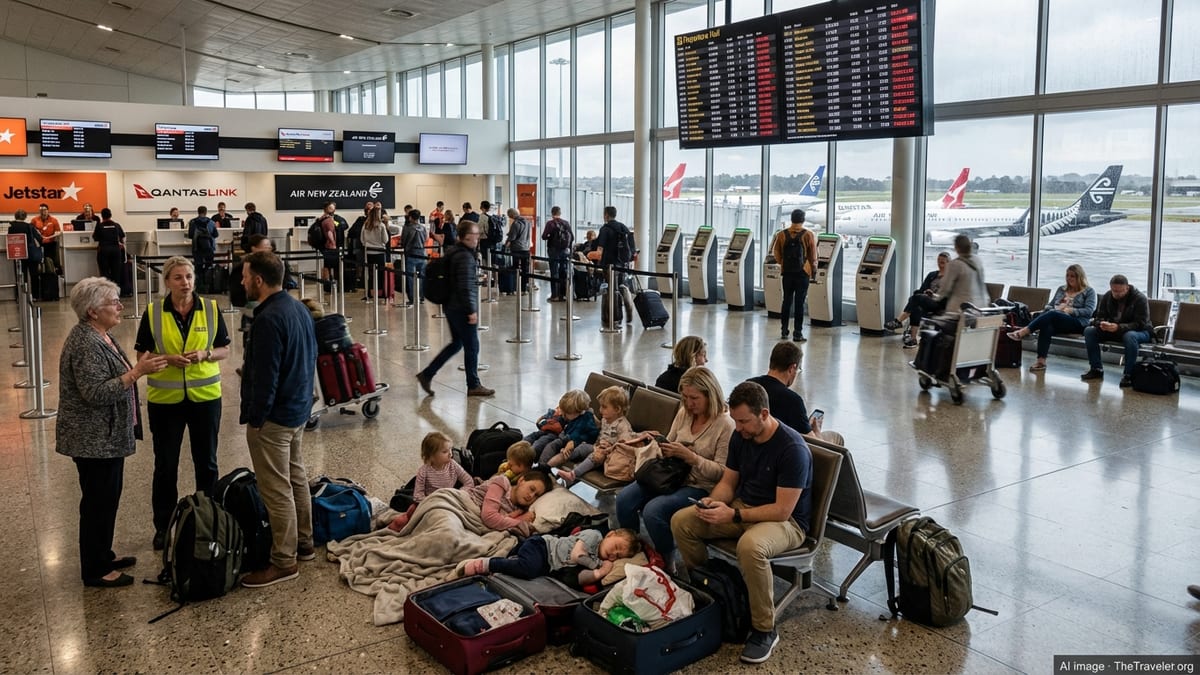
Passengers traveling through Melbourne, Sydney and Auckland are facing widespread disruption as publicly available tracking data shows 249 flights delayed and three cancelled across Australia and New Zealand, affecting major carriers Virgin Australia, Jetstar, Qantas, Air New Zealand and several regional operators.
Get the latest news straight to your inbox!
Major Hubs in Australia and New Zealand Under Pressure
The latest disruption is centered on some of the busiest gateways in Australasia, with Melbourne, Sydney and Auckland airports reporting elevated levels of congestion and late-running services. Real-time flight boards and tracking platforms indicate that knock-on delays are spreading across domestic and trans-Tasman networks, extending the impact well beyond the three headline cancellations.
Melbourne and Sydney are among the largest domestic hubs in Australia, and both play a critical role in connecting passengers to and from New Zealand. When services on trunk routes such as Melbourne to Sydney or Sydney to Auckland fall behind schedule, ripple effects can quickly propagate to secondary cities, as aircraft and crews arrive late for subsequent rotations.
Auckland, New Zealand’s primary international gateway, is experiencing similar pressure. Late inbound flights from Australia are reducing the buffer between arrivals and departures, which in turn increases the risk of missed connections and further schedule changes for onward domestic flights within New Zealand.
Publicly available operational data and prior performance reports underline how quickly conditions can deteriorate when punctuality slips on key Australia–New Zealand corridors. Recent on-time performance summaries for trans-Tasman routes show relatively modest cancellation rates but a significant proportion of flights arriving outside scheduled times, creating a fragile operating environment when weather or operational issues arise.
Key Airlines See Schedules Disrupted
Among the airlines affected in the latest disruption are Virgin Australia, Jetstar, Qantas and Air New Zealand, which together account for the bulk of capacity between Australia and New Zealand. Publicly accessible flight status pages on booking and tracking platforms list multiple late departures and arrivals for these carriers on routes linking Melbourne, Sydney and Auckland with other major cities.
At least three cancellations are currently recorded across the network, including services operated by Qantas and Virgin Australia on core domestic sectors such as Melbourne to Sydney and Adelaide to Melbourne. In addition, delays of between 30 minutes and several hours are being reported on a range of trans-Tasman flights, including services marketed by Qantas and Air New Zealand and, in some cases, operated as codeshares with alliance or partner airlines.
Jetstar, which relies heavily on Airbus A320-family aircraft for its domestic and trans-Tasman operations, is again prominent in real-time disruption tallies. The carrier has previously been affected by a combination of technical directives and fleet scheduling challenges on the A320, and published coverage in recent months has highlighted occasions when these issues contributed to rolling delays and cancellations across Australia and New Zealand.
Air New Zealand’s services into and out of Auckland are also encountering headwinds, particularly on high-frequency links to Australia. Public data on recent on-time performance trends for routes such as Sydney to Auckland and Queenstown to Sydney suggests that congestion and tight turnaround times can amplify even minor schedule disturbances, leading to late arrivals and departures that reverberate throughout the day.
Weather, Staffing and Operational Factors Combine
While precise causes for individual delays and cancellations vary by flight, recent patterns across the region point to a mix of weather, staffing, air traffic control constraints and technical factors. Published analyses of earlier disruption days in Australasia have noted the role of storms and low-visibility conditions, particularly around Brisbane and parts of the eastern seaboard, which in turn cause aircraft and crews to be out of position for later services.
Operational requirements and maintenance considerations are another recurring theme. Airlines across the region continue to balance fleet availability against high demand following the post-pandemic travel rebound. In the case of low-cost carriers operating dense schedules with limited spare aircraft, even a short, unscheduled maintenance stop can cascade into multiple delayed departures and, in some instances, cancellations when recovery options are limited.
Airports also play a part in the overall picture. When several carriers experience delays simultaneously at shared hubs such as Melbourne, Sydney and Auckland, congestion can build quickly at security, check-in and boarding gates. Adjustments to runway sequences and departure slots, driven by air traffic management requirements, may further slow the flow of aircraft, extending the length of delays even after initial issues have been resolved.
Recent public commentary and operational statistics from the Australian and New Zealand transport sectors indicate that punctuality has become a persistent challenge as carriers rebuild schedules to meet strong leisure and business demand. Although headline cancellation rates on major trans-Tasman routes remain relatively low, the frequency of late-running flights continues to generate frustration for travelers.
Knock-on Effects for Passengers Across the Network
The immediate impact of today’s disruption is concentrated among passengers departing or arriving in Melbourne, Sydney and Auckland, but the consequences are spreading to smaller cities through missed connections and aircraft redeployments. When an early-morning or mid-day service operates significantly late, subsequent flights using the same aircraft or crew often depart behind schedule, compounding delays through the afternoon and evening.
Travelers transiting through these hubs, particularly those relying on short connection windows, are among the most affected. Publicly available travel advisories and prior coverage of similar disruption events in the region emphasize the risk of booking tight same-day transfers on separate tickets, as airlines are generally not obliged to protect onward journeys sold by other carriers or intermediaries.
Family and leisure travelers bound for holiday destinations such as Queenstown, Wellington or coastal Australian cities may also face disrupted plans as late evening or final flights of the day depart behind schedule or are consolidated. Published guidance from previous disruption days highlights that when operations are strained, last departures are especially vulnerable, with limited fallback options if an aircraft or crew becomes unavailable.
For some passengers, the practical consequences include extended waits at the airport, unexpected overnight stays and the need to rearrange accommodation, rental cars or tour bookings. In cases where a flight is cancelled rather than delayed, rebooking options can be constrained on already busy routes, particularly during peak travel periods or weekends.
What Travelers Can Do if Their Flight Is Affected
Publicly available information from major airlines in the region outlines several options for passengers whose flights are delayed or cancelled. In general, carriers such as Qantas, Virgin Australia, Jetstar and Air New Zealand indicate that they will rebook affected travelers on the next available service operated by the same airline when a disruption occurs close to departure, subject to seat availability.
Where a delay or cancellation is within an airline’s control, policies referenced in consumer guidance and airline documentation may provide for additional support, including meal vouchers, accommodation for overnight disruptions and ground transport, depending on the circumstances and applicable law in Australia or New Zealand. When the primary cause is outside the carrier’s control, such as severe weather or air traffic control restrictions, entitlements may be more limited, although passengers are still generally entitled to a refund if the airline cannot provide the transport purchased.
Travel industry advice published in recent months strongly encourages passengers to monitor their flight status through airline apps and airport departure boards before leaving home or their hotel, especially on days when disruption is already widespread. Allowing extra time for security and immigration procedures, and avoiding the last flight of the day when same-day arrival is essential, are frequently cited strategies to reduce the risk of severe inconvenience.
Travelers are also increasingly urged to consider comprehensive travel insurance products that explicitly cover missed connections, extended delays and incidental expenses such as accommodation and meals. While such policies do not prevent disruption, they can mitigate some of the financial impact when events like today’s wide-ranging delays and a handful of cancellations affect journeys across Australia and New Zealand.