

More news on this day
Travelers passing through Dallas Love Field on June 20 are encountering significant schedule disruptions, with publicly available tracking data indicating around 105 delayed flights and at least one cancellation, affecting Southwest Airlines and other carriers on key domestic routes to Houston, Denver, Chicago, Atlanta, Las Vegas, and Phoenix.
Get the latest news straight to your inbox!
Weather and Airspace Constraints Ripple Across Dallas Network
Flight tracking boards for Saturday show Dallas Love Field coping with a fresh round of delays as summer weather unsettles air traffic across North Texas and beyond. Recent storms and airspace flow restrictions in and out of the Dallas area have produced rolling ground delays in recent days, a pattern that often results in aircraft and crews being out of position for the following morning’s departures.
Publicly available information from airline and airport data services indicates that Love Field departures and arrivals are seeing hold times that push many flights beyond the 15 minute threshold commonly used in the United States to define a delay. Short haul sectors to nearby hubs, including Houston and Atlanta, can be particularly vulnerable when convective weather forces wider rerouting and spacing of aircraft.
North Texas travelers have reported similar conditions at Dallas Fort Worth International in recent days, with accounts of extended waits, repeated schedule changes, and late night cancellations. When Dallas area airports slow or pause operations because of storms or congestion, the resulting backlog frequently spreads across multiple states and affects flights well into the next operating day.
With the summer travel season ramping up and aircraft already scheduled closely together, relatively brief interruptions can translate into a steep buildup of delayed departures. The situation at Love Field on June 20 reflects that dynamic, with a high proportion of the day’s schedule running behind.
Southwest at the Center of Love Field Disruptions
As the dominant carrier at Dallas Love Field, Southwest Airlines experiences the greatest operational impact whenever there is a disruption at the airport. The airline’s point to point network relies heavily on tight turns, where an arriving aircraft is turned quickly for its next departure. When one leg is slowed by weather, air traffic control programs, or congestion at a connecting airport, the following flights often inherit those delays.
Tracking data for Love Field shows that a majority of the delayed flights on June 20 involve Southwest-operated services, including departures to major leisure and business destinations such as Las Vegas, Phoenix, Denver, and Chicago. Many of these routes are typically served multiple times per day, which can help airlines rebook passengers but also raises the risk of knock on congestion when multiple flights on the same route depart late.
Some published coverage and passenger reports from the past week describe late evening operations at Love Field where flights were pushed back repeatedly before eventually departing hours behind schedule or being cancelled altogether. In those cases, aircraft and crews arriving after midnight can cascade delays into the next morning’s wave of departures, as strict crew duty limits and maintenance requirements narrow the options for recovery.
The impact is not limited to outbound travelers from Dallas. Inbound flights bound for Love Field from other Southwest focus cities can be held at their origin airports when Dallas encounters a ground delay program, creating further disruption for passengers trying to connect or end their journeys in North Texas.
Other Carriers and Key Domestic Routes Affected
While Southwest accounts for the majority of operations at Love Field, other carriers also serve the airport and are part of the current disruption picture. Regional and mainline flights operating under larger airline brands show scattered delays, particularly on connections feeding into broader national networks through cities like Atlanta and Chicago.
According to publicly accessible status boards, services between Dallas Love Field and Houston area airports are experiencing repeated short delays as weather and traffic management initiatives tighten departure spacing in busy air corridors along the Gulf Coast. These routes, often less than an hour in the air, can easily slip behind schedule when ramp operations slow or when aircraft wait for a new departure slot.
Longer segments from Love Field to Denver, Las Vegas, and Phoenix are also affected, with some flights departing well beyond scheduled pushback times. These mid continent and desert destinations often operate at or near capacity during peak travel periods, making it more challenging for airlines to absorb disrupted passengers onto later departures.
Flights to Chicago and Atlanta, which connect travelers to some of the country’s largest hubs, show the same pattern of incremental delays. For passengers relying on tight onward connections at those airports, even modest slippage departing Dallas can translate into missed links and overnight stays away from home.
Passenger Experience: Long Waits, Rolling Schedule Changes
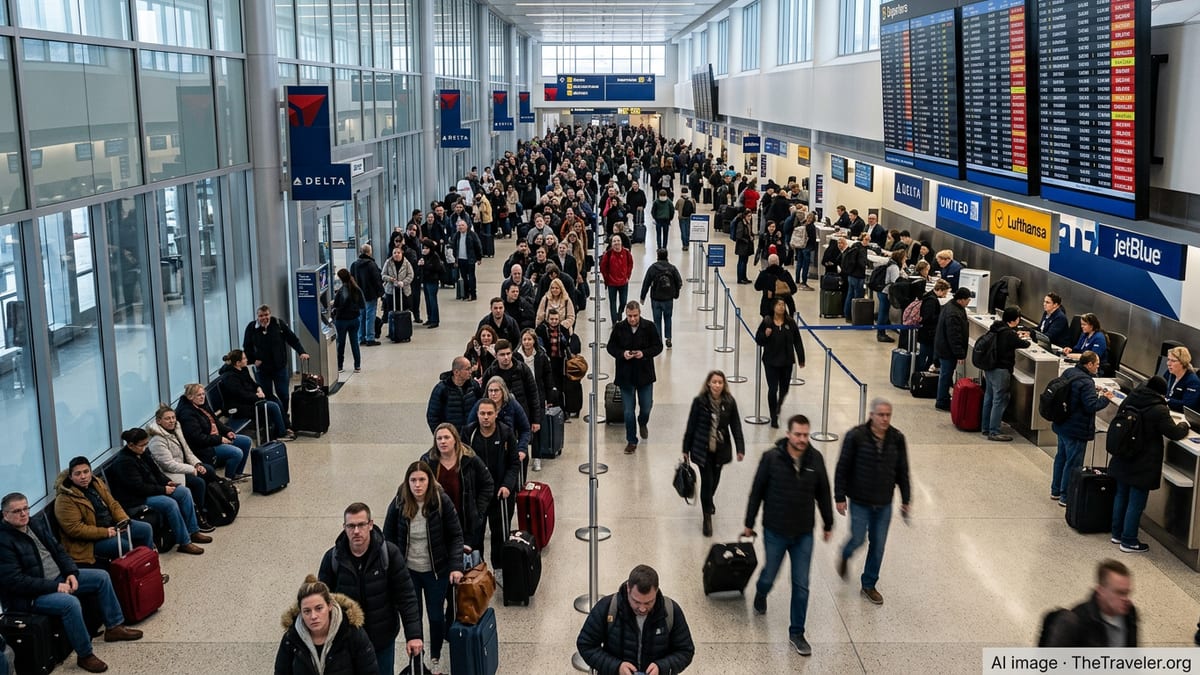
For travelers inside the terminal at Dallas Love Field, the operational challenges translate into crowded gate areas, shifting departure times, and extended periods of uncertainty. Reports shared on social media and travel forums in recent days describe passengers enduring several hours of waiting as departure estimates move in small increments, a common practice when airlines are attempting to preserve the option of operating a flight rather than cancelling it outright.
At times, passengers have reported boarding flights after lengthy delays only to receive notification of a further schedule change or cancellation while seated on the aircraft. These circumstances can strain airport amenities, with concessions, restrooms, and seating areas facing heavy demand during irregular operations.
Some travelers have noted that disruption in Dallas is not necessarily tied to visibly severe weather at the airport itself. Storms in other parts of Texas and the surrounding region, or staffing constraints at air traffic facilities, can trigger system-wide programs that slow arrivals and departures across multiple airports, including Love Field.
With high passenger loads typical of summer weekends, rebooking options for those whose flights are significantly delayed or cancelled may be limited. Remaining seats on later flights to popular destinations such as Las Vegas and Phoenix can sell out quickly, leaving some travelers to contend with overnight stays or multi stop routings.
Advice for Travelers Heading Through Dallas Love Field
Given the number of delayed flights at Dallas Love Field on June 20, travel experts and seasoned fliers often recommend several practical steps for those with upcoming itineraries through the airport. Monitoring flight status early and frequently on airline apps or flight tracking tools can provide advance warning of disruptions before leaving for the airport.
Passengers connecting onward from cities such as Houston, Denver, Chicago, Atlanta, Las Vegas, or Phoenix may benefit from building in additional connection time, especially during peak afternoon and evening periods when thunderstorms and traffic volume can combine to slow operations. When possible, selecting earlier departures can also offer more recovery options later in the day if something goes wrong.
Travel industry guidance commonly advises keeping essential items, including medications, chargers, and a change of clothes, in carry on baggage in case of lengthy tarmac waits or unexpected overnight stays. During stretches of irregular operations, hotels near Dallas airports can fill quickly, so travelers facing cancellations often try to secure accommodation and revised itineraries as soon as a significant disruption appears likely.
As Dallas Love Field works through the current wave of delays and a single cancellation on an otherwise heavy schedule, the situation highlights the vulnerability of tightly wound summer flight networks. Even a limited number of storms or airspace restrictions can create a ripple effect that touches multiple cities and carriers across the domestic system.