


More news on this day
The fatal collision of two passenger trains near Bedford on June 19, which left one driver dead and scores of passengers injured, is prompting renewed scrutiny of Britain’s rail signalling and train protection systems along one of the country’s busiest routes.
Get the latest news straight to your inbox!
Focus turns to how two southbound trains collided
Published coverage indicates that two East Midlands Railway services, both travelling south towards London St Pancras, collided on the Midland Main Line between Bedford and Luton during the evening peak on Friday. Rail tracking data cited in multiple reports shows that a Nottingham to London service came to a halt south of Bedford before being struck from behind by a Corby to London train running on the same line.
According to reports summarising information from the scene, at least one train driver died and around 90 to 100 people were injured to varying degrees, with several in critical condition. Images and eyewitness accounts carried by national and regional media describe crumpled carriages, shattered interiors and passengers being thrown from their seats as the rear train ploughed into the stationary service.
The collision has blocked the main north–south rail artery in the area, with Thameslink and East Midlands Railway services suspended or heavily disrupted between Luton and Bedford. National Rail service updates indicate that engineering access and emergency investigations are expected to affect travel for several days, with knock-on delays reaching into wider regional and long-distance networks.
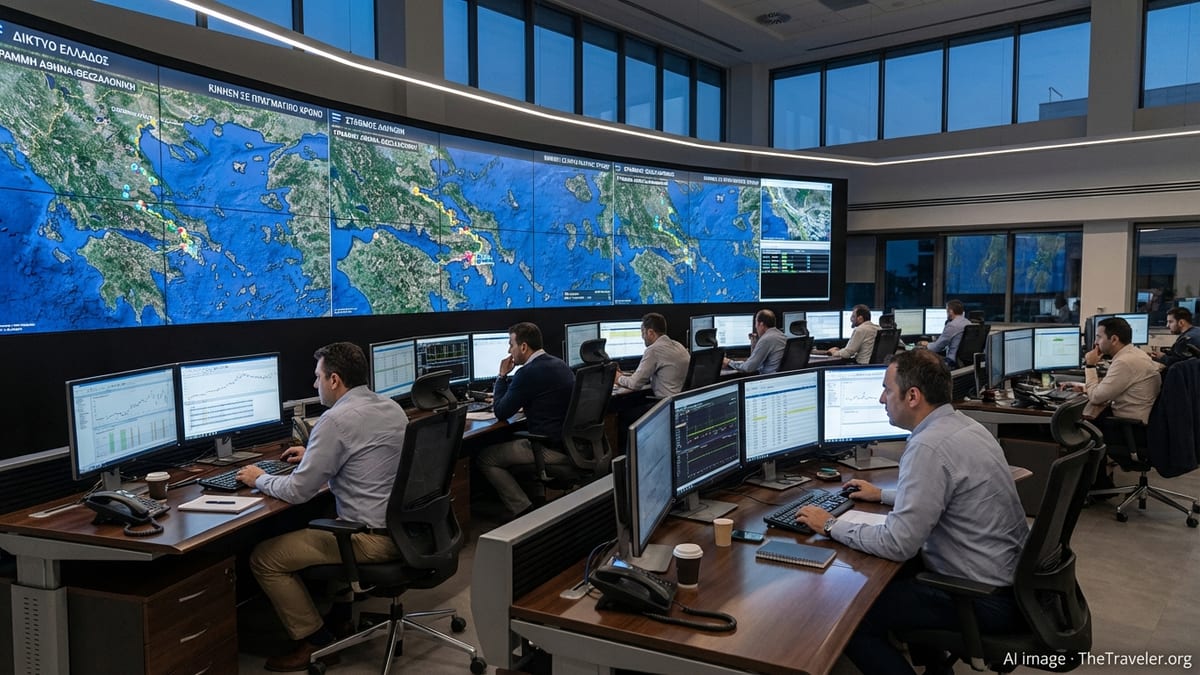
Specialist investigators from Britain’s rail accident investigation bodies are now examining the sequence of events, including train data recorders, trackside equipment and signal box logs. While the formal investigation is at an early stage, attention is rapidly centring on how a modern signalled main line permitted a rear-end collision between two passenger services travelling in the same direction.
Modern signalling and train protection under examination
The section of line south of Bedford forms part of the electrified Midland Main Line, which is equipped with colour-light signals, track circuits or axle counters to detect trains, and a suite of train protection technologies designed to prevent collisions and overspeed incidents. Publicly available technical material and past safety reports explain that these systems are intended to maintain a safe distance between trains by dividing the track into sections and only allowing a following train to proceed when the section ahead is confirmed clear.
In principle, a stopped train should be protected by at least one red signal and associated safety margins. On many parts of the network, this is backed up by systems such as the Automatic Warning System (AWS), which alerts the driver to restrictive signals, and the Train Protection and Warning System (TPWS), which can automatically apply the brakes if a train passes a red signal at danger or approaches too fast.
Commentary from rail operations specialists and enthusiasts, shared across industry publications and public forums in the hours after the crash, highlights the apparent rarity of such rear-end collisions on signalled main lines in Britain’s recent history. Questions are being raised about whether there was a signalling irregularity, a failure or absence of certain train protection modules at the crash location, or a train-borne fault that prevented safety systems from operating as designed.
Published discussions referencing technical diagrams of the area suggest that some tracks on this stretch may rely on a combination of legacy and more modern protection systems, with variations in how TPWS equipment is installed. Investigators are expected to consider whether the particular configuration of the line, the trains involved and any degraded operating conditions combined in an unforeseen way on the day of the crash.
Historical context of signalling failures and near misses
The Bedford collision is being placed in the context of past rail accidents where signalling or train protection issues played a role. Historical case studies, such as the Barnes rail crash in 1955 and several signal-related collisions in mainland Europe, are frequently cited in rail safety literature as examples that drove successive upgrades to block signalling, interlocking and automatic train stop systems.
More recent investigation reports from the UK’s Rail Accident Investigation Branch show how even non-fatal incidents, including near misses and overspeed events, have triggered incremental improvements. These have ranged from better positioning of train stop loops and refinements to signal sighting, to enhanced training for signallers and drivers in degraded modes of operation when equipment is faulty or out of service.
Internationally, comparisons are being drawn with collisions in countries where advanced automatic train control or cab signalling was present but not universally fitted to all rolling stock or routes. In several of those cases, investigators found that gaps in coverage or transitional interfaces between signalling systems created vulnerabilities that were only exposed under unusual combinations of failures and human factors.
For rail travellers, the key question now is whether the Bedford crash will reveal a similar systemic weakness on a core British main line, or instead point to an isolated but tragic combination of technical fault and human decision-making. The answer is likely to influence how far-reaching any subsequent recommendations will be.
Impact on passengers and the wider network
In the immediate aftermath, the crash has severely disrupted rail travel into and out of London on the Midland Main Line. National Rail and operator service updates show that fast and stopping services between London, Bedford, Leicester, Nottingham and beyond have been cancelled, diverted or replaced by buses, significantly lengthening journey times for both commuters and long-distance passengers.
Neighbouring routes, including alternative corridors into London and cross-country connections, are experiencing higher passenger loads as travellers seek to reroute. Industry briefings referenced in regional transport coverage indicate that planners are working to balance the need for investigative access to the crash site with pressure to restore at least a limited rail service through the area.
For rail users, the Bedford collision arrives during a period of already frequent timetable changes linked to infrastructure upgrades, signalling renewals and rolling stock introductions on several main lines. Travel advisories ahead of the summer have urged passengers to check journey planners and live updates more regularly, and the latest disruption around Bedford is expected to reinforce that message.
Tourism bodies and regional business groups are monitoring the situation, amid concerns that sustained disruption on a key north–south corridor could affect visitor numbers, conference travel and day trips that rely on reliable rail connections into central London. How long the line remains partially blocked will depend on the progress of recovery work and the early conclusions of investigators about track and signalling repairs.
What investigators are likely to probe in coming weeks
Rail accident investigations in Britain typically unfold in several stages, beginning with evidence gathering at the scene, followed by technical analysis and, eventually, interim and final reports. Based on the approach seen after previous major incidents, specialists are expected to examine the status of all relevant signals before and during the event, the functioning of AWS and TPWS at the site, and any recorded faults in the signalling control systems.
Data from onboard recorders, sometimes described as the railway equivalent of flight data recorders, will be crucial in reconstructing the behaviour of both trains in the minutes leading up to the collision. This includes their speeds, braking profiles, responses to signal aspects and any safety-system interventions or alarms presented to the drivers.
Investigators are also likely to review maintenance and inspection records for track circuits, axle counters and lineside equipment in the Bedford area, alongside any recent engineering work or known issues that might have left the system in a degraded configuration. Training and operating procedures for signallers and drivers when confronted with equipment faults will come under scrutiny, particularly if the crash occurred while the railway was already operating under special instructions.
Any recommendations that emerge, whether focused on technology, procedures or organisational responsibilities, will feed into ongoing debates about the pace of signalling modernisation and the roll-out of more sophisticated systems. For passengers and rail staff alike, the Bedford crash has abruptly brought the often invisible world of signalling engineering into sharp and deeply personal focus.