


More news on this day
Delta Air Lines’ prolonged struggle to recover from last summer’s CrowdStrike-linked IT outage is once again rippling through its network, with Detroit Metropolitan Wayne County Airport emerging as one of the hardest hit hubs as renewed schedule disruptions and rolling cancellations trigger fresh travel chaos across the United States.
Get the latest news straight to your inbox!
Detroit Emerges as Flashpoint in Delta’s Network Disruptions
Recent schedule data and media coverage indicate that Detroit Metropolitan Wayne County Airport, one of Delta’s largest hubs, has seen waves of cancellations and extensive delays as the carrier works through lingering operational fragilities exposed by the 2024 technology failure. The impact has been felt across both domestic and transborder routes, with knock-on effects for connecting travelers throughout the Midwest and beyond.
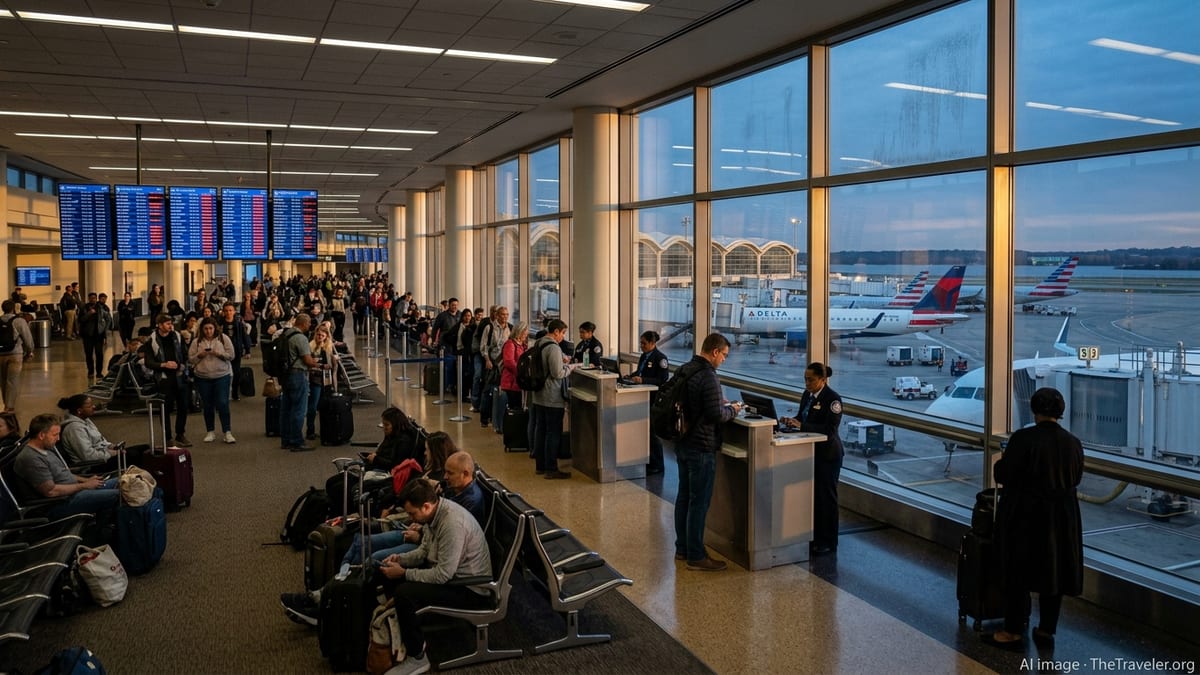
Scenes at Detroit Metro have included long queues at check in and customer service desks, terminal corridors lined with passengers seeking rebooking options, and baggage halls struggling to keep pace with offloaded luggage from scrubbed flights. Publicly available flight tracking data shows that Detroit has repeatedly ranked among U.S. airports with the highest number of same day Delta cancellations during the most recent bouts of disruption, underscoring its central role in the airline’s hub and spoke system.
Capacity constraints at Detroit add to the strain. Delta relies on tightly timed banks of departures and arrivals to feed connections through the hub, and any breakdown in aircraft or crew positioning quickly cascades across the schedule. Once cancellations mount, open seats for rebooking become scarce, leaving many travelers facing overnight delays or multi stop routings to reach their destinations.
Local reports from the Detroit area further describe confusion over flight status updates and limited same day alternatives, particularly on key business and leisure routes to coastal cities. Travelers connecting onward to international flights have been especially vulnerable when inbound segments to Detroit are canceled or substantially delayed, severing onward itineraries.
CrowdStrike Outage Casts a Long Shadow Over Delta
The renewed turmoil comes against the backdrop of one of the most significant aviation IT crises in recent memory. In July 2024, a defective software update from cybersecurity provider CrowdStrike triggered system failures across millions of Windows devices worldwide, hitting airlines, financial institutions and other critical services. Delta was among the hardest hit U.S. carriers, with the disruption crippling key operating systems and cascading into days of cancellations and delays across its network.
According to aviation data cited in multiple news reports, Delta ultimately canceled more than 4,500 flights in the immediate aftermath of the July 19, 2024 event, far more than any other airline. Official overviews of the incident describe a prolonged recovery period as the carrier struggled to restore crew tracking, dispatch and other core platforms that underpin daily operations.
Subsequent analyses note that Delta’s heavy reliance on Windows based infrastructure magnified the effect of the faulty update, resulting in a slower restoration compared with some competitors that were able to reboot or switch to backup systems more quickly. Delta’s leadership has publicly quantified the financial impact in the hundreds of millions of dollars and has indicated plans to seek compensation from CrowdStrike through legal channels.
Regulators have also increased scrutiny. Public statements from the U.S. Department of Transportation describe the July 2024 disruption as a controllable event from the airline’s perspective, opening the door to enforcement actions related to customer care, refund handling and disclosure. This classification has shaped expectations for how Delta responds to subsequent breakdowns in service, including the latest wave of cancellations affecting Detroit and other hubs.
Passengers Face Missed Connections, Overnight Stays and Limited Alternatives
For travelers passing through Detroit Metro this season, the operational stress has translated into a familiar pattern of missed connections, unexpected overnight stays and uncertain rebooking options. Flight tracking services and airline schedule records indicate that on peak disruption days, a significant share of Delta’s departures from Detroit have been either canceled outright or subject to multi hour delays, compressing the remaining schedule and straining customer service resources.
Reports from other major Delta centers, including Atlanta, Minneapolis St. Paul and Salt Lake City, show similarly elevated disruption levels, suggesting that Detroit’s turmoil is part of a broader network wide imbalance rather than an isolated local issue. When dozens of flights in a single hub bank are scrubbed, aircraft and crews often end up out of position for subsequent rotations, amplifying the impact on later departures from Detroit and downline stations.
Publicly available information on Delta’s customer policies indicates that affected passengers may be eligible for fee waivers, refunds on unused segments or rebooking at no additional cost when flights are canceled or significantly delayed. However, travelers have reported difficulty securing prompt assistance during peak disruption periods, with call centers inundated and in person queues stretching for hours in Detroit and other affected airports.
Accommodation and ground transport have become additional pain points. During the 2024 outage, hotels and rental car companies in hub cities were quickly overwhelmed, and similar pressures are now resurfacing when cancellation volumes spike. Passengers stranded overnight in Detroit often find limited availability near the airport and may need to venture farther into the metropolitan area in search of last minute rooms.
Operational Resilience and IT Strategy Under Renewed Pressure
The recurring disruptions centered on Delta’s hubs, including Detroit, are intensifying debate over the airline’s technology strategy and operational resilience. Industry analysts note that the 2024 CrowdStrike incident exposed the risks of heavy dependence on a single operating system and vendor stack for mission critical functions such as crew scheduling, maintenance tracking and airport operations.
Follow up coverage in aviation and technology publications has highlighted Delta’s efforts to harden its systems, including diversifying platforms, improving rollback procedures for third party updates and expanding manual contingency tools. Even so, the persistence of large scale cancellations when new disruptions occur suggests that key parts of the operation remain tightly coupled to complex IT architectures that are difficult to restart once they fail.
Aviation experts point to the experience of other U.S. carriers that recovered more quickly from the global IT outage as an indication that redundancy, distributed systems design and frequent failover drills can mitigate the worst effects of such events. Comparisons between carriers have become a reference point for regulators and consumer advocates assessing whether current levels of disruption are in line with reasonable expectations for a modern airline.
At Detroit and other Delta hubs, these broader questions are playing out in real time for passengers whose immediate concern is simply getting to their destinations. As travel demand remains robust and aircraft utilization stays high, any renewed IT instability or staffing shortfall risks triggering another round of cancellations, reinforcing Detroit’s role as a bellwether for Delta’s ability to deliver a stable schedule after one of the most consequential technology failures in recent aviation history.