


More news on this day
Rail services in central England faced major disruption on Friday after two East Midlands Railway passenger trains collided near Bedford, leaving one person dead and injuring many others on a busy commuter corridor into London.
Get the latest news straight to your inbox!
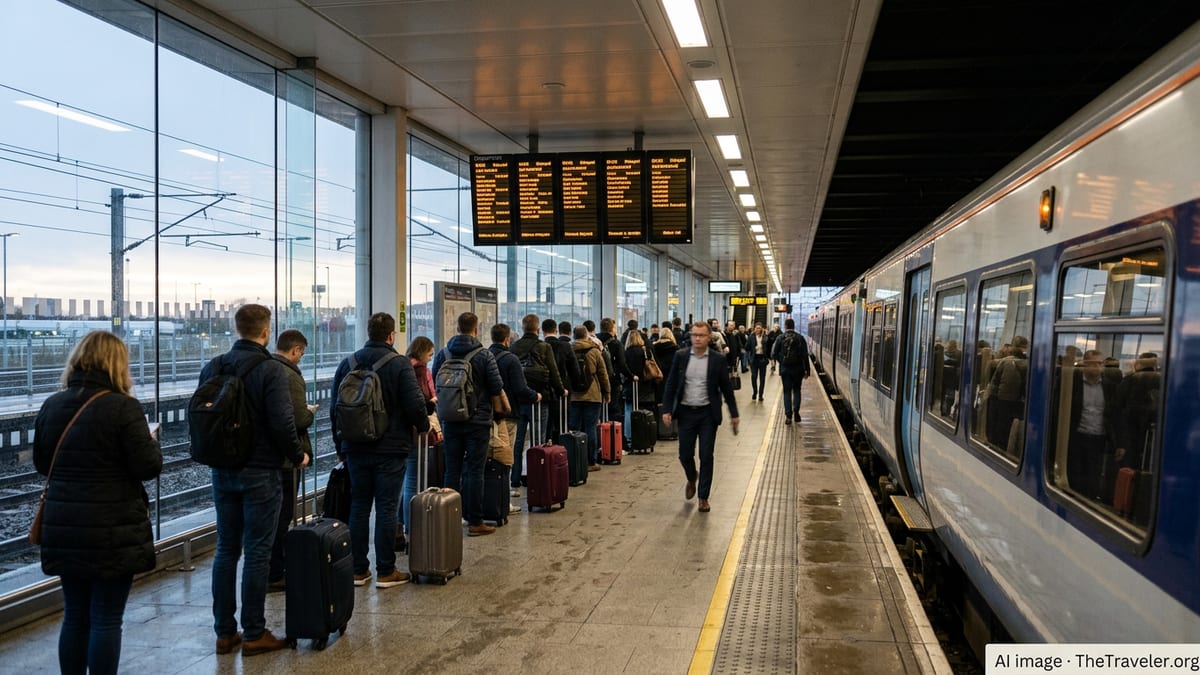
Collision on key London corridor
Published reports indicate that the crash occurred on the afternoon of Friday 19 June on the main line between Bedford and Luton, a key route carrying fast services into London St Pancras station. Two southbound East Midlands Railway services, both heading towards the capital, were involved in the collision just a few miles south of Bedford.
Information from rail tracking outlets and early national and regional coverage suggests that one train had either stopped or significantly reduced speed when it was struck from behind by a following service. Both trains were reported to be high-speed intercity-type services operating on the busy Midland Main Line, which links London with towns and cities including Nottingham, Corby and Sheffield.
Emergency responders were deployed in large numbers, with air ambulances and specialist hazardous incident teams seen heading to the scene. Images and video shared on social media and compiled by news organisations showed at least one train set with severe damage at one end, as well as a substantial presence of police, fire and ambulance vehicles along the line.
Services on the affected route were suspended for the remainder of the day as responders continued their work and rail engineers began assessing the damaged trains and infrastructure. Passengers were advised to seek alternative routes or delay travel, as no timescale was initially given for the full reopening of the line.
Fatality and multiple injuries reported
According to publicly available information collated by several outlets, at least one person died in the crash. Early reports from the scene indicated that the fatality was believed to be a member of train crew, although full details about the victim had not been released as investigations continued and next of kin were informed.
Passenger accounts gathered by domestic and international media describe a sudden, violent impact that threw people forward in their seats, leaving many with visible injuries. Some travellers reported broken bones, cuts and heavy bruising, while others described scenes of confusion as carriages filled with dust and debris immediately after the crash.
Hospitals in the wider Bedfordshire area reported operating under pressure following the incident, with local coverage noting requests for residents to use emergency departments only for the most urgent cases while casualties from the collision were treated. Dozens of people are understood to have been assessed at the scene, with a number transferred to hospital for further care.
Transport and rail industry figures publicly expressed sympathy for those affected and acknowledged the scale of the response required. The incident has drawn widespread attention across the United Kingdom and internationally, given the relative rarity of serious passenger train collisions on Britain’s rail network.
Major incident declared and rail network disruption
Regional and national coverage states that a major incident was declared shortly after first reports of the crash emerged around the middle of the afternoon. British Transport Police and local forces coordinated with fire and ambulance services to manage access to the site, which lies on one of the country’s most important intercity corridors.
All lines between Bedford and Luton were initially blocked, affecting not only East Midlands Railway’s intercity and airport services but also other operators using the route. With the main line into London St Pancras closed in both directions, significant delays and cancellations rippled across the wider network, disrupting journeys well beyond Bedfordshire.
East Midlands Railway’s own service updates indicated that trains to and from London St Pancras were suspended or heavily curtailed, with passengers told not to attempt to travel on the affected parts of the route. Replacement road transport was difficult to organise at short notice due to the volume of people already en route, and journey planners showed severe crowding at alternative stations.
Rail analysts noted that the location of the incident, on a key stretch of four-track railway used by both fast intercity and stopping commuter services, made the operational impact particularly acute. The line is a principal artery for both regional passengers and air travellers using Luton Airport, compounding the disruption caused by the collision.
Early focus on signalling and train protection systems
While the causes of the crash have not yet been formally established, commentators and rail specialists quoted across multiple reports have pointed to the likely involvement of signalling or train protection systems. Initial indications from rail data sources suggest that the leading train may have been stationary or moving slowly because of a technical fault linked to onboard safety equipment, with the following service then running into the rear of the train.
Public discussion in rail forums and on social media, referenced by news outlets, has centred on how a rear-end collision could occur on a modern, signal-controlled main line where multiple layers of protection are designed to prevent trains entering an occupied block of track. Some experienced railway observers have highlighted the possibility of a signal being passed at danger, combined with complex junction layouts and human factors, although these theories remain unconfirmed.
The Rail Accident Investigation Branch is expected to lead a detailed inquiry into the circumstances of the collision, supported by the industry safety regulator and infrastructure owner. Investigators typically examine train data recorders, signalling logs and radio communications, while also interviewing staff and passengers to build a full picture of events leading up to an incident.
In previous major rail crashes in the United Kingdom, interim findings have sometimes prompted rapid safety changes, while final reports have led to longer-term modifications to equipment, procedures and training. Observers note that the Bedford collision is likely to undergo similar scrutiny, given its location on a flagship intercity route and the deployment of relatively new rolling stock on at least one of the services involved.
Safety record under renewed scrutiny
Britain’s railway network is often cited in international comparisons as having a strong overall safety record for passengers, with very few fatal train-to-train collisions in recent decades. Nonetheless, Friday’s crash has prompted renewed public debate about the capacity of ageing infrastructure, growing passenger numbers and the pace at which advanced protection technologies are rolled out across busy main lines.
Commentators have linked the incident to wider concerns about resilience on key rail corridors, where a single blockage can quickly cause national-level disruption. The section of line south of Bedford has seen ongoing investment and timetable changes in recent years, as operators seek to balance intercity, commuter and airport traffic on a constrained corridor.
Rail user groups and transport commentators have also highlighted the emotional impact on those caught up in the collision and their families, as well as on staff across the industry. Calls for clear communication, practical support for affected passengers and transparency around the investigation have featured prominently in public discussion since the first reports emerged.
As services are progressively restored and investigators begin their work, attention is expected to focus on what lessons can be drawn from the Bedford crash to prevent a similar event in the future. For many regular users of the route, the incident represents a shocking interruption to an everyday journey, underlining how heavily the region relies on the rail network that threads through Bedfordshire into the heart of London.