

More news on this day
Days of rolling flight disruptions at Atlanta’s Hartsfield-Jackson airport have left Delta Air Lines customers bound for Peru facing hours-long delays, missed connections and, in some cases, unexpected overnight stays in the world’s busiest hub.
Get the latest news straight to your inbox!
Peru Routes Snagged in Broader Atlanta Disruptions
Publicly available flight-tracking data show that Delta’s services between Atlanta and Lima, a key gateway for travelers heading to Peru, have been repeatedly affected during a turbulent stretch of operations in mid-June. One of the airline’s primary Atlanta to Lima departures has run late on several consecutive days, while another service was listed as canceled, leaving would-be travelers scrambling for alternatives and pushing many into overnight stays in Atlanta hotels or on terminal benches.
The Peru-bound backlog has unfolded as Atlanta experiences wider operational strain. Reporting focused on June 13 and June 14 describes intense thunderstorms over Georgia that temporarily turned Hartsfield-Jackson into a chokepoint, slowing departures and diversions across domestic and long haul networks. Additional coverage from June 15 highlights nearly one thousand delays and dozens of cancellations tied to carriers operating out of the hub, with Delta bearing a substantial share of the disruption pressure.
Travel industry outlets indicate that when a major hub like Atlanta slows down, flights to South America are particularly vulnerable. These long haul departures tend to operate in concentrated evening banks and depend heavily on passengers and aircraft arriving from multiple U.S. cities. A single delayed inbound from the Midwest or West Coast can compress the turnaround time for a Lima departure, or, in more severe cases, prompt a cancellation if crew duty limits or maintenance windows are breached.
For travelers focused on reaching Peru, the convergence of storms, network congestion and tight crew rotations has translated into lengthy queueing at Delta counters, repeated gate changes and anxious overnight waits for scarce rebooking options to Lima and onward destinations such as Cusco, Arequipa and Iquitos.
Stranded in the Hub as Rebooking Options Narrow
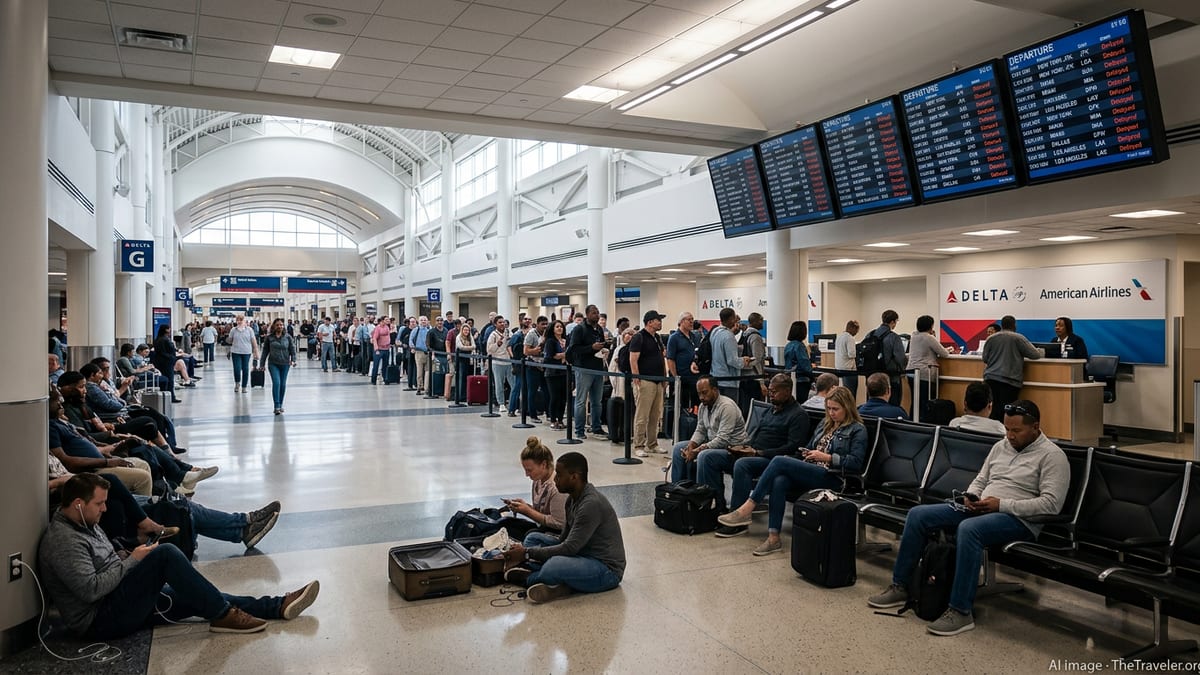
First hand accounts circulating on social media platforms and travel forums describe scenes of crowded concourses, long customer service lines and passengers sleeping on the floor near the international gates used for flights to Latin America. Some travelers report arriving in Atlanta on time from feeder cities only to discover that their onward Peru flights were delayed for hours or, in certain instances, removed from departure boards altogether and reclassified as canceled.
Commentary shared by affected passengers suggests that rebooking has been complicated by high summer load factors and the relatively small number of daily nonstop flights from Atlanta to Lima. With seats on later Delta departures already heavily booked, many stranded customers recount being routed through secondary hubs in the United States or via partner airlines through other South American gateways, sometimes adding a full day or more to their itineraries.
Stories collected from online communities dedicated to Delta travel point to a pattern familiar to frequent flyers through Atlanta. When a wave of delays pushes late night arrivals past midnight, airport infrastructure such as the underground tram and many concessions close for the night, even as international passengers continue to land or wait to depart. Travelers bound for Peru describe spending the early hours navigating darkened terminals and relying on vending machines or limited overnight food options while they waited for updated departure information.
In some cases, travelers recount that hotels near the airport quickly filled, leaving those without early rebooking or elite status with few realistic alternatives beyond staying in the terminal. Families with small children and older passengers appear to have been particularly affected by the shortage of nearby rooms during the peak of the disruption.
Operational Stress Adds to Recent Scrutiny of Delta
The latest difficulties for Peru-bound passengers come against a backdrop of heightened attention on Delta’s handling of irregular operations. Recent reporting on federal oversight shows that transportation regulators examined the airline’s response to a 2024 global information technology outage that caused widespread cancellations and left large numbers of passengers stranded across its network. That inquiry has since been closed, but travel commentators note that the episode remains a touchstone in public discussions about major airline resilience.
Separate coverage of recent incidents involving long onboard delays and extended tarmac waits at various U.S. airports has also kept the reliability of summer schedules in the spotlight. Consumer-focused publications have highlighted past cases in which passengers remained on aircraft for many hours due to staffing and gate shortages, framing those events as reminders of how quickly airline operations can unravel when multiple factors converge.
Within that context, the images and descriptions emerging from Atlanta this week, including stranded Peru travelers stretched across concourse seating and snaking queues at international ticketing desks, have fed into a broader narrative about the fragility of hub-and-spoke networks. Analysts quoted in travel industry pieces emphasize that while weather may trigger the initial disruption, the depth of the ensuing chaos often reflects how efficiently airlines can reposition crews, reassign aircraft and communicate with those stuck in transit.
For Delta, Atlanta’s scale is both a strength and a vulnerability. The same density of flights that allows for extensive South American connectivity can also magnify the impact of storms, air traffic control holds or equipment issues, particularly during high season when spare capacity is minimal.
Advice Emerging for Travelers Headed to Peru
As word of the Atlanta chaos spreads, passenger advocacy groups and travel publications are renewing long standing advice aimed at reducing the risk of being marooned en route to South America. One common recommendation is to book the earliest feasible departure into Atlanta on the day of an international connection, creating a larger buffer in case of upstream delays. For those starting their trips in smaller U.S. cities, experts suggest avoiding tight connections that leave less than two or three hours between arrival at the hub and scheduled boarding for Lima.
Guides focused on summer 2026 travel also advise monitoring flight status closely using airline apps and independent tracking tools, particularly in the 24 hours before departure. If weather systems are forecast to affect Georgia or connecting regions, travelers are encouraged to investigate voluntary rebooking options before flights show as severely delayed or canceled, when inventory and alternate routings are more plentiful.
Another recurring theme in recent coverage is the importance of understanding each airline’s published policies for hotel, meal and ground transport assistance during irregular operations. While obligations vary based on the cause of disruption, some carriers provide vouchers or reimbursements when cancellations are linked to crew or operational challenges rather than weather. Passenger rights publications stress the value of keeping receipts for expenses such as lodging, food and taxis in case reimbursement is available after the fact.
For travelers heading to Peru for time sensitive activities such as guided treks, cruise departures or set tour itineraries, multiple sources suggest building in an extra day in Lima before onward domestic flights. That cushion, they argue, can protect long planned journeys to destinations such as Machu Picchu from being derailed by knock on effects from an Atlanta backlog.
Lingering Uncertainty as Operations Slowly Stabilize
By midweek, operational data indicate that Delta’s Atlanta to Lima schedule is gradually returning to a more predictable pattern, with fewer outright cancellations and delays shrinking toward more typical margins. Nevertheless, a residual wave of rebooked travelers and displaced passengers continues to work its way through the network, meaning that some flights remain heavily oversubscribed.
Travel observers note that even as departure boards show improved on time performance, the aftershocks of a multi day disruption can persist for several cycles. Aircraft may be out of position, crews may still be nearing duty limits, and connection banks to and from key markets can remain fragile. For Peruvian routes in particular, which rely on evening departures and overnight flying, any late running inbound equipment from earlier in the day can still ripple into schedule changes.
For now, those with upcoming tickets from Atlanta to Peru are being urged by travel advisers and online communities to stay vigilant, allow extra time in the hub and prepare contingency plans in case their original flights are affected. As this latest episode of Delta Peru flight chaos underscores, even routine connections through a major global hub can quickly turn into extended, uncertain stays when weather, capacity and operational complexity intersect.