


More news on this day
Australia has eased its broad travel warning for the Middle East to Level 3, “reconsider your need to travel,” marking a significant shift from the previous blanket “do not travel” guidance that had severely disrupted transit routes between Australia, the Gulf and Europe.
Get the latest news straight to your inbox!
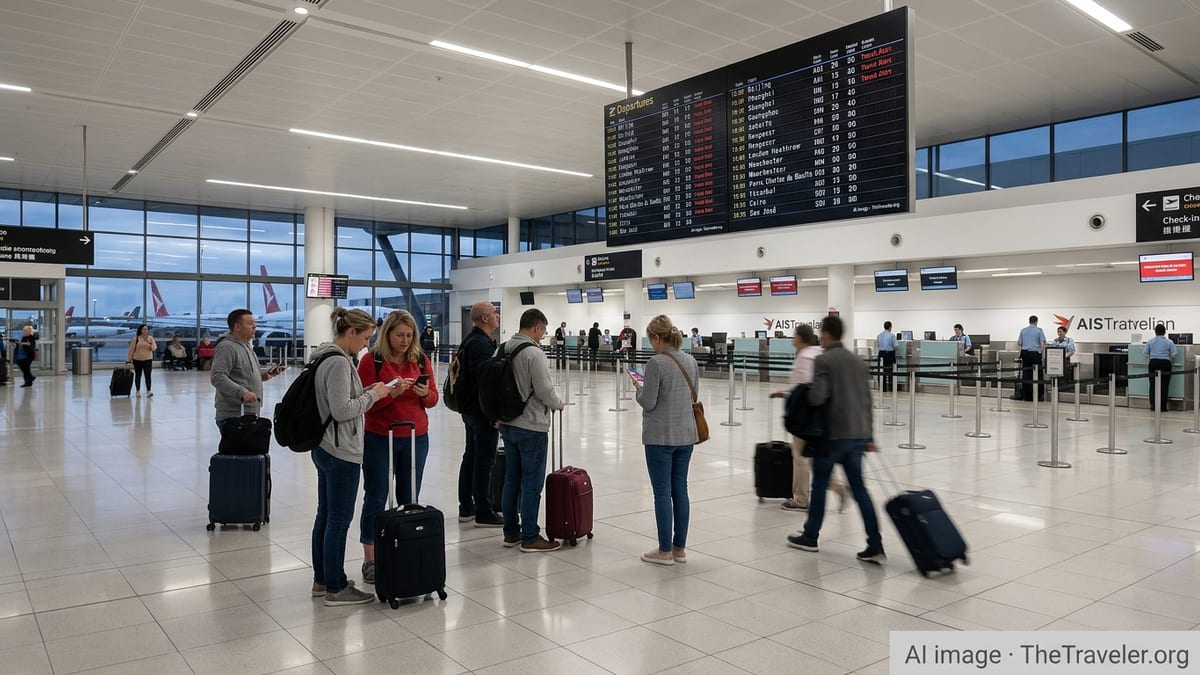
Shift From Blanket Ban to Targeted Caution
According to publicly available government advisories, Australia’s Middle East guidance has moved from an across-the-board “do not travel” stance to a more differentiated Level 3 warning that urges travellers to reconsider non-essential trips. This adjustment follows months of elevated concern around regional conflict, missile and drone activity, and airspace closures that affected both direct visits and transit through key aviation hubs.
The new setting keeps the overall risk rating high but signals that the government no longer views all civilian travel as uniformly unacceptable. Instead, the focus has shifted to encouraging Australians to carefully weigh the necessity of their journey, monitor developments closely and have contingency plans in place.
Risk levels for individual countries and territories within the Middle East remain varied. Some destinations are now covered by the broader Level 3 advisory, while others continue to carry more stringent, destination-specific warnings reflecting localised conflict or security concerns.
The recalibration aligns Australia’s approach more closely with that of several other governments, which distinguish between outright war zones and states where security conditions are tense but controlled enough for limited, risk-managed travel.
What Level 3 Means for Australian Travellers
Australia’s four-tier system ranges from Level 1, “exercise normal safety precautions,” through Level 2, “exercise a high degree of caution,” Level 3, “reconsider your need to travel,” and Level 4, “do not travel.” The Middle East downgrade to Level 3 leaves the region in the second-highest risk category, signalling that serious threats remain even as the most restrictive nationwide bans are eased.
For travellers, Level 3 is a practical turning point. Publicly available insurance guidance shows that many travel insurers treat Level 3 as a threshold at which coverage may be limited, especially for new policies purchased after an advisory is issued. Trip cancellation and disruption benefits can depend on the precise wording of the policy and the timing of bookings.
Airlines and tour operators also use the advice levels as a planning tool. When an area is rated Level 4, services are often reduced or suspended entirely. At Level 3, carriers are more likely to maintain carefully controlled schedules, subject to fast changes if security conditions worsen or airspace restrictions return.
Australians are still being urged through public information campaigns to register their details, keep family informed of itineraries and pay close attention to local alerts, particularly around airports, major transport corridors and large public gatherings.
Impact on Transit Routes Between Australia, the Gulf and Europe
The earlier blanket warnings had significant consequences for global flight networks, particularly for Australians accustomed to using Gulf hubs as gateways to Europe, North Africa and parts of Asia. Published coverage in aviation and business media documented a surge in demand for alternative routings via Asia and the Pacific as travellers sought to avoid both stopovers and overflight of high-risk Middle East airspace.
With the regional advisory now at Level 3 rather than a universal prohibition, airlines operating via the Gulf are expected to see a gradual return of passengers who had re-routed through Singapore, Bangkok, Seoul or North American hubs. However, industry analysis indicates that many travellers remain cautious and may continue to favour itineraries that do not rely on airspace previously affected by missile or drone activity.
Tourism analysts note that the advisory shift could ease some of the pressure on Australia’s inbound market. Earlier guidance had placed a large number of long-haul trips at risk because so many visitors from Europe and parts of Africa depend on Middle Eastern transit points. A less restrictive warning may reassure some travellers and corporate travel managers, even while the advice still urges careful risk assessment.
Airlines and airports in the region are expected to respond by highlighting security measures, flexible change policies and contingency routing, in an effort to restore confidence among Australian and international passengers who remain sensitive to headlines about regional instability.
Regional Security Context Still Volatile
Despite the downgrade, open-source reporting continues to describe the Middle East as a region in flux, with several conflict zones and unresolved political flashpoints. Country-specific advisories for locations most directly affected by recent hostilities continue to impose stricter travel guidance, including targeted bans on particular provinces, land border areas and coastal regions.
Travel and risk consultancies tracking the situation point to ongoing concerns about terrorism, sporadic cross-border strikes and the potential for sudden escalation. These assessments emphasise that while some capitals and major transit hubs may appear calm, the broader strategic environment remains unpredictable and can alter quickly in response to diplomatic or military developments.
Publicly available briefings to the travel and insurance industries continue to underline the importance of monitoring local media in destination countries and being prepared for short-notice closures of airspace or temporary suspensions of flights. Travellers are being encouraged to consider flexible tickets and robust insurance that explicitly addresses war and civil unrest exclusions.
Analysts also note that a regional advisory at Level 3 does not guarantee uniform conditions across all cities or airports. Security measures, checkpoints and curfews can differ significantly even within a single country, making on-the-ground research essential for anyone planning to move beyond major hubs.
How Travellers Can Respond to the New Advice
With the Middle East now broadly set at Level 3, Australians are being nudged to become more active managers of their own travel risk. Public guidance from government and industry sources recommends careful route planning, including checking whether flights involve overnight layovers or only same-day transits, and whether alternatives exist that avoid higher-risk airspace.
Specialists in corporate and humanitarian travel advise organisations to update their internal risk assessments, employee travel policies and emergency protocols. This may include pre-journey briefings, clear rules on acceptable stopovers, and systems to track staff movements in case circumstances deteriorate.
Individual travellers are encouraged to keep copies of passports and key documents, maintain contact with airlines and tour operators, and ensure they can be reached quickly if itineraries need to be changed. Many advisory services recommend building extra time into connections to accommodate possible security checks or schedule disruptions.
The downgrade from a blanket “do not travel” signal to a Level 3 warning is being interpreted as a cautious acknowledgement that some travel to, and through, the Middle East is once again feasible. At the same time, the message of publicly available advisories remains clear: trips should be carefully justified, thoroughly planned and constantly reviewed against a security landscape that can shift with little warning.