


Delta Sky Club has become almost mythical among frequent flyers: a refuge from crowded gate areas and long security lines, but also a source of confusion thanks to fast-changing access rules and mixed reviews. If you fly Delta periodically, you have probably wondered whether the lounge experience is actually worth planning your airport time around. This guide walks through what the Delta Sky Club really offers in 2025 and 2026, how access works in practice, and what you can expect at major airports from Atlanta to Los Angeles.
Get the latest updates straight to your inbox!
What Delta Sky Club Is (and Is Not)
Delta Sky Club is Delta Air Lines’ network of airport lounges, with more than 50 locations worldwide, mostly in U.S. hubs like Atlanta, New York JFK, LaGuardia, Los Angeles and Seattle. Once you are inside, the basics are consistent: complimentary food, a full bar with many free alcoholic drinks, high speed Wi Fi, dedicated restrooms and a quieter place to sit and work or relax compared with the main terminal.
Sky Clubs are not all identical. A smaller club at a spoke airport like Nashville typically offers a compact buffet, one bar, limited seating and perhaps a single quiet room. Meanwhile, a flagship club such as the one above Concourse F at Atlanta or the large Sky Club in JFK’s Terminal 4 has multiple seating zones, shower suites and often a Sky Deck outdoor terrace. These differences matter if you are deciding whether to walk to a farther concourse just for a better lounge.
It is also worth distinguishing regular Sky Clubs from Delta One Lounges. Delta One Lounges are a newer, more exclusive concept reserved for Delta’s long haul business class and a handful of top elites. They feature restaurant style dining and upgraded spaces. A traveler with a Platinum credit card might be welcome in the regular Sky Club in Boston’s Terminal E, for instance, but not allowed past the host stand into the adjoining Delta One Lounge dining room.
Finally, Sky Club is not meant to be a luxury spa or gourmet restaurant. The model is closer to a very nice airport cafeteria with an open bar and decent workspaces. When expectations are realistic, the value is clear: you trade the chaos of the gate area for predictable comfort and reliable amenities.
How Access Really Works Under the New Rules
Access is where most of the confusion arises, especially after Delta tightened lounge entry several times. In 2025 and 2026, the most common way U.S. based travelers enter is via a premium American Express card that includes Delta lounge privileges. For example, a traveler with an American Express Platinum card flying Delta from Los Angeles to New York can tap their card at the entrance and use one of their limited annual visits tied to that card, as long as they hold a same day Delta marketed or Delta operated boarding pass.
Delta’s own co branded Reserve cards also unlock Sky Club entry on eligible same day Delta flights, but with their own visit limits. As of 2025, Reserve and Platinum cardholders receive a fixed number of Sky Club “visits” each program year unless they meet a very high annual spend threshold that restores unlimited access. A “visit” is now defined broadly: all entries to Delta Sky Clubs (or use of a Grab and Go station) within a 24 hour period count as a single visit, which means connecting in Atlanta and popping into two different lounges on the same itinerary still only uses one visit for that day.
Separate from credit cards, traditional Sky Club memberships are still sold, though pricing and terms adjust regularly. An individual membership allows the member to enter whenever they are flying on Delta or a partner airline the same day. Guests typically cost an additional per person fee per visit, charged at check in, and that fee has hovered around the price of a modest sit down meal in the terminal. Existing lifetime members, a legacy product that is no longer sold, retain flexible access even when flying on other airlines in many cases.
There are also access pathways tied to your ticket or elite status. Travelers flying in Delta One on long haul routes, such as New York JFK to London or Los Angeles to Sydney, are entitled to Sky Club access before departure and often on arrival as well. Select international business class tickets on SkyTeam partners can grant access when connecting to or from a Delta flight. However, mid tier Medallion status alone without the right cabin or card no longer guarantees lounge entry, which catches some infrequent elites by surprise at the door.
What the Lounge Experience Actually Feels Like
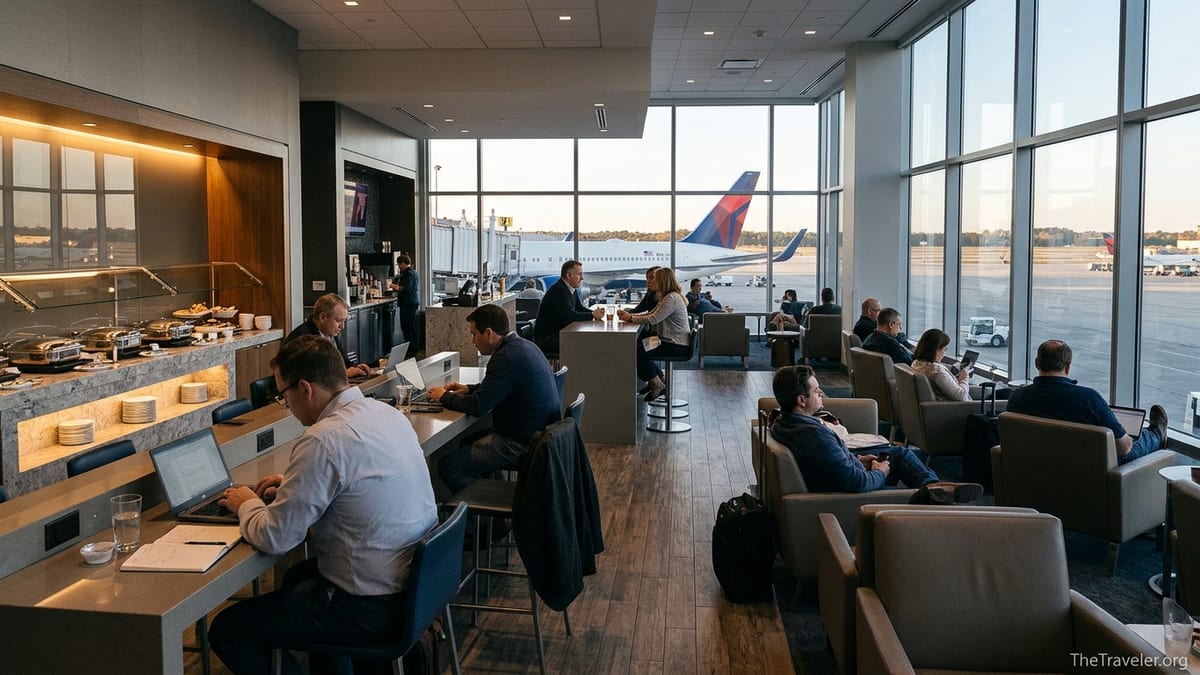
Walk into a typical Sky Club at a hub like Atlanta’s Concourse A during the early evening bank and the first thing you will notice is the noise level. It is quieter than the terminal, but not silent. Conversations, clinking glassware and boarding announcements from screens provide a steady backdrop. Many travelers treat the lounge like an upgraded gate area: they find a chair near a power outlet, open a laptop, grab a snack and use the time to answer emails.
Seating varies noticeably by lounge age and size. In the renovated Sky Club at LAX Terminal 3, for example, you will find a mix of high top communal tables, semi enclosed work pods, lounge chairs facing the runway and soft banquettes near the buffet. Power outlets are built into the floor, tables or armrests at most seats, which is a major upgrade from older clubs where competition for a plug can be as intense as in the main terminal. Floor to ceiling windows in many newer locations provide natural light and decent plane spotting.
Noise and crowding ebb and flow with the flight schedule. During a 10 a.m. lull on a weekday, the Sky Club at Seattle might feel like a co working space, with travelers spread out, baristas steaming milk at a coffee station and a gentle hum of conversation. Fast forward to 5 p.m. on a Sunday at New York JFK and you may find a line at the entrance, limited open seating and staff circulating to bus tables as quickly as possible. Overcrowding remains a recurring complaint despite Delta’s access crackdowns, and it is not unusual to see posts from long time flyers describing lounges in Atlanta or LaGuardia as “as busy as the gate area, just with better chairs.”
Staff interaction tends to be limited but useful. Lounge ambassadors at a desk in the center of many clubs can help with same day flight issues, such as rebooking after a missed connection, changing seats, or placing you on a standby list. In irregular operations, such as a weather meltdown at Atlanta, these agents can sometimes resolve problems faster than an overwhelmed gate team because they work from the same Delta systems but with fewer people in line ahead of you.
Food, Drinks and Showers: What You Actually Get
The all inclusive food and beverage spread is one of the main reasons travelers value Sky Club access, particularly at mealtimes. At most lounges, you can expect a rotating buffet of hot and cold items. A lunchtime visit to the Sky Club in Detroit, for example, might reveal a self serve salad bar with fresh greens, a couple of composed salads like quinoa with vegetables, a soup kettle, one or two hot mains such as chicken with rice or a vegetarian pasta, and smaller bites like hummus, crudité, cheese and crackers. Breakfast usually features scrambled eggs, oatmeal with toppings, yogurt, pastries and fruit.
The quality has improved in many larger clubs as Delta leans into more substantial dishes and local touches. At the LAX Sky Club, travelers frequently find made to order tacos or bowls at a staffed station highlighting Southern California flavors. At New York JFK, the buffet may incorporate New York style bagels in the morning or pasta and hearty stews in winter. Still, this is buffet food designed for volume. It rarely matches a good sit down restaurant in the terminal, but when you combine it with the cost of an entree, drink and tax at an airport bar, many travelers find the lounge a better value, especially on long layovers.
The bar is another headline amenity. All Sky Clubs offer complimentary soft drinks, coffee, tea, and a selection of house wine, beer and well spirits. A traveler in the Atlanta Concourse B club can order a basic gin and tonic or glass of red wine without paying anything extra beyond their access method. For those seeking something nicer, many locations publish a premium menu with craft cocktails, higher end spirits and Champagne available for purchase, charged to a credit card or, in some cases, redeemable with SkyMiles. The house options will not satisfy a serious wine critic, but they are comparable to what you might order at a decent casual bar.
Shower facilities are limited to select locations but can be a trip changing perk. Major hubs such as Atlanta, Boston, Detroit, Los Angeles, New York JFK, San Francisco and Seattle have Sky Clubs with shower suites. These usually resemble compact hotel bathrooms: a walk in shower, vanity, toilet and amenities like towels, basic toiletries and a hair dryer. After an overnight flight from Europe arriving in New York, it is realistic to clear immigration, head upstairs to the Sky Club in Terminal 4, request a shower at the reception desk, and emerge 30 minutes later feeling human again before a connection to a domestic flight.
Locations and Notable Standout Clubs
You will find Delta Sky Clubs at practically every Delta hub and many focus cities. Atlanta alone has close to ten lounges across its concourses, including a large Sky Club at Concourse F serving many international departures and another centrally located above the food court in Concourse A. For a traveler with a ninety minute layover between Minneapolis and Miami, choosing the Concourse F club at Atlanta can mean a quieter space, better views and a higher chance of scoring a shower, compared with the more heavily trafficked Concourse B club near a dense cluster of domestic gates.
On the coasts, Los Angeles and New York stand out. At LAX, Delta consolidated its operations into Terminals 2 and 3, building a spacious Sky Club in Terminal 3 with a Sky Deck, an outdoor terrace overlooking the ramp. This means that on a clear evening before a transcontinental flight to JFK, you can sit outside with a drink, watch aircraft taxi and feel the California air while still inside secured lounge space. New York JFK’s flagship club in Terminal 4 is one of the largest in the system, with multiple zones, long picture windows and both business travelers heading to Europe and leisure flyers bound for the Caribbean passing through on a typical afternoon.
Elsewhere, Seattle’s Sky Club commands views of Mount Rainier on clear days, Detroit’s lounge network caters to a heavy flow of connecting passengers to the Midwest and Canada, and Boston’s Terminal E Sky Club now coexists with a premium Delta One Lounge. Even smaller cities sometimes have surprisingly useful clubs. For example, a morning visit to the Sky Club in Raleigh Durham can provide a quiet work session with strong Wi Fi and breakfast before a short hop to New York or Atlanta, something that can be hard to replicate in the often crowded main concourse food courts.
Internationally, Delta operates or codeshares lounge space at select SkyTeam hubs, though branding and experience can differ. In Amsterdam or Paris, for instance, you may be directed to a partner lounge that feels closer to a European business class facility than a U.S. domestic Sky Club, complete with more substantial hot food and showers. Your Delta boarding pass and status or cabin class determine which lounge you can use, so it is always wise to confirm the rules specific to your itinerary before banking on a shower or meal abroad.
Is It Worth It for the Average Traveler?
Whether the Sky Club is “worth it” depends on how you travel. For a business traveler flying Delta several times a month through busy hubs like Atlanta or LaGuardia, the combination of workspace, reliable Wi Fi, food and the ability to quickly troubleshoot disruptions with lounge agents often justifies carrying a premium credit card or paying for membership. On a day when thunderstorms shut down departures in the Southeast, the person already inside the Sky Club at Atlanta can often get rebooked while everyone else is still waiting to speak with three stressed gate agents at the podium.
For an infrequent leisure traveler, the value calculation is different. If you take one big trip per year from a smaller city, buying an annual membership almost never makes sense. Occasional one time access through a day pass is not widely offered for Delta’s lounges anymore, so your main options are flying in a cabin that includes access, using a compatible credit card, or entering as a paying guest of someone else. In that scenario, consider the math: a typical airport breakfast and coffee can easily cost twenty to twenty five dollars per person, while a sit down lunch with a drink might hit forty to fifty dollars. If a lounge guest fee for you runs around the cost of a decent meal and you have at least two or three hours to spend before a long flight, you may come out ahead in both cost and comfort.
The biggest risk is overcrowding. If you pay to bring a family member into a Sky Club at a peak bank at New York LaGuardia, only to find every seat taken and a noisy environment, the perceived value plummets. Travelers who know they will be using the lounge primarily at peak times should temper expectations: think “more comfortable extension of the gate area with free food” rather than “quiet sanctuary.” Choosing less popular locations within the same airport, such as a Sky Club at a secondary concourse served by fewer flights, can help.
There is also the risk of overlooking alternatives. Many large airports now host independent lounges or credit card branded spaces that you can access with different memberships or passes. At some hubs, a traveler might prefer a quieter American Express Centurion Lounge, if they have access, over a packed Sky Club. At others, a solid sit down restaurant with power outlets at the bar and good food may serve your needs just as well on a short layover, especially if work is not on the agenda.
The Takeaway
Delta Sky Club delivers a clearly defined experience: consistently available Wi Fi, snacks and light meals, soft drinks and house alcohol, relatively comfortable seating and basic business services in a space generally calmer than the main terminal. Some locations, like the rooftop Sky Deck at LAX or the massive flagship in JFK Terminal 4, layer on extras such as outdoor terraces, showers and better than average buffets. Others are compact and can feel crowded, especially at peak departure banks in Delta’s busiest hubs.
The access rules are more restrictive and nuanced than many travelers expect, particularly with visit limits tied to specific credit cards and a growing separation between regular Sky Clubs and the newer Delta One Lounges. Before assuming you can walk in, it is wise to check your specific card’s terms, your ticket type and whether your trip date falls under the latest policy updates. Spending thousands of dollars annually on a premium card only to be unexpectedly turned away at the door is an experience more than one casual traveler has now had.
If you travel on Delta several times a year through major hubs and value a reliable place to work, eat lightly and recharge both your devices and yourself, Sky Club can meaningfully improve your airport days. If you mainly fly short domestic hops from quieter airports and rarely face long layovers or irregular operations, a lounge may feel like a nice occasional perk rather than a must have. Understanding what the Sky Club actually offers helps you decide when it makes sense to plan your travel time around it, and when you are better off simply grabbing a coffee at the gate.
FAQ
Q1. Do I need to be flying Delta the same day to use a Sky Club?
In most cases yes. The standard rule is that you must hold a same day Delta marketed or Delta operated boarding pass to enter when your access comes from a Delta or Amex credit card or from a Sky Club membership. Certain legacy lifetime memberships and select international itineraries on partners can be exceptions, but you should generally plan on needing a same day Delta flight.
Q2. Can I use the Sky Club after I land, or only before departure?
As long as you meet the standard access rules and are within the same travel day on a qualifying Delta itinerary, you can typically visit a Sky Club on arrival as well as before departure. Under the current “visit” definition for many credit card based access methods, multiple entries within a 24 hour period count as a single visit, so a connection and an arrival visit on the same trip usually draw from the same allowance.
Q3. Are food and alcoholic drinks really free inside Delta Sky Clubs?
Yes, a selection of food, soft drinks and house alcoholic beverages is complimentary once you are inside the lounge. You can make multiple trips to the buffet and order standard beer, wine or basic mixed drinks at no extra charge. However, premium spirits, specialty cocktails and some higher end wines or Champagnes are priced separately and will be charged to your card if you order them.
Q4. Which Delta Sky Clubs have shower facilities?
Showers are available only in certain larger Sky Clubs, mainly at major hubs and international gateways. Examples include clubs at Atlanta, Boston, Detroit, Los Angeles, New York JFK, San Francisco and Seattle. You typically request a shower at a desk inside the lounge and may be placed on a short waiting list during busy times, especially early mornings when overnight flights arrive.
Q5. How crowded are Sky Clubs these days?
Crowding varies widely by airport and time of day. Some travelers report consistently full lounges and difficulty finding seats at peak periods in hubs like Atlanta, LaGuardia and JFK, even after Delta tightened access. Other locations, especially at off peak times or at secondary concourses, feel calm and spacious. If you are connecting, choosing a less central lounge within the same airport can improve your odds of a quieter experience.
Q6. Can I bring guests into the Delta Sky Club?
Guest rules depend on how you access the lounge. Many credit card based access methods allow you to bring one or two guests for a per person fee that is charged at entry. Sky Club members can generally bring guests for a similar fee, sometimes with the option to pay in miles. All guests must usually be flying on Delta or a partner airline the same day, and lounge staff will check their boarding passes at the door.
Q7. Is lounge Wi Fi fast enough for work calls and streaming?
Yes, lounge Wi Fi is usually fast enough for video calls, streaming and large file uploads. Reports from travelers at newer clubs often cite speeds comparable to good home broadband, and there are plenty of power outlets near seats. That said, performance can dip during extremely busy periods when many devices are connected, so downloading very large files ahead of time is still wise if it is critical.
Q8. Do Delta Sky Clubs have dress codes?
There is no formal dress code beyond basic standards of neat, respectful attire. You will see everything from business suits to jeans and hoodies. However, lounge staff can deny entry to guests whose clothing is excessively revealing, offensive or soiled, and bare feet or swimwear are not acceptable. Think of what you might comfortably wear to a casual hotel lobby or business class cabin.
Q9. Can I sleep in a Sky Club during a long layover?
Sky Clubs are not designed as sleeping facilities, and there are no lie flat day beds. Short naps in a reclined lounge chair are common, especially on overnight connections, but you should not expect dark, ultra quiet rest areas. Staff may wake guests who appear deeply asleep in ways that disturb others, and families with children and regular boarding announcements mean the environment is rarely truly silent.
Q10. How do Delta Sky Clubs compare with other airline lounges?
Compared with many domestic U.S. airline lounges, Sky Clubs are generally competitive on food and beverage offerings and often ahead on design at newly renovated hubs like LAX and JFK. They can lag behind some international business class lounges, which may feature full restaurant service or spa amenities. For most travelers flying within the United States on Delta, however, Sky Clubs strike a practical balance between comfort, convenience and availability.