


More news on this day
Jakarta’s Soekarno-Hatta International Airport was thrust into fresh travel turmoil today as leading Indonesian carriers including Batik Air, Garuda Indonesia, Lion Air, Citilink and Super Air Jet contended with 13 flight cancellations and 167 delays, triggering widespread knock-on disruption across key routes to Singapore, Malaysia, Saudi Arabia, Vietnam, China and Australia.
Get the latest news straight to your inbox!
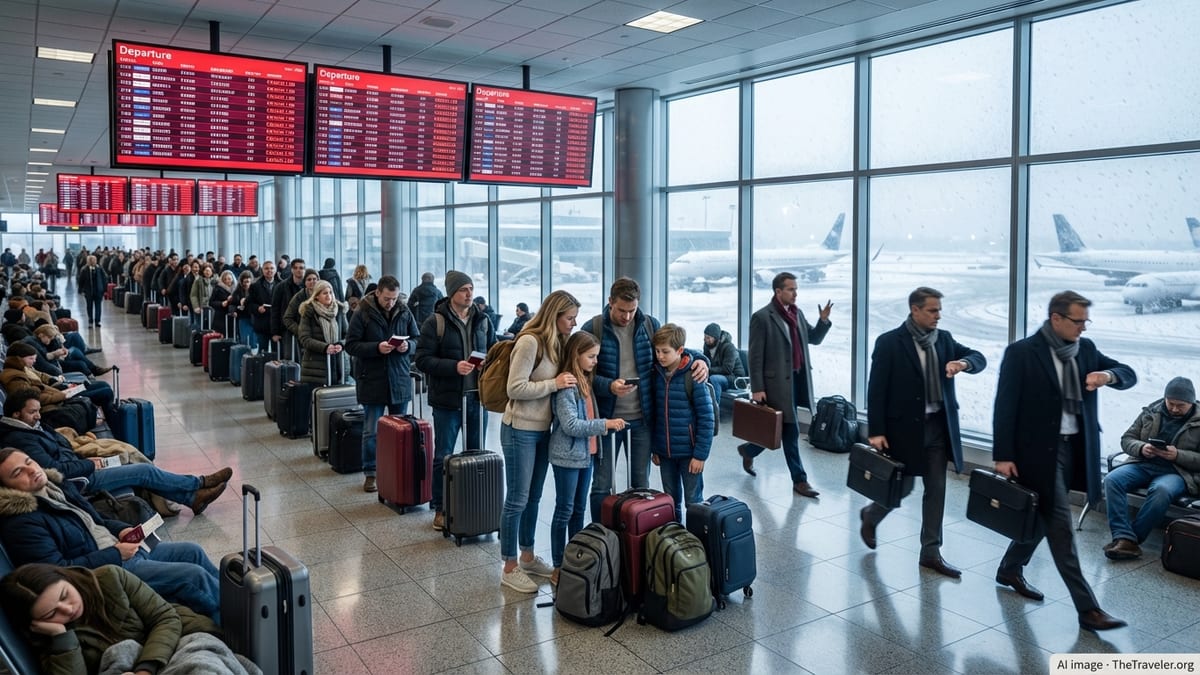
Heavy Disruption Across Indonesia’s Busiest Aviation Hub
Publicly available operational data and published coverage indicate that Soekarno-Hatta, Indonesia’s primary international gateway serving Jakarta, has once again become the focal point of severe schedule disruption. The affected services span both domestic and international routes, with core regional links bearing the brunt of the operational strain.
The majority of cancellations and delays are attributed to carriers that use Soekarno-Hatta as a central hub, including Batik Air, Garuda Indonesia, Lion Air, Citilink and Super Air Jet. These airlines collectively handle a substantial share of Indonesia’s domestic traffic and a growing portion of regional services, magnifying the impact of any operational disruption at the airport.
Reports indicate that today’s spike in irregular operations follows a broader pattern seen in recent months, during which Indonesian carriers have periodically struggled with punctuality and schedule reliability. While the latest figures of 13 cancellations and 167 delays are significant on their own, analysts note that they also reflect ongoing pressure on infrastructure, fleets and staffing at one of Southeast Asia’s busiest hubs.
Jakarta’s role as a key connector between secondary Indonesian cities and international destinations means that disruptions at Soekarno-Hatta quickly ripple out into the wider network. Passengers traveling to and from destinations such as Bali, Surabaya, Makassar and Yogyakarta, as well as onward to Singapore, Kuala Lumpur, Jeddah, Madinah, Ho Chi Minh City and major Chinese and Australian cities, have reported missed connections, extended layovers and last-minute rebookings.
Key Routes to Singapore, Malaysia, Saudi Arabia and Vietnam Hit
According to route and schedule data reviewed today, some of the most affected sectors involve high-demand regional corridors that connect Indonesia with neighboring markets and religious travel flows. Flights linking Jakarta with Singapore and Kuala Lumpur are particularly exposed, given their status as business and leisure lifelines as well as key connection points for long haul itineraries.
Publicly available flight-tracking information shows that services between Jakarta and Singapore, traditionally shared by Garuda Indonesia, Batik Air and foreign carriers such as Singapore Airlines, have experienced a concentration of lengthy delays. These include both nonstop flights and code-share operations carrying passengers booked via partner airlines across Asia, Europe and Australia, heightening the risk of missed onward connections.
Malaysia-bound flights have also come under pressure, including services to Kuala Lumpur and other major Malaysian gateways operated by Indonesian carriers and their Malaysian affiliates. Travelers booked on these routes have faced rescheduled departure times, aircraft changes and, in some cases, cancellations that require rerouting through alternative hubs.
Traffic to Saudi Arabia and Vietnam has not been spared. Indonesia’s sizable market for religious travel to Jeddah and Madinah means that delayed or cancelled flights can have outsized consequences for group itineraries and tour programs. Similarly, the growing number of leisure and business travelers linking Jakarta with Vietnamese cities has meant that even a small number of cancellations and extended delays can strand significant numbers of passengers mid-journey.
Domestic Network Strain Compounds International Chaos
Operational pressures within Indonesia’s vast domestic network have compounded the difficulties facing international travelers. Soekarno-Hatta serves as a primary hub for Batik Air, Lion Air, Citilink, Garuda Indonesia and Super Air Jet, with many itineraries built around tight domestic connections that funnel passengers into and out of international services.
When domestic departures from Jakarta to cities such as Denpasar, Surabaya, Makassar, Medan, Balikpapan and Lombok run late, the effect cascades through the system. Publicly available flight statistics reviewed today show that once departure banks slip behind schedule, subsequent rotations are forced to compress or shift, raising the likelihood of further delays or tactical cancellations later in the day.
Past disruption data published earlier this year already highlighted how even a relatively small number of cancellations, when combined with hundreds of delayed services, can lead to significant congestion at key Indonesian airports. Soekarno-Hatta has consistently appeared among the most affected, reflecting its dominant role in the national aviation system and its dependence on a small group of carriers operating high-frequency schedules.
Aviation observers note that such conditions can strain ground-handling capacity, gate availability and crew scheduling. When multiple airlines within the same corporate group, such as Lion Air Group subsidiaries Batik Air and Super Air Jet, experience simultaneous operational challenges, options for swapping aircraft or crew to stabilize the timetable quickly become limited.
What Today’s Numbers Reveal About Airline Performance
The tally of 13 cancelled flights and 167 delays at Soekarno-Hatta provides a snapshot of current reliability pressure on Indonesia’s leading airlines. While the figures are modest in absolute global terms, they are significant for a single day at one airport and come against a backdrop of previously documented waves of disruption affecting Indonesian carriers.
Published performance summaries in recent months have frequently cited Batik Air and Lion Air among the most delay-prone operators at major Indonesian gateways, with Garuda Indonesia, Citilink and Super Air Jet also recording notable numbers of late-running services. Today’s data reinforces that pattern, with all five carriers represented among the disrupted operations out of Jakarta.
Industry analysts suggest several contributing factors, including tight aircraft utilization, weather-related constraints during peak travel periods, airspace congestion near major metropolitan areas and ongoing supply chain challenges that can limit the availability of spare parts and backup aircraft. In such an environment, even minor technical or scheduling problems can snowball into multi-hour delays across multiple flights.
For passengers, the distinction between a short delay and a severe disruption often hinges on connection windows. A 60 to 90 minute pushback at Jakarta can be enough to jeopardize onward flights to Singapore, Kuala Lumpur or long haul departures to the Middle East and Australia, particularly when itineraries involve separate tickets or complex code-share arrangements.
Guidance for Affected Travelers and Future Bookings
Travel advisories from airlines and travel platforms reviewed today emphasize the importance of monitoring flight status in real time and allowing extra buffer time when connecting through Soekarno-Hatta. With multiple carriers experiencing concurrent disruptions, same-day rebooking options on alternative flights or rival airlines may be limited during peak periods.
Passengers already at the airport are generally advised, in publicly available guidance, to stay within easy reach of departure gates and keep digital boarding passes and contact details for their travel providers close at hand. Many carriers enable same-day changes or rebookings through mobile applications or customer portals, which can sometimes reduce the need to queue at service counters during periods of high disruption.
For travelers planning future trips via Jakarta, industry commentary recommends considering longer connection times, especially when linking domestic Indonesian flights with international sectors to Singapore, Malaysia, Saudi Arabia, Vietnam, China or Australia. Booking on a single ticket where possible can provide additional protection, as it typically obliges the operating carrier to reroute passengers in the event of major delays or cancellations.
While today’s disruptions at Soekarno-Hatta highlight ongoing reliability challenges for some Indonesian carriers, they also underscore the airport’s continuing importance as a regional hub. Until additional capacity, improved punctuality and more resilient scheduling are consistently in place, travelers using Jakarta as a gateway are likely to remain exposed to sudden bouts of travel chaos similar to those unfolding today.