


Step into almost any busy U.S. hub today and you will see the same scene outside the lounges: long lines, agents policing entry rules, and travelers trying to figure out whether the promise of quiet, food, and Wi-Fi is really worth the hassle. Nowhere is that tension more visible than at Delta Sky Club. After visiting multiple Sky Clubs and comparing them with United Club, American Airlines Admirals Club, and a handful of premium credit card lounges, a clear picture emerges of where Delta’s flagship lounges excel, where they lag behind, and who will genuinely benefit from paying or swiping for access.
Get the latest updates straight to your inbox!
Where Delta Sky Club Stands in the Lounge Landscape
Across the major U.S. airlines, three networks dominate the traditional lounge scene: Delta Sky Club, United Club, and American Airlines Admirals Club. On top of those, many frequent travelers also compare them with premium credit card spaces such as Amex Centurion Lounges or Capital One Lounges. In that crowded field, Delta Sky Club typically lands in the top tier for design, food quality at key hubs, and bar offerings, while sometimes falling short on crowding and access clarity.
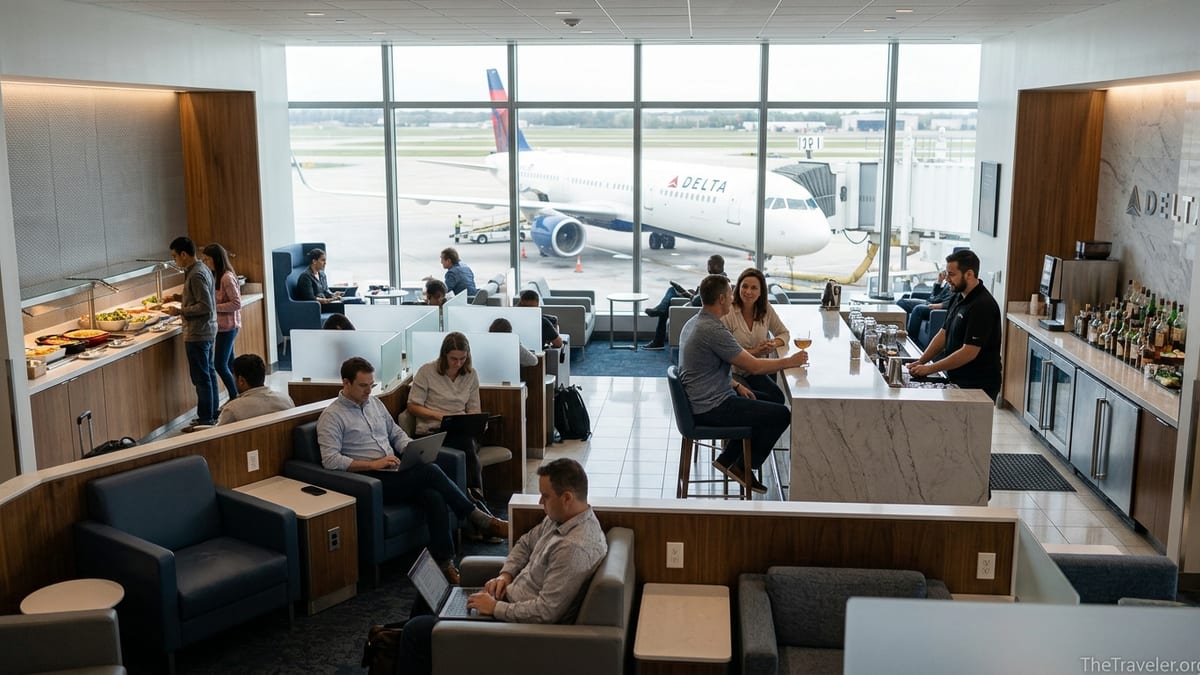
Take a typical weekday afternoon at Atlanta’s Concourse B or New York LaGuardia’s Terminal C. Sky Clubs at these airports often feel more modern and upscale than many United Club or Admirals Club locations of similar size, with floor-to-ceiling windows, hardwood accents, and zones that attempt to separate work areas from dining and relaxation spaces. By contrast, many older United Clubs at airports like Newark’s Terminal A or some legacy Admirals Clubs at Chicago O’Hare still show their age, with lower ceilings, more basic seating, and smaller buffets.
However, the comfort advantage often comes with a trade-off. Delta’s popularity with both business travelers and premium credit card holders has made Sky Clubs a victim of their own success. Even after rule changes designed to reduce crowding, travelers still report lines to enter during peak morning and late-afternoon banks at major hubs. That means the quality of the experience can vary sharply depending on when and where you visit.
The net result: when you manage to visit a Sky Club at a calm time, it can feel significantly more polished than a standard United or American lounge. When you hit a peak departure wave, though, even a well-designed Sky Club can start to feel like a crowded gate area with better food.
Access Rules: What It Really Takes to Get Into Sky Club
Delta has spent the past several years tightening Sky Club access in response to overcrowding. Today, a short list of credentials opens the door. Travelers can enter with a same-day Delta or partner boarding pass if they hold a qualifying American Express Platinum or Centurion Card, a Delta SkyMiles Reserve credit card, or a paid Sky Club membership. Basic economy passengers are largely excluded, and casual day passes are far less common than in the past.
One of the most important rules to know is Delta’s three-hour access policy. In most cases, you can only enter a Sky Club within three hours of your scheduled departure time, though connecting passengers are typically allowed to use clubs during layovers regardless of length. That rule alone can surprise travelers used to dropping into lounges as all-day workspaces, especially at hub airports like Atlanta or Detroit where someone might previously have arrived early to work for half a day.
Comparatively, United Club and Admirals Club still allow more straightforward access through paid memberships and day passes, although those products have become more expensive in recent years. For example, it is still common to buy a single-visit United Club pass through the airline’s app before a flight, while Delta’s single-visit options are more restricted and often priced high enough that many travelers instead consider a premium credit card.
One crucial nuance for Sky Club hopefuls: many travelers confuse the Delta co-branded Platinum credit card with the Amex Platinum Card. As of 2024, the Delta SkyMiles Platinum card no longer grants Sky Club access at all, while the generic Amex Platinum Card still allows entry when you fly Delta in eligible cabins. At the check-in desk in airports like Minneapolis or Salt Lake City, agents frequently have to break that bad news to cardholders who assumed “Platinum” automatically meant lounge access.
Design, Atmosphere, and Comfort Compared With Rivals
Design has become one of Delta’s strongest selling points. In newer or renovated Sky Clubs, such as the flagship spaces at New York LaGuardia’s Terminal C or the large lounge near Concourse F in Atlanta, the look is closer to a boutique hotel than an old-school airport club. Expect a mix of soft lighting, locally inspired art, and varied seating types: solo pods with privacy dividers, high-top communal tables with power outlets, and cushioned armchairs near large windows overlooking the ramp.
United and American have been renovating aggressively as well, but their networks still include a greater number of legacy lounges that feel functional rather than aspirational. For instance, while United’s Polaris Lounges easily beat Sky Club when you fly long-haul business class, those are a separate, more exclusive product; the standard United Club locations often feel plainer, with more basic decor and less variation in seating compared with a newer Sky Club.
Noise levels across the three major networks can be similar at peak times, yet Sky Clubs often do a better job of carving out quasi-quiet zones. In Seattle or Boston, for example, you will typically find smaller, tucked-away nooks with individual seats and side tables that feel more conducive to focused laptop work than some Admirals Club layouts, which can be more open and echo-prone.
If you value natural light and runway views, Sky Clubs at hubs like Salt Lake City, Los Angeles, and LaGuardia are a standout. The combination of glass walls and higher ceilings gives them an airy feel that contrasts with several interior United Club locations that lack windows entirely. However, there are exceptions on all sides; older Sky Clubs in some secondary terminals remain relatively dated, so your mileage will depend heavily on the specific airport.
Food, Drinks, and Showers: How Sky Club Treats You Between Flights
Food and drink are where everyday travelers feel the lounge difference most clearly. Delta has steadily upgraded its buffet offerings at key hubs, with hot items like grilled chicken, vegetarian curries, or pasta dishes alongside salads, soups, and desserts. At breakfast, you are likely to see oatmeal, scrambled eggs, yogurt, fruit, and pastries. Compared with the more minimal spreads that still appear in several United Clubs and Admirals Clubs, the average Sky Club buffet feels a step up in both variety and freshness, especially at busy hubs where turnover is high.
To give a concrete example, a mid-morning visit to the Sky Club in Detroit might include a hot breakfast casserole, fresh-cut fruit, bagels, and a selection of yogurts, while the neighboring terminal’s Admirals Club might offer a smaller range of packaged snacks, basic pastries, and perhaps one or two hot items depending on the day. United has improved its hot food bars at certain hubs, but quality and selection still vary more from lounge to lounge than Delta’s more standardized approach.
Beverage service is another strong suit. Sky Clubs typically offer a complimentary bar with house wine, beer, and basic spirits, plus an upgraded selection available for purchase. Many locations also feature barista-style coffee machines or staffed coffee bars. In practice, that means you can expect a decent glass of red wine or a basic gin and tonic at no extra charge, comparable to what you would find in most United and American lounges. The edge comes in consistency: major Sky Clubs at Atlanta, New York, and Los Angeles tend to staff well-trained bartenders during peak hours, which makes the experience feel closer to a mid-range hotel bar than a purely functional drink station.
Showers remain an uneven perk across networks. Delta offers shower suites in select Sky Clubs at international gateways such as Atlanta, New York JFK, and Seattle. These can be a lifesaver after an overnight flight from Europe or South America, especially if you are connecting onward in economy. United and American also provide showers in some flagship or larger lounges, and United’s Polaris Lounges often win on this front with particularly spacious, well-designed shower rooms. For a typical domestic traveler, though, shower access will depend far more on which airport you pass through than which airline you fly.
Crowding, Entry Limits, and Real-World Wait Times
No discussion of Delta Sky Club is complete without addressing crowding. Even after multiple rounds of rule changes aimed at thinning the lines, peak-time congestion remains common at major hubs. At Atlanta, for example, it is not unusual to see a queue snaking out the door of the Concourse B Sky Club during early morning departures or the late-afternoon rush. Agents there often switch to a “one in, one out” policy, scanning boarding passes and asking guests to wait several minutes before space opens up inside.
Delta’s response has been to layer on access restrictions: tighter limits on which credit cards qualify, the three-hour rule tied to departure time, and in some airports, “grab-and-go” satellite concepts designed to offload guests who mainly want to pick up food and leave. In practice, travelers with Amex Platinum or Delta Reserve cards still enjoy frequent access, but the days of casually walking into any Sky Club at any time have largely disappeared.
Compared with Sky Club, United Club and Admirals Club lounges sometimes feel less crowded, but that perception can be misleading. United’s and American’s networks include numerous smaller or older lounges that simply do not attract as many visitors, while Delta has concentrated a high volume of premium travelers in a slightly more limited pool of high-profile spaces. During peak times at their own hubs, such as Denver for United or Dallas Fort Worth for American, those airlines can experience similarly packed lounges, although lines at the door have historically been more associated with Sky Club.
For travelers deciding where to credit loyalty, this crowding question matters. If your home airport is a Delta fortress hub like Atlanta, Detroit, or Salt Lake City, you are likely to benefit most from Sky Club’s stronger design and food if you also plan your visits outside peak departure banks. If you mostly fly at peak commuter times out of a smaller United or American station, you may actually find their lounges less chaotic simply because local demand is lower.
Value for Money: Is Sky Club Access Worth It for You
Evaluating the value of Delta Sky Club access means weighing real-world usage against the price of entry, whether that is an annual membership or the annual fee on a premium credit card. Membership fees fluctuate, but many travelers now effectively buy Sky Club access by holding an Amex Platinum Card or Delta Reserve credit card with annual fees that run in the mid hundreds of dollars. To justify that in practical terms, you need to visit a lounge frequently enough that each visit feels reasonably priced.
Imagine a traveler based in Atlanta who flies Delta twice a month, with at least one connection on most trips. If that traveler uses a Sky Club on both ends of each journey, they might log 30 to 40 visits per year. Spread across a typical premium card annual fee, the per-visit cost can quickly drop to a level comparable to buying a sandwich and drink in the terminal, especially when you factor in Wi-Fi, workspace, and the occasional shower on international trips.
Now compare that with someone who flies Delta only four or five times a year from a smaller outstation where the local Sky Club is small or non-existent. For that traveler, it may make more sense to rely on pay-per-visit options with United or American when they happen to fly those carriers, or to consider credit cards that emphasize flexible travel credits rather than lounge access. A casual leisure flyer connecting through a busy hub a couple of times a year might still appreciate a Sky Club visit before a long-haul flight, but probably will not extract full value from a dedicated lounge card.
Against competitors, Sky Club’s value proposition is strongest when you regularly fly through Delta’s top hubs. In those cases, you are more likely to encounter the best-designed lounges with stronger buffets and consistent bar service. If your flying pattern is more evenly split across airlines, or focused on secondary airports where Delta lounges are older or absent, United Club or Admirals Club memberships, or even broader Priority Pass-style options, may offer a better return.
The Takeaway
After comparing Delta Sky Club with United Club, American Admirals Club, and a sample of premium credit card lounges, a consistent story emerges. At its best, Sky Club delivers a polished, modern, and reliably catered experience that can meaningfully improve a long travel day. The design and atmosphere at key hubs are often a step ahead of standard United or American lounges, and the buffet and bar offerings usually feel more robust than the old stereotype of “cheese cubes and crackers” that still lingers over some rival spaces.
At the same time, Sky Club faces two persistent challenges: crowding and complexity. Access rules have changed several times in a short span, leaving many travelers confused about which cards and tickets actually qualify, especially around issues like basic economy fares or co-branded Platinum cards that no longer confer entry. Crowding remains notable during peak times at Delta’s biggest hubs, to the point where lines at the door are part of the lived experience.
If you are a frequent Delta flyer based at a hub, Sky Club remains one of the strongest domestic lounge options, provided you time your visits thoughtfully and understand the latest entry policies. If you fly a mix of airlines or rarely transit Delta hubs, you may find greater consistency or easier access through United Club, Admirals Club, or a high-quality credit card lounge program instead. The real key is to match your lounge strategy to your actual travel pattern, not just to marketing photos of a perfectly empty bar with a view of the runway.
FAQ
Q1. Who can access Delta Sky Club lounges now?
Access is generally available to travelers with a same-day Delta or partner boarding pass who also hold an eligible premium credit card, a paid Sky Club membership, or a qualifying premium cabin ticket on select international routes.
Q2. Does the Delta SkyMiles Platinum credit card get me into Sky Club?
No. The Delta SkyMiles Platinum credit card no longer includes Sky Club access. Many travelers instead rely on the Amex Platinum Card or Delta Reserve cards, which still provide entry when flying Delta on eligible fares.
Q3. What is the Delta Sky Club three-hour rule?
In most cases, you may enter a Sky Club only within three hours of your scheduled departure time. Connecting passengers can usually access clubs during layovers even if the wait is longer than three hours.
Q4. How does Sky Club food compare with United Club and Admirals Club?
On average, Sky Clubs at major hubs offer a more substantial buffet, with multiple hot dishes, salads, and snacks that feel closer to a casual hotel spread than to the limited options some United and American lounges still provide.
Q5. Are Delta Sky Clubs always crowded?
Not always, but crowding is common at peak times in major hubs such as Atlanta, New York, and Los Angeles. Early mornings and late afternoons on busy travel days are the most likely times to see lines at the door.
Q6. Do all Sky Clubs have showers?
No. Shower suites are available only at select larger or international gateway lounges, including key locations in Atlanta, New York, and a few other hubs. Many smaller Sky Clubs do not have showers.
Q7. Is Sky Club access worth it for occasional travelers?
For travelers who fly only a few times a year, especially from airports without major Delta lounges, the cost of a premium card or membership can outweigh the benefit. Occasional flyers may be better off using pay-per-visit options when needed.
Q8. How do Sky Clubs compare with Amex Centurion Lounges?
Centurion Lounges often feel more upscale and curated, with chef-driven menus and craft cocktails, but they can be even more crowded. Sky Clubs offer a broader network that is more useful if you primarily fly Delta.
Q9. Can I bring guests into Delta Sky Club?
Guest policies depend on your specific form of access. Some memberships and premium cards allow paid guests or a limited number of complimentary guests, while others require each person to have their own qualifying access method.
Q10. Does flying first class on Delta guarantee Sky Club access?
Domestic first class tickets on Delta do not automatically grant Sky Club access. Access from a ticket alone is more common on select international business or premium cabin itineraries, and even then, rules vary by route and partner.