

More news on this day
Spring travelers on both sides of the Atlantic are facing fresh turbulence as a round of disruptions centered on Denver International Airport spills across the U.S.–Europe network, affecting schedule reliability on more than 120 transatlantic and feeder flights just as demand climbs ahead of the summer season.
Get the latest news straight to your inbox!
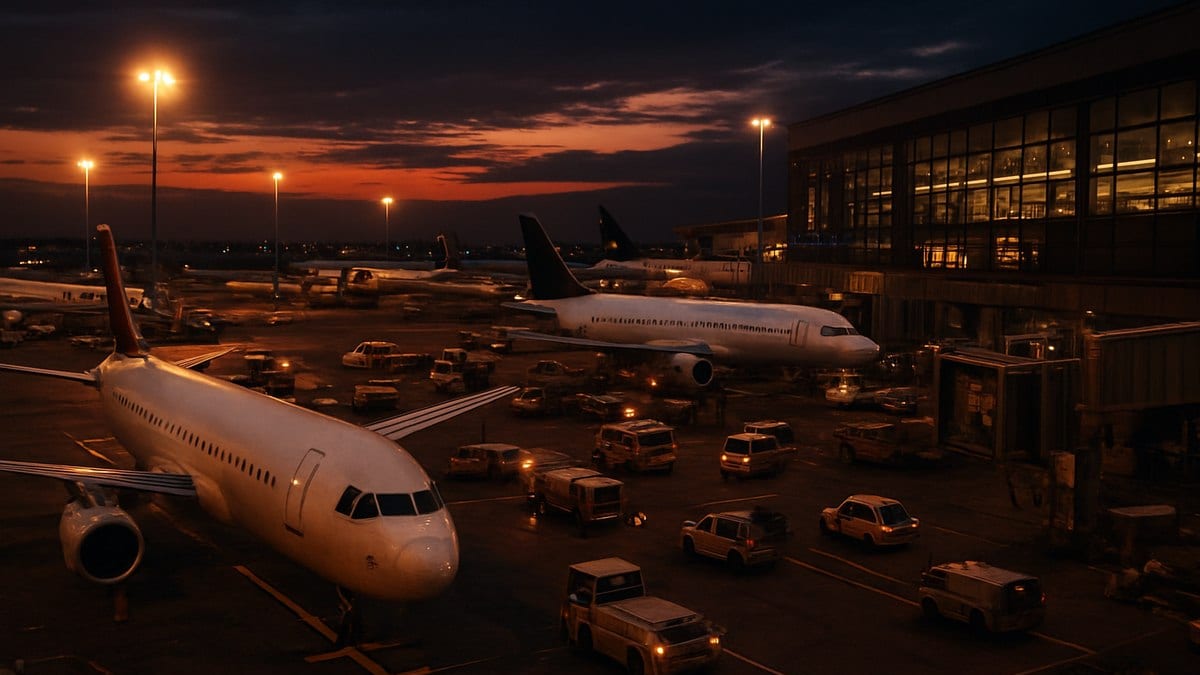
Weather Turbulence at a Key Rocky Mountain Hub
Publicly available aviation data and regional weather reports indicate that Denver has been grappling with a mix of late-season snow, gusty crosswinds and intermittent ground stops in recent weeks, conditions that routinely challenge operations at the high-elevation hub. Even when the airport remains open, reduced arrival and departure rates can quickly build queues of aircraft waiting for takeoff slots or diversion clearance, especially during afternoon and evening peaks.
Denver’s position on the High Plains, not far from the Front Range of the Rockies, means that fast-moving storm systems can develop or intensify with relatively short notice. When this happens, controllers may briefly halt ramp activity for lightning or impose spacing restrictions on arriving aircraft, which in turn trigger rolling delays. For long-haul flights to and from Europe that typically operate in narrow time windows, these slowdowns can force operators to cancel rotations outright or swap aircraft, creating bottlenecks that reverberate through the schedule for days.
Industry trackers note that similar weather patterns across the central United States this spring, including heavy snow and strong winds, have already disrupted operations at other major hubs. As Denver’s traffic has grown, its exposure to these kinds of weather-driven interruptions has become more visible across the wider U.S. and European network.
Transatlantic Routes Feel the Strain
Denver’s expanding roster of nonstop links to Europe means that local operational problems no longer stay local. Route maps and schedule filings show connections from Denver to major European gateways such as London, Frankfurt, Munich, Zurich and Reykjavik, along with seasonal or leisure-focused links that depend on tightly timed aircraft rotations. When one evening departure from Colorado fails to leave on time, the returning flight from Europe can be delayed, consolidated or canceled, immediately affecting passengers on both sides of the Atlantic.
Based on recent schedule monitoring, more than 120 flights tied to U.S.–Europe itineraries have been affected in some way by Denver-related disruption patterns, including outright cancellations of transatlantic sectors and missed connections on feeder legs that supply those long-haul services. For many travelers, the problem appears not only on the nonstop Denver–Europe links but also on domestic flights from cities such as Seattle, Los Angeles, Chicago and Dallas that are meant to feed transatlantic departures through Denver.
Because transatlantic frequencies from Denver are still relatively limited compared with coastal hubs, a single cancellation can leave passengers with few same-day alternatives. Long-haul aircraft and crews are scheduled days in advance, so operators have limited flexibility to add extra sections at short notice, forcing many travelers into overnight delays or lengthy detours through other U.S. gateways.
Ripple Effects Across U.S. and European Hubs
The impact of Denver’s latest operational challenges is emerging at airports far beyond Colorado. Flight-status boards and delay summaries from major U.S. hubs show knock-on effects as aircraft that were due to operate Denver services arrive late or are reassigned to cover gaps elsewhere in the network. This can mean secondary delays on routes that do not touch Denver directly but rely on the same fleet and crew pools, such as services between the U.S. East Coast and Western Europe.
In Europe, airport monitoring services and travel-industry coverage point to a broader backdrop of strain, including staffing constraints, episodic airspace restrictions and localized weather events. When Denver-originating flights arrive behind schedule into crowded European morning banks, ground handling and border-control queues can lengthen, and missed onward connections become more likely. Some airlines then rebook affected passengers onto later departures from other hubs, adding to congestion at those airports.
This interlinked environment means that a round of disruptions focused on Denver can ultimately materialize as a patchwork of delays in cities ranging from London and Frankfurt to smaller secondary airports that depend on feed from major European hubs. For travelers, it often appears as scattered, hard-to-predict interruptions rather than a single clearly defined event.
Passenger Options and Rights on Both Sides of the Atlantic
With cancellations and long delays stacking up for some Denver-linked itineraries, passenger rights differ depending on the airline operating the flight and the jurisdictions involved. Consumer-advocacy guidance highlights that travelers on itineraries touching the European Union, the United Kingdom or certain other jurisdictions may be covered by compensation and care rules when flying with European carriers or departing from European airports, although weather and air-traffic control constraints are often classified as extraordinary circumstances that limit direct compensation.
On the U.S. side, publicly available airline contract-of-carriage documents generally commit carriers to rebooking passengers on the next available flight when disruptions occur, with meal or hotel vouchers sometimes provided during lengthy delays. Policies vary between airlines and may distinguish between disruptions caused by factors within the carrier’s control and those attributed to weather or air-traffic restrictions. Travelers are frequently encouraged by consumer groups to document delay times, keep boarding passes and monitor airline notifications to understand what remedies are available in each case.
Travel planners advise that passengers connecting through Denver onto transatlantic flights build in longer connection times during the spring storm season, especially in the afternoon and evening periods when weather-related ground stops and high traffic volumes are more common. Purchasing flexible fares or trip insurance that covers missed connections and overnight stays is also presented as one way to reduce financial risk when schedules unravel.
What the Disruptions Mean for the Coming Summer
The current wave of Denver-centered disruptions arrives as airlines on both sides of the Atlantic gear up for what forecasts suggest will be another strong summer travel season. Capacity data for 2026 show increases on many North Atlantic routes, including from interior U.S. hubs that rely on stable domestic feed to fill widebody aircraft bound for Europe. Ensuring that these complex networks can absorb weather and infrastructure shocks without cascading failures is expected to be a central challenge.
Industry commentators note that carriers and airports have been investing in new deicing facilities, upgraded ramp procedures and enhanced air-traffic coordination tools in high-risk regions such as the central United States. While these steps may reduce the likelihood of prolonged disruptions, analysts caution that no system can fully eliminate the impact of severe storms or unexpected bottlenecks at busy hubs like Denver.
For travelers, the events of this spring serve as a reminder that transatlantic journeys often depend on a delicate chain of flights, crews and airport operations. When a crucial link in that chain is strained, as Denver has been in recent weeks, the consequences can stretch thousands of miles across the Atlantic, reshaping travel plans from Colorado to the capitals of Europe.