


More news on this day
A late-night diversion involving a widebody airliner has drawn fresh scrutiny of airline passenger protections after 373 people were reportedly kept on board for more than 10 hours without air conditioning, with limited access to food, water and information throughout the night.
Get the latest news straight to your inbox!
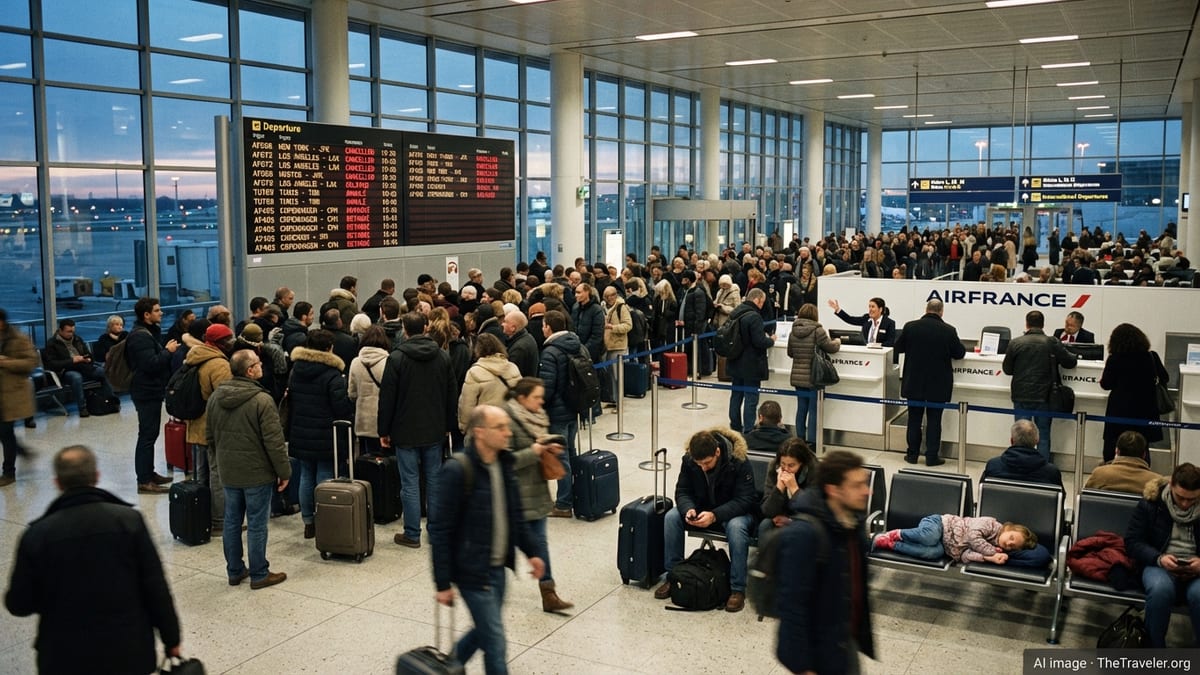
Late-Night Diversion Becomes Overnight Ordeal
According to an account published by aviation analyst Jay Ratliff on WEBN’s aviation blog, the incident began as a routine long-haul flight before weather and operational factors led to an unscheduled diversion in the early hours of the morning. The aircraft, carrying 373 passengers, landed safely at an alternate airport but remained parked away from a terminal, with passengers kept on board.
Ratliff’s report indicates that what was initially described to passengers as a short hold evolved into an extended overnight delay. Over a period exceeding 10 hours, the widebody jet reportedly sat on the ground with its main air conditioning systems turned off for much of the time, even as outdoor temperatures remained warm and the cabin became increasingly uncomfortable.
The account describes a gradual deterioration in conditions as the hours passed. Passengers allegedly contended with rising cabin temperatures, limited ventilation and restricted movement, as well as uncertainty about when they would be allowed to disembark or continue their journey. Families with small children, elderly travelers and those with health conditions were among those affected by the extended hold.
While basic refreshments were reportedly offered at intervals, the prolonged period on board amplified frustrations. Passengers described feeling trapped between safety-related restrictions on deplaning at the diversion airport and a lack of timely updates about the airline’s plan to resolve the disruption.
Heat, Comfort and Health Concerns in a Sealed Cabin
Extended ground delays without effective climate control can quickly become more than an inconvenience. Even at moderate outside temperatures, a sealed aircraft can heat up as residual engine and environmental systems are reduced or shut down, particularly when a jet remains away from a gate and external power is limited.
While detailed medical information from this particular diversion has not been made public, previous incidents have shown that heat buildup in aircraft cabins may lead to reports of dizziness, nausea and other heat-related symptoms among passengers and crew. Past events in Las Vegas and other hot-weather airports, where aircraft waited on the tarmac without adequate cooling, resulted in several passengers requiring medical attention and flight cancellations when conditions became untenable.
In this case, passengers reportedly resorted to improvising ways to stay cool, such as fanning themselves or sharing limited cool drinks, while flight attendants attempted to manage comfort with constrained resources. The combination of fatigue from overnight travel, uncertainty about connecting flights and the physical stress of a warm, crowded cabin contributed to mounting frustration on board.
Aviation safety guidance generally encourages crews to monitor cabin conditions closely during lengthy ground holds and to consider options such as deplaning or relocating to a gate if temperature or air quality begins to deteriorate. However, those options can be restricted by airport infrastructure, staffing levels during overnight hours and border control requirements when a diversion occurs in a different country than the scheduled destination.
Tarmac Delay Rules and What Protections Passengers Have
The episode has renewed attention on tarmac delay regulations and how they apply in complex diversion scenarios. In the United States, the Department of Transportation’s tarmac delay rule generally prevents airlines from keeping passengers on board a domestic flight for more than three hours, or an international flight for more than four hours, without an opportunity to deplane, subject to certain safety and air traffic control exceptions.
Those rules require airlines to provide passengers with access to food and potable water within two hours of the start of a tarmac delay, ensure operable lavatories and maintain comfortable cabin temperatures where feasible. They also obligate airlines to update passengers about the status of the delay at regular intervals and to coordinate with airports to arrange deplaning when it becomes possible.
When a flight diverts, however, the situation can become legally and operationally more complicated. If an aircraft lands at an airport where the airline has limited ground support, restricted gate access or no existing customs and immigration arrangements, it may be more difficult to bring passengers into the terminal. Airlines may argue that safety, security or border-control constraints prevent deplaning, which can extend on-board delays even as cabin conditions worsen.
Consumer advocates have long urged regulators to clarify and strengthen enforcement in diversion cases, arguing that passengers should not lose basic protections simply because a flight did not reach its original destination. Episodes involving extended holds with limited air conditioning are cited frequently by advocates as evidence that existing rules and their application remain inconsistent.
Growing Scrutiny of Airline Handling of Disruptions
The reported experience of the 373 passengers aligns with a broader pattern of heightened public sensitivity to how airlines manage irregular operations. Published accounts over recent years have highlighted diversions that left travelers waiting on remote stands for hours, overnight delays with limited services, and long-haul flights that operated with degraded onboard amenities.
In one widely discussed case earlier this year, a major international airline operated a transpacific flight without seatback entertainment, Wi-Fi or power outlets, prompting criticism from passengers who argued the carrier should have delayed or reconfigured the service rather than operate with limited amenities. In other diversions, passengers have waited on board while ground staff arranged buses, sourced a replacement aircraft or worked through customs procedures at airports not accustomed to handling unscheduled international arrivals.
Analysts note that airlines often face a difficult balance between operational constraints, safety considerations and customer expectations. Limited spare aircraft, crew duty-time rules and congested airspace can leave carriers with few attractive options when a long-haul flight diverts late at night. Nonetheless, public reaction to high-profile cases suggests that prolonged onboard confinement, especially in warm cabins with uncertain timelines, is increasingly seen as unacceptable, regardless of underlying complexities.
Web and social media coverage of such incidents tends to amplify passenger frustration and place additional pressure on carriers to review their policies. Aviation-focused blogs and consumer forums have become influential venues for documenting and dissecting these events, often prompting follow-up coverage from mainstream outlets and renewed calls for regulatory review.
Questions Over Contingency Planning and Communication
The diversion described by Jay Ratliff has raised questions about the robustness of airlines’ contingency planning for large aircraft operating long-haul routes. Carrying close to 400 passengers concentrates risk when something goes wrong en route and can quickly strain available resources at a diversion airport, particularly if that facility does not routinely handle widebody international flights.
Observers point to several recurring themes in reported diversion incidents: limited availability of gates, insufficient ground personnel during overnight hours, and uncertainty about customs and immigration procedures when passengers unexpectedly arrive at an alternate airport. These factors can delay decisions about deplaning, buses and hotel accommodations, prolonging the time travelers spend confined on board.
Communication has also emerged as a central concern. Passengers in this incident, as in similar cases, reported inconsistent or infrequent updates about the cause of the delay, the status of the aircraft’s maintenance or refueling, and when they might finally reach their intended destination. Travel experts emphasize that even when solutions are constrained, clear and regular information can significantly reduce stress and frustration.
In response to past high-profile delays, some airlines and airports have introduced more detailed contingency protocols for extended tarmac holds, including predefined temperature thresholds for mandatory deplaning, standby buses and closer coordination with border and security agencies. The circumstances described in this diversion suggest that gaps remain and that not all carriers or airports apply these measures uniformly.