


For many long-haul travelers, Doha’s Hamad International Airport is less a brief stop and more a crucial midway base. Consistently ranked among the world’s top airports, it can be a pleasure to use, but only if you know how to work it to your advantage. From choosing the right place to sleep on a 10 hour layover to figuring out if the metro really is the best way into town, these are the concrete, real world tips that seasoned flyers use every time they pass through Hamad.
Get the latest updates straight to your inbox!
Plan Your Transit Strategy Before You Land
Seasoned travelers treat Hamad International as a mini logistics project, especially on layovers of more than four hours. Before you fly, check your total time on the ground and decide whether you want to stay airside, book a sleep pod, splurge on the in-terminal Oryx Airport Hotel, or exit for a quick look at Doha itself. A traveler arriving from London at midnight with a 9 hour connection to Bangkok will make very different choices from someone landing at 10:00 in the morning with a six hour wait. Have that decision made before you ever see the arrivals board.
For short daytime connections of two to four hours, frequent flyers typically stay in the main terminal, make a quick pass through the Orchard indoor garden and duty free, then find a quiet seating zone near their next gate. On medium layovers of five to eight hours, people who prioritize comfort tend to book either a lounge pass or a three hour block in a Sleepover pod (the rebranded sleep ’n fly concept) in the South or North Node, timed for the most tiring middle portion of the layover. For truly long overnight stays of 10 hours or more, many regulars either book the Oryx Airport Hotel for a full night’s sleep or use Qatar Airways’ transit accommodation program if they qualify.
Be realistic about how much time processes actually take. Immigration, security, and walking time in such a large terminal can easily eat up 60 to 90 minutes on each side of your layover if you leave the airport. Long time users of Hamad often advise that if your total connection is under eight hours and falls between about 23:00 and 06:00, it usually makes more sense to stay inside the terminal and focus on resting rather than trying to dash into the city.
Nail Your Arrival and Getting Into Doha
For anyone starting or ending a trip in Qatar, getting between Hamad International and central Doha is straightforward once you know your options. The Doha Metro Red Line runs directly from the airport station inside the terminal to key central stops such as Msheireb and West Bay. The trip into the city center usually takes around 20 to 30 minutes and, according to recent independent transport guides updated in mid 2026, costs only a few Qatari riyals each way, making it the most budget friendly choice for solo travelers with light luggage.
Regular visitors point out that the metro shines for predictable daytime arrivals, like a 14:00 touchdown from Europe. After clearing immigration and customs, you can often be in a Msheireb hotel by 16:00, metro included. If you are traveling as a family of four with checked bags, however, many frequent travelers switch to taxis or ride hailing. The turquoise Karwa taxis waiting outside arrivals charge by the meter, and recent traveler reports suggest that a ride into central Doha typically runs in the equivalent of roughly 10 to 20 US dollars depending on traffic and exact destination. Ride hailing apps such as Uber and Careem also operate from designated pickup zones and come in at similar or slightly higher prices but with the reassurance of an upfront fare quote.
If you land in the early hours of the morning, especially between 23:00 and 05:00, veteran visitors often recommend a taxi instead of the metro to avoid late night waits and limited bus options. On very short overnight layovers many experienced flyers do not exit the airport at all, but when they do decide to go out, they usually head for nearby neighborhoods like Souq Waqif or the Corniche area, both around 15 to 25 minutes from the airport by car in normal traffic.
Sleeping Well: Pods, Hotel or Just Find a Quiet Spot
Hamad has become known among frequent flyers as a surprisingly sleep friendly hub, but your best option depends heavily on budget and how deeply you need to rest. At the premium end, the Oryx Airport Hotel is located inside the terminal near the central concourse, with rooms that can often be booked in shorter daytime blocks as well as overnight. Regular business travelers often choose this when they have 8 to 12 hours on the ground, valuing a proper bed, blackout curtains and private bathroom over anything else, especially when arriving jet lagged from North America.
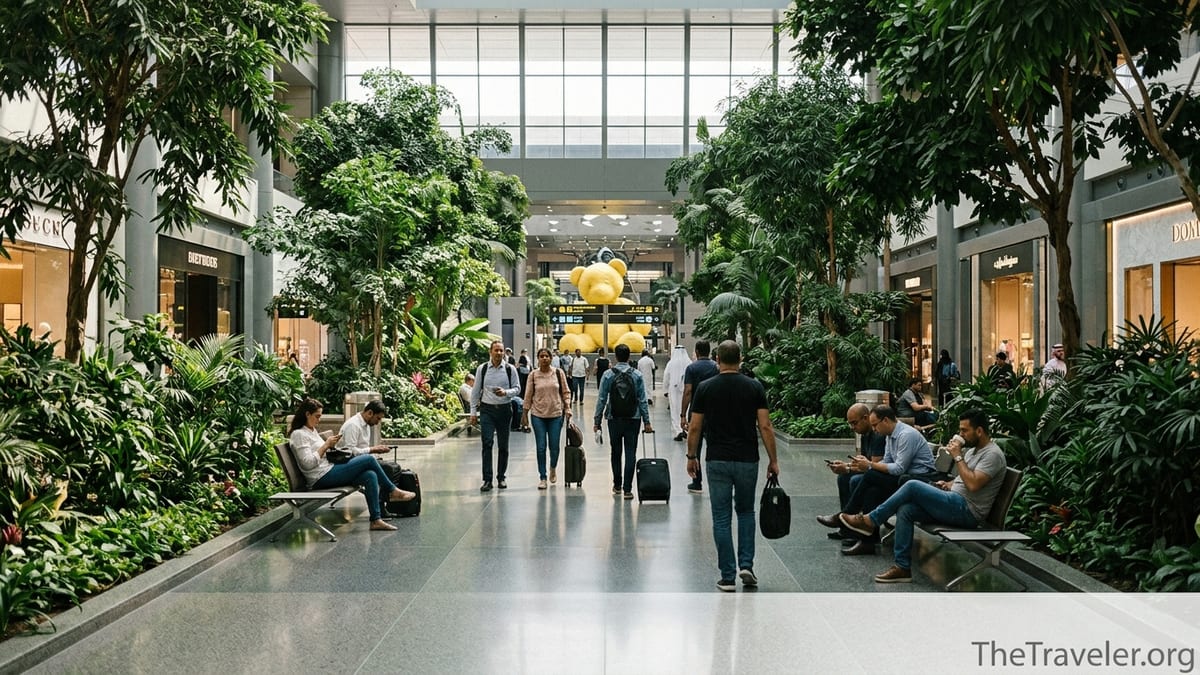
For something more flexible, the Sleepover lounges, which evolved from the original sleep ’n fly pods and now operate in the South Transit area near the famous yellow teddy bear sculpture and in the North Node near gates C30 and C31, are a favorite among long haul economy passengers. Recent price indicators from sleep pod aggregators suggest that private pods here often cost in the region of roughly 35 to 65 US dollars per hour depending on pod type and booking channel. Travelers with 6 to 9 hour layovers frequently reserve a three hour window during their personal “body clock night,” use the first couple of hours of the layover for a shower and meal, then crash in a FlexiSuite or cabin pod and still wake up with time for boarding.
Budget minded flyers sometimes opt to sleep for free in quieter corners of the terminal. Over the past couple of years, many have gravitated toward dimmer seating areas along the concourses away from the main Orchard and duty free zones, such as near the far end of concourse C or certain corners of concourses D and E. While there are no true “sleeping rooms” that are free of charge, Hamad does have padded benches without armrests and carpeted floor spaces where travelers routinely stretch out. Earplugs, an eye mask, and a lightweight travel blanket or shawl make a big difference here; frequent transits travelers often keep a compact sleep kit permanently in their carry on just for these situations.
Making the Most of Lounges and Showers
Hamad is a major hub for Qatar Airways, so premium class and oneworld status passengers have access to some of the region’s flagship lounges. Frequent travelers flying business or first class on Qatar often base themselves in the airline’s own lounges for most of the layover, using them for restaurant style dining, showers, and quieter workspaces. Many report treating these lounges as an extension of the aircraft cabin, arriving with a plan: eat immediately to reset mealtimes, shower within the first hour, then either work or rest in a quiet area before boarding the next flight.
For those traveling in economy, paid access lounges are a key tool. The Al Maha Transit Lounge in the North Plaza and several contract lounges accessible with programs like Priority Pass typically sell entry for blocks of around four hours, with pricing that in recent years has often fallen in the range of about 50 to 80 US dollars depending on lounge and booking method. Seasoned users suggest comparing this against the cost of a pod: if your main goal is a hot meal, coffee and showers, a lounge can be better value. If your main priority is deep sleep, a dedicated sleep pod or hotel room usually wins.
Showers are one of the most prized amenities on extremely long routings, such as Sydney to London via Doha. In addition to showers in premium and pay per use lounges, the Oryx Airport Hotel spa has offered paid shower access to non hotel guests in the past, which some travelers use as a middle ground when they do not need a full room. A common routine among frequent flyers on 14 to 18 hour total travel days is to disembark in Doha, take a slow walk to stretch their legs, shower and change into fresh clothes, then have a proper sit down meal before trying to nap for a couple of hours.
Food, Shopping and The Orchard: Where to Spend Your Time
Food at Hamad ranges from quick grab and go snacks to full service restaurants run by well known international brands. Regulars advise that prices for sit down meals inside the terminal are on par with other major hubs: a mid range restaurant in the central shopping area might charge something in the equivalent of 15 to 25 US dollars for a main course, while a coffee and pastry from a chain café typically comes in around 7 to 10 dollars. Because many flights arrive at odd hours, experienced travelers tend to eat a substantial meal whenever they find both an appetite and an open restaurant rather than assuming a better option will be available later in the layover.
The centerpiece of the expanded terminal is the Orchard, a large indoor garden bathed in natural light and ringed by high end retail. Frequent flyers, including some who transit several times a year, use the Orchard as their “mental reset” zone on long hauls: they walk a few circuits around the greenery, find a bench under the trees, and let their eyes rest from aircraft cabins and bright duty free aisles. This is also where you will find many of the flagship luxury boutiques, from designer fashion to watches, so those interested in shopping often plan at least 45 to 60 minutes here.
Duty free prices at Hamad are broadly competitive for certain categories like fragrances and cosmetics, but regular shoppers note that electronics are not always a bargain compared to prices in Europe or North America. If you are just passing through and want a small reminder of Qatar, experienced travelers recommend focusing on compact local products such as dates, locally roasted coffee, or small decorative items that are easy to pack and not subject to complicated warranty issues.
Wi Fi, Power and Working on the Go
Hamad offers free, time unlimited Wi Fi throughout the terminal, something that regulars consider one of its greatest practical strengths on long connections. Once you have joined the network, you can generally stay connected for the entire layover without repeated logins, which makes it realistic to work remotely or stream entertainment. Many travelers who pass through several times a year note that speeds are usually good enough for video calls in the quieter hours of the day, although bandwidth can fluctuate when multiple wide body flights arrive at once.
Power outlets are widely available, but their distribution is uneven. Frequent flyers report that the most central seating areas near the Orchard and main duty free are often crowded, with many passengers hunting for sockets. More reliable options tend to be found along the concourses closer to the gates, particularly in smaller seating clusters and near some of the quieter coffee stands. A practical habit among seasoned travelers is to top up devices as soon as they sit down, rather than waiting until the battery is low and then trying to hunt for a free outlet.
Those who work on the road also pay attention to lighting and noise. Bright, busy central spaces are fine for quick emails but not ideal for long stretches of focused work. Many repeat passengers therefore build a loose routine: 30 minutes in a café or lounge to download documents and answer urgent messages, followed by an hour in a quieter terminal corner near their next gate for deeper work. Noise canceling headphones and a lightweight laptop stand are common in the bags of consultants, engineers and remote workers who use Hamad several times a year.
Layover Adventures: When It Is Worth Leaving the Airport
One of the most debated questions among frequent travelers is whether to leave the airport on layovers of 8 to 12 hours. The consensus that has emerged from countless trip reports is that it often is worth it, but only when the timing and logistics are on your side. For example, a 10 hour daytime layover from 08:00 to 18:00 gives enough time to clear immigration, take the metro or taxi into town, enjoy a few hours exploring areas like Souq Waqif, the Corniche or the redeveloped Mina District, have a proper meal, and get back with at least two to three hours to spare before the next flight.
On the other hand, if your connection runs from midnight to 10:00 in the morning, many experienced flyers now prefer to stay airside. They cite the cumulative fatigue of two rounds of security and immigration, the limited opening hours of many attractions before mid morning, and the temptation to overschedule when their body clock is screaming for rest. In these cases, a common strategy is to divide the layover into distinct blocks: one for hygiene and food, one for real sleep in a pod or hotel room, and one for light exercise and browsing the Orchard before boarding.
Travelers who do decide to go out typically keep things simple. A popular pattern is to take a taxi directly to Souq Waqif, spend a couple of hours wandering its alleys, perhaps have a late breakfast or early dinner at one of the outdoor restaurants, and then walk briefly along the Corniche before heading back. This gives a taste of Doha’s atmosphere without the stress of trying to tick off too many sights. Seasoned visitors also keep a close eye on the weather, as Doha’s summer heat can be intense. If your layover falls in the hottest months and middle of the day, many frequent flyers recommend staying indoors unless you are very heat tolerant.
The Takeaway
What separates first time visitors from regulars at Hamad International Airport is not insider access so much as intentional planning. Frequent flyers do their homework on whether to stay in the terminal or head into Doha, they pre book sleep pods or hotel rooms for long layovers instead of hoping something will be available at the last minute, and they think in terms of concrete blocks of time for eating, washing, working and resting. With that mindset, a 9 hour wait in Doha can shift from a grueling endurance test to a structured pause that actually leaves you feeling more human when you board your onward flight.
Above all, the travelers who swear by Hamad treat the airport as a flexible toolkit rather than a fixed experience. On one trip they may simply use the free Wi Fi and a quiet corner to get a few hours of work done between flights. On another, they might splurge on a pod and a long shower to recover from a red eye. The combination of efficient transport links, modern facilities, and increasingly traveler friendly services means that if you approach your time in Doha with a plan tailored to your budget and priorities, Hamad International can become one of the most manageable and even enjoyable hubs on your long haul routes.
FAQ
Q1. Is it worth booking a sleep pod at Hamad International Airport?
For layovers longer than about six hours, many frequent travelers find that a few hours in a Sleepover pod are worth the cost, especially on overnight connections where deep sleep is hard to get in regular seating. If you mainly want food and showers, a paid lounge can be better value, but if real rest is your priority a pod or hotel room usually pays off in how you feel on the next flight.
Q2. How early should I arrive at Hamad International Airport before my flight?
Most airlines at Hamad recommend arriving about three hours before an international departure, and frequent flyers generally follow that rule of thumb. Travelers with checked baggage, traveling in peak evening bank hours, or needing to claim tax refunds often allow an extra 30 to 60 minutes, while those with only hand luggage on quieter mid day departures sometimes find two and a half hours sufficient.
Q3. Is the Doha Metro the best way to get from the airport to the city?
The Doha Metro Red Line is usually the best option for solo travelers or couples with light luggage, thanks to its low fare and predictable travel time of around 20 to 30 minutes to central stations. For families with several suitcases or those arriving after midnight, taxis or ride hailing services can be more practical, especially when splitting the cost across multiple passengers.
Q4. Can I sleep for free inside Hamad International Airport?
Yes, many travelers sleep for free in the public seating areas of the terminal, especially in quieter stretches of the concourses away from the Orchard and main duty free. While these areas are generally safe and open all night, they can be bright and noisy, so regulars recommend eye masks, earplugs and a small travel blanket to make rest more comfortable.
Q5. Are there showers at Hamad International Airport for economy passengers?
Economy passengers can access showers by paying to enter certain lounges or by purchasing shower access through the Oryx Airport Hotel’s facilities when available. Prices vary, but many travelers consider a shower on a long multi leg journey one of the best value comforts, particularly when connecting between overnight flights or moving across major time zones.
Q6. Is it safe and practical to leave the airport on a long layover?
Leaving the airport on a layover of eight hours or more is both safe and practical for most travelers, especially during daytime hours. The key is to allow at least two to three hours on each end for security, immigration and transport, and to keep your plans simple, such as a focused visit to Souq Waqif and the Corniche rather than trying to cross the entire city.
Q7. How good is the Wi Fi at Hamad International Airport?
The airport’s free Wi Fi is generally reliable and fast enough for email, web browsing and streaming in most public areas and lounges. Frequent travelers who work on the move report that video calls are usually smooth during off peak times, although speeds can dip briefly when several large flights arrive and many passengers log on simultaneously.
Q8. What is the best strategy for an overnight layover in Doha?
For overnight layovers of eight to twelve hours, experienced flyers often split the time into segments: eat and shower soon after landing, book a sleep pod or hotel room for three to six hours during their normal sleep window, then spend the final hour or two strolling the terminal and Orchard before boarding. This approach typically leads to better rest and less jet lag than trying to stay awake all night in public seating.
Q9. Are food and drinks expensive at Hamad International Airport?
Prices for food and drinks at Hamad are similar to other major international hubs, with sit down meals in mid range restaurants often costing the equivalent of 15 to 25 US dollars and coffee shop snacks around 7 to 10 dollars. To manage costs, frequent travelers sometimes eat a main meal on board their flight and then use the airport for lighter meals or snacks, or they opt for lounge access where food and drinks are included in the entry price.
Q10. How far in advance should I book lounges or sleep pods in Doha?
For peak travel seasons and overnight layovers, it is wise to book lounges or sleep pods several weeks in advance, especially if you need a specific time slot. Outside of busy periods, same day bookings are often possible, but frequent flyers still prefer to reserve at least a few days ahead to guarantee a spot and avoid wandering the terminal tired and searching for an available pod or lounge seat.