


More news on this day
Portugal’s Douro River, one of Europe’s fastest growing river cruise destinations, has effectively reached its official ship capacity, according to recent statements from the river authority, raising new questions about how the region balances tourism growth, safety and environmental protection.
Get the latest news straight to your inbox!
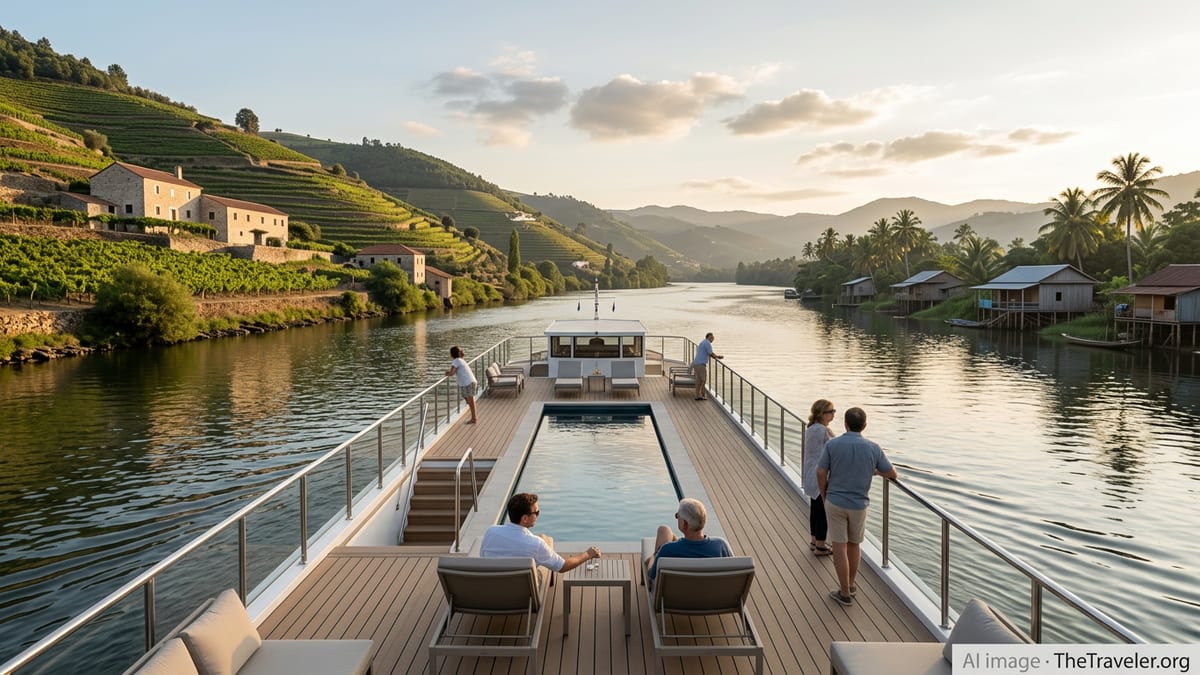
River Authority Signals Stop to New Cruise Ship Approvals
Recent reports from Portuguese media and trade publications indicate that the Douro River authority is no longer approving additional large cruise vessels for the waterway. The decision follows more than a decade of rapid fleet expansion that turned the once quiet wine valley into a major river cruise corridor.
Publicly available information shows that dedicated Douro cruise ships have increased steadily since the mid‑2000s as international operators added capacity to meet rising demand. Industry data compiled in European inland navigation reports describe the Douro as a relatively small segment of the overall river cruise market by share, but one that has grown quickly in absolute numbers of vessels and berths.
The river authority’s position effectively sets a ceiling on the number of licensed cruise ships that can operate multi‑day itineraries along the Portuguese section of the river. While existing vessels can continue sailing, the halt to new approvals is widely interpreted as a recognition that the narrow, lock‑controlled waterway is operating at or near the limits of what it can safely and comfortably accommodate during peak season.
Local coverage suggests that the decision was shaped by a combination of navigation capacity at locks and quays, congestion in small riverside towns and ongoing concerns over shoreline erosion and wake impacts. The authority’s stance aligns with a broader European trend in which popular destinations are examining how many ships, and how many passengers, their infrastructure and communities can realistically handle.
A Small River Carrying a Growing Share of Europe’s Cruise Market
Compared with major cruise arteries such as the Rhine and Danube, the Douro remains a modest slice of the European river cruise business. Market studies on passenger shipping in Europe show that the river typically represents only a single‑digit percentage of total cruise capacity across the continent, well behind northern and central European routes.
What sets the Douro apart is its geography. The river winds through steep, terraced vineyards in a valley that has been recognized as a UNESCO World Heritage cultural landscape, with tight bends and a series of dams and locks constraining vessel length and frequency. Operators use specially designed ships adapted to those dimensions, and the cumulative number of such vessels has now reached the level at which the authority considers the system saturated.
Travel industry analyses highlight that river cruises remain a fast‑growing segment globally, with European rivers absorbing much of that demand. Within this context, the Douro has become a flagship itinerary for passengers seeking a combination of wine tourism, historic towns and scenic cruising. The cap on additional ships therefore represents a significant intervention in a market that, until recently, appeared on track for continued expansion.
From a commercial perspective, the capacity limit could favor existing operators that already hold berths and sailing rights on the Douro, potentially increasing the value of those assets. It may also encourage companies to invest in refurbishments and onboard upgrades rather than in new tonnage, given that the overall number of hulls on the river is unlikely to grow.
Overtourism Pressures Reach Portugal’s Wine Valley
The Douro’s ship limit fits into a wider European conversation about overtourism and the environmental footprint of cruise traffic on rivers and coastal destinations. In recent years, cities such as Amsterdam and island destinations in the Mediterranean have introduced caps or restrictions on cruise arrivals as residents and planners question the impact of concentrated visitor flows.
In the Douro Valley, concerns have centered on a combination of visual and noise intrusion, increased traffic through small historic centers and the cumulative effect of wakes on fragile riverbanks. Environmental groups and some local stakeholders have pointed to the river’s constrained morphology, warning that further increases in vessel numbers could exacerbate erosion, safety margins in tight channels and conflicts between cruise operators, local ferries and recreational craft.
Tourism observers note that the Douro’s growth has brought clear economic benefits to port cities such as Porto and to rural communities that receive excursion traffic. At the same time, the character of some riverside settlements has changed as seasonal crowds concentrate around piers and viewing points during the main sailing months. The new ship cap is being interpreted by many analysts as an attempt to stabilize that dynamic rather than allow continuous volume growth.
Climate‑related variability in river levels is another factor in the background. Low or exceptionally high water can affect navigation windows on European rivers, and industry discussions increasingly reference the need to plan capacity with hydrological limits in mind. For a river as tightly engineered and geographically constrained as the Douro, those factors add further weight to the argument that there is a practical upper bound on ship numbers.
Implications for Cruise Itineraries and Future Investment
The ship limit on the Douro is expected to reshape how cruise companies plan itineraries and invest in the region over the next several years. With the number of vessels effectively frozen, growth will likely come from optimizing occupancy, refining onboard offerings and diversifying shore excursions rather than from deploying additional ships.
Some operators may respond by extending the season at the margins, offering more spring and late‑autumn departures in an attempt to spread demand beyond the busiest summer weeks. Others may consider pairing shorter Douro itineraries with land‑based extensions in Lisbon, Porto or Spain to create longer packages without increasing the pressure on the river’s daily traffic.
Industry analysts suggest that the Douro decision could also redirect newbuild investment toward other rivers where infrastructure allows for more ships or larger vessels. Companies that had been eyeing the Douro for future deployment may instead look to the Rhine, Danube or emerging routes in Eastern and Southern Europe for expansion opportunities.
For local and national planners, the capacity ceiling creates an incentive to focus on quality, sustainability and value capture from the cruise segment that already exists. That includes potential investments in cleaner propulsion technologies, shore‑power connections where feasible and better integration of cruise passenger flows with local transport and heritage conservation plans.
What Travelers Should Expect Next Season
For travelers booked on Douro cruises in upcoming seasons, the river’s ship limit is unlikely to disrupt existing plans, as current vessels are permitted to continue operating under their licenses. However, the constraint on new capacity could influence pricing and availability, particularly during peak dates, if demand continues its upward trajectory.
Travel advisors are already signaling that the Douro may become a route where early booking is increasingly important, especially for cabins with balconies or premium amenities. With no prospect of a larger fleet to absorb demand, competition for prime departures could intensify.
On the ground, visitors may notice incremental adjustments rather than sweeping changes. These could include more staggered timing of port calls, refined crowd‑management practices in popular small towns and a stronger emphasis in marketing materials on sustainability and responsible tourism in the Douro Valley.
The Douro’s ship cap offers a case study in how destinations with finite natural and infrastructural capacity are beginning to set clearer boundaries on tourism growth. For river cruise passengers, it signals that one of Europe’s most scenic itineraries is moving into a new phase in which safeguarding the river corridor takes precedence over simply adding more ships.