


More news on this day
SpiceJet passengers headed to Dubai faced fresh disruption in recent days as multiple departures from India ran hours behind schedule, leaving some travelers stuck overnight at airports and scrambling to protect onward connections, hotel bookings, and work commitments.
Get the latest news straight to your inbox!
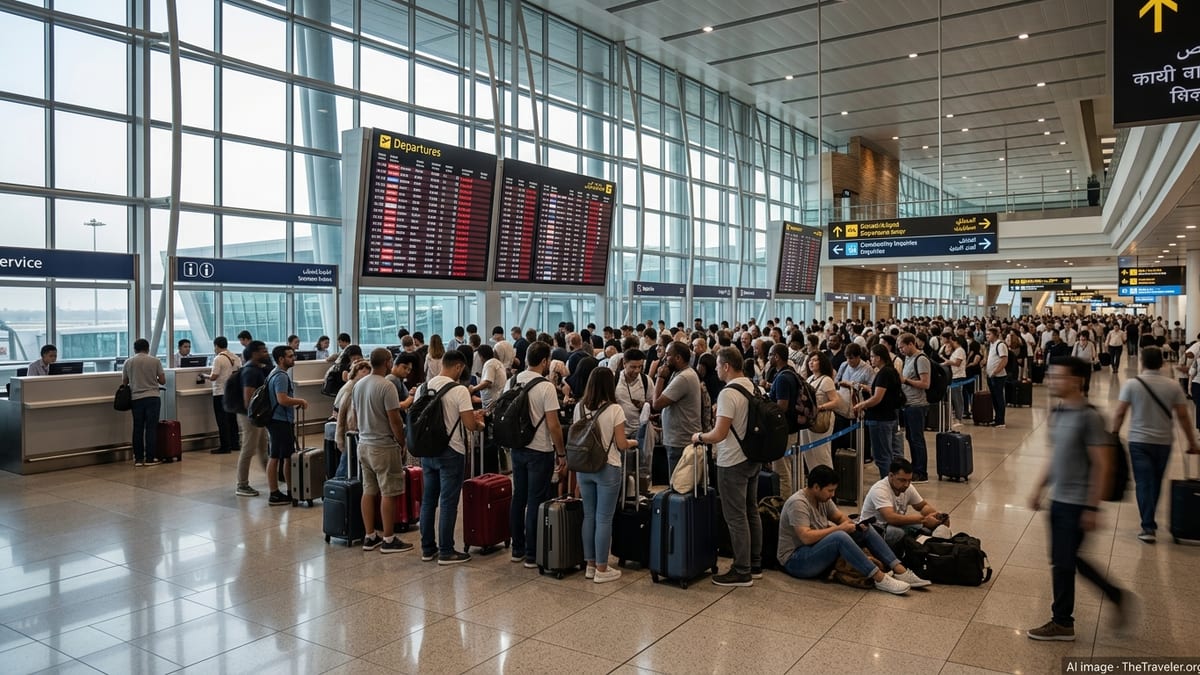
What travelers say happened on delayed Dubai-bound departures
Published coverage in India has described a series of Dubai-bound disruptions involving SpiceJet, including lengthy delays and, in at least one widely reported case, a cancellation after passengers waited for hours at the gate. Reports have centered on crowding at terminal areas, repeatedly revised departure times, and travelers seeking clearer updates about when flights would actually depart.
One of the most recent flashpoints involved SpiceJet’s Pune to Dubai service, commonly identified as SG-51. Coverage described passengers waiting for extended periods as schedules shifted, with some accounts indicating they remained at the airport late into the night or into the next day while departure times were revised.
Separate reporting has also pointed to disruptions on other India to Dubai sectors, including instances where passenger counts were described in the “hundreds,” underscoring that these are not isolated one-off cases on lightly loaded routes. The immediate impact for travelers can range from missed connections to lost hotel nights and uncertainty over visa or employment deadlines tied to arrival times.
Recent case examples on the SpiceJet to Dubai network
Coverage in September 2026 described a major delay for Pune to Dubai, with passengers reporting a wait that stretched close to a full day as the flight time was repeatedly rescheduled. Other reports in late August 2026 also described shorter but still significant delays on the same Pune to Dubai sector, with complaints focused on the pace and clarity of information at the airport.
In addition, earlier 2026 reporting highlighted a Jaipur to Dubai disruption where a flight was delayed for many hours and later cancelled, leaving travelers to seek alternative arrangements. While the specifics vary by incident, the common theme across reports is that travelers had difficulty planning onward steps when the departure time kept shifting.
Flight-tracking histories for specific flight numbers can show unusually large arrival delays on particular dates, but travelers should treat these as a supplement rather than a replacement for airline notifications, since operational decisions can change quickly depending on aircraft positioning, maintenance requirements, and airport constraints.
Passenger welfare expectations at DXB and what that means in practice
For flights involving Dubai International Airport (DXB), passenger welfare expectations during disruption are documented in Dubai Airports operational conditions that outline minimum assistance standards. These materials describe the expectation that airlines provide clear communication and make informed representatives available to passengers throughout periods of disruption, with an emphasis on timely updates and visible support at check-in and beyond when delays or cancellations occur.
Dubai has also moved in 2026 toward a more structured consumer-welfare approach for aviation. Publicly available information indicates the Dubai Civil Aviation Authority introduced an Aviation Consumer Welfare Directive and a related mechanism intended to clarify passenger rights and airline obligations and to support complaint handling through a mediated process.
In practical terms, passengers affected by a delay or cancellation on a Dubai sector may need to deal with two different environments: assistance at the departure airport in India and assistance on the Dubai side for return services or disrupted onward journeys. Expectations can differ depending on where the disruption occurs and which local consumer-welfare framework applies.
How travelers can protect bookings and document disruption
When a delay extends into many hours, travelers can reduce downstream losses by documenting a timeline: screenshots of the booking, boarding passes, revised departure notifications, and any written communication provided at the airport. Receipts for meals, local transport, or emergency lodging can be important if reimbursement becomes an option under the carrier’s policies or applicable rules.
For travelers departing India, India’s passenger-facing guidance includes the Ministry of Civil Aviation’s Passenger Charter and the AirSewa grievance system, which provides a channel to escalate unresolved service issues. Public guidance emphasizes first raising the matter with the airline and then using formal grievance tools if the outcome is unsatisfactory.
For those who must rebook at their own cost, the most immediate decision is often whether to wait for the delayed flight, seek an alternative carrier to Dubai, or postpone travel altogether. Because last-minute fares can rise sharply around peak travel periods, the financial hit can be significant, so travelers may want to confirm rebooking and refund options in writing before purchasing replacement tickets.
Why these disruptions matter on Dubai routes
Dubai remains a major hub for onward travel to the Middle East, Africa, and Europe, and delays into DXB can cascade into missed connections, reissued visas for some itineraries, and disrupted work schedules for travelers commuting between the UAE and India. A delay of several hours can be manageable; an overnight delay can materially change the cost and feasibility of a trip.
The recent wave of passenger complaints also highlights how communication quality becomes part of the disruption itself. Even when operational issues are legitimate, a lack of clear, frequent updates can intensify crowding and anxiety at gates and check-in areas, particularly for families, elderly passengers, and travelers with tight arrival deadlines.
As reports continue to surface across multiple India to Dubai sectors, travelers booked on affected routes may want to monitor flight status closely on the day of travel, arrive with extra buffer time for connection plans, and keep a fallback plan for hotels and onward transport if a delay pushes travel into the next day.