


More news on this day
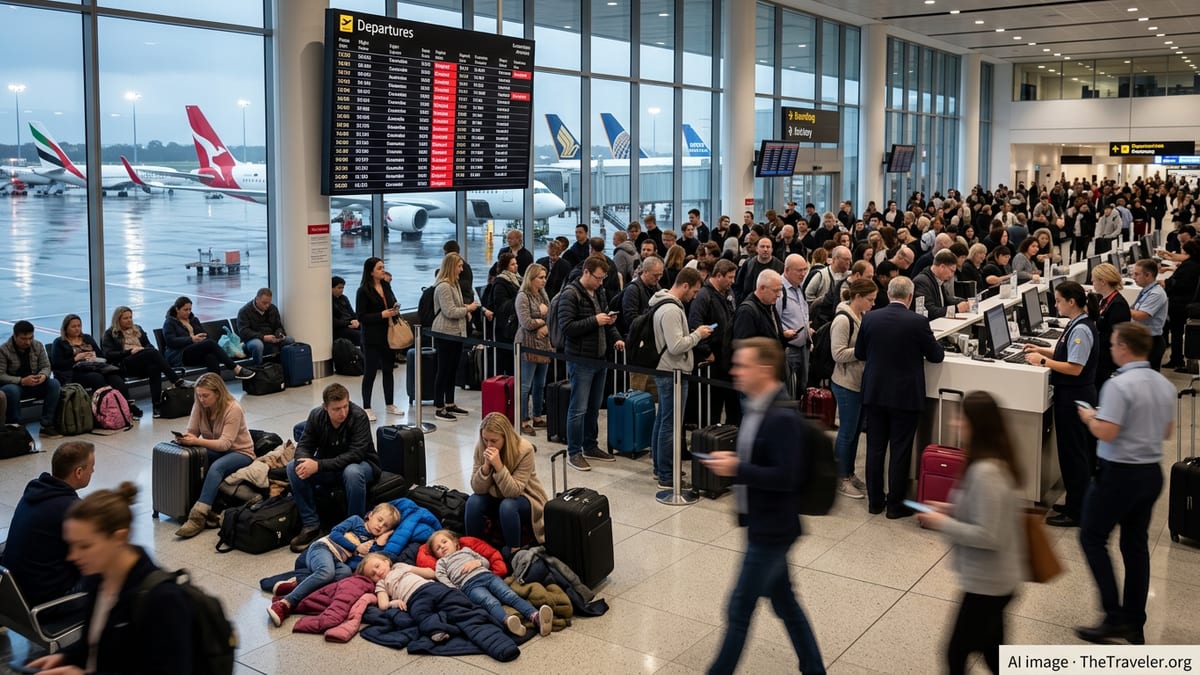
Travel across Canada and the Pacific Northwest faced fresh turbulence after Vancouver International Airport registered 61 delayed departures and six cancellations in a single operating period, affecting carriers including Pacific Coastal, Horizon Air, Jazz and WestJet on routes to Toronto, Seattle, San Francisco and other major cities.
Get the latest news straight to your inbox!
Ripple Effects Across Canadian and U.S. Routes
Operational data from Vancouver International Airport indicates that the latest wave of disruption touched a broad mix of domestic and transborder services, with flights to Toronto, Seattle and San Francisco among those delayed or cancelled. The 61 delays and six cancellations were concentrated among short and medium-haul services that typically carry both business and leisure travelers, heightening the impact on weekend and early-week itineraries.
Published flight information shows Pacific Coastal, Horizon Air, Jazz and WestJet among the airlines most visibly affected, alongside several smaller regional operators. These carriers link Vancouver to key hubs such as Toronto Pearson, Seattle-Tacoma and San Francisco International, meaning disruption at Vancouver quickly translated into knock-on effects along the wider network.
Travel industry coverage in recent days has already highlighted strong passenger volumes at Vancouver International Airport, particularly around the May long weekend in British Columbia. With the airport expecting hundreds of thousands of travelers over a multi-day peak period, even a relatively modest number of delayed and cancelled flights can translate into crowded departure halls and tight connection windows for onward journeys across Canada and the United States.
The pattern of disruption underscores how tightly connected Vancouver’s operations are to the broader North American system. When schedules bunch up or weather and congestion affect partner airports, the result is often seen in stacked departure boards and rolling delays out of Vancouver on routes that are ordinarily among the most reliable.
Carriers Most Exposed at Vancouver
Publicly available route and schedule data lists Jazz, Pacific Coastal, Horizon Air and WestJet among the most active operators at Vancouver International Airport, alongside larger network carriers. These airlines serve a mix of regional communities within British Columbia, major Canadian centers such as Toronto and Calgary, and cross-border gateways including Seattle and San Francisco.
Information compiled by aviation analytics platforms indicates that WestJet, in particular, has seen variable punctuality on certain Vancouver departures over recent months, including services to Toronto and U.S. West Coast cities. Separate tracking of flights between Vancouver and Seattle also shows moderate average delays, reinforcing how small schedule slips can accumulate across a busy day of operations.
Pacific Coastal and Jazz are key providers of regional connectivity from Vancouver, linking smaller coastal communities and interior cities to the country’s second-busiest airport. When their flights are delayed or cancelled, travelers often have fewer same-day alternatives, leading to rebookings through other hubs or overnight stays. Horizon Air plays a similar role on the U.S. side, feeding passengers between Seattle, Vancouver and other points in the Pacific Northwest.
Industry observers note that such disruption can be especially challenging for travelers on multi-leg journeys, where a short delay on a regional feeder flight may cause a missed connection onto a long-haul service. With major hubs like Toronto and San Francisco forming key onward gateways, irregular operations at Vancouver can reverberate far beyond the immediate region.
Weather, Congestion and System Pressures
The precise mix of causes behind the 61 delays and six cancellations at Vancouver has not been fully detailed, but recent aviation briefings for North American airspace point to a familiar combination of factors: low cloud ceilings, coastal fog and airspace flow restrictions at major hubs, including San Francisco. When such programs are in effect, flights departing from other airports may be held, slowed or re-sequenced, feeding delay into their origin points.
Vancouver’s role as a coastal hub also makes it particularly sensitive to changing weather conditions that can reduce runway capacity or require increased separation between aircraft. Industry guidance on delay categories highlights how a single bout of adverse weather, combined with already-busy schedules, can quickly generate extended knock-on effects for airlines and travelers.
Beyond weather, recent coverage of the Canadian aviation sector has cited crew availability, tight turnaround times and strong seasonal demand as additional sources of pressure on reliability. Airlines operating dense schedules through airports like Vancouver have limited spare capacity to absorb irregular operations, which can lead to cascading delays once a morning departure departs late or a mid-day rotation is disrupted.
Published statistics from punctuality trackers show that even on routes regarded as relatively stable, average delays in the range of 15 to 30 minutes are not unusual during busy periods. When dozens of flights in a single day experience similar or longer slippages, overall airport performance metrics can deteriorate quickly, resulting in visible congestion at gates and security checkpoints.
Impact on Travelers and What Passengers Can Expect
For passengers, the immediate effect of the latest disruptions at Vancouver International Airport has been longer waits at departure gates, tighter or missed connections and, for those on cancelled services, last-minute rebookings or overnight stays. Travelers bound for Toronto, Seattle and San Francisco are particularly vulnerable to missed onward flights because those destinations serve as gateways to extensive domestic and international networks.
Consumer advocates typically recommend that passengers monitor their flight status frequently on days when a cluster of delays is reported at a major hub. Publicly available tracking tools and airline status pages often update in near real time and can provide early warning of schedule changes, gate swaps or equipment substitutions that might affect a journey.
While compensation rules vary between Canada and the United States, and depend heavily on the underlying cause of a delay or cancellation, travelers are generally advised to retain boarding passes and documentation of any additional expenses incurred during long disruptions. Government agencies in both countries publish guidance on passenger rights, and many travelers consult this material when deciding whether to pursue compensation or reimbursement.
In the near term, passengers transiting Vancouver can expect airlines to adjust schedules, swap aircraft and reallocate crews to restore normal operations. As the peak spring and early summer travel period continues, the recent episode of 61 delays and six cancellations serves as a reminder that even well-managed hubs can experience sudden bouts of disruption that ripple across Canada and the cross-border network.
Vancouver’s Growing Traffic and Operational Resilience
The disruptions come at a time when Vancouver International Airport is handling a high volume of passengers and flights. Recent reporting has noted that the airport has seen sustained growth in traffic and continues to position itself as a primary gateway between Canada, the Pacific Northwest and the broader Asia-Pacific region.
Airport planning documents and fee schedules released for 2026 indicate ongoing investment in infrastructure and services intended to support higher levels of activity. These efforts are designed to improve capacity and resilience, even as airlines adjust their route maps in response to shifting demand patterns and operating costs.
Analysts point out that short-lived episodes of disruption, such as the one involving 61 delays and six cancellations, must be viewed against the backdrop of an airport that routinely handles hundreds of daily movements. Performance snapshots show that average delay times at Vancouver can fluctuate significantly from day to day, with recent seven-day averages suggesting that, outside of busy peaks, operations remain relatively stable.
However, with carriers like WestJet reassessing some transborder routes and other airlines fine-tuning their domestic networks, travelers using Vancouver International Airport are likely to see continued schedule changes through 2026. For many, careful itinerary planning, longer connection buffers and close monitoring of flight status will remain essential strategies when flying through one of Canada’s busiest hubs.