


More news on this day
New York’s LaGuardia Airport is facing a new wave of severe disruption, with hundreds of travelers reporting mass flight cancellations and rolling delays on Southwest, American, and Delta services, intensifying an already turbulent spring for U.S. air travel.
Get the latest news straight to your inbox!
Rolling Cancellations Hit Key U.S. Carriers at LGA
Publicly available flight data and traveler reports indicate that LaGuardia has again become a flashpoint for disruption, with Southwest Airlines, American Airlines and Delta Air Lines among the hardest hit on several recent high-volume travel days. While individual flights continue to operate, clusters of cancellations and multi-hour delays have turned routine journeys into day-long ordeals for many passengers transiting the New York hub.
Monitoring tools that aggregate operations across major U.S. carriers show that both Delta and Southwest have experienced elevated systemwide cancellation rates this month, with ripple effects landing heavily at LaGuardia, one of their key Northeast gateways. American’s regional operations have also seen scattered cancellations at the airport, particularly on short-haul routes operated by partner carriers using smaller jets.
Travel-focused forums and social media posts from early to mid-May describe itineraries unraveling with little warning, including trips from LaGuardia to major domestic destinations such as Atlanta, Chicago, Dallas, and Florida and Midwest cities. Some travelers reported multiple schedule changes within hours, followed by abrupt cancellations, as airlines attempted to re-time banks of flights or juggle available aircraft and crews.
Despite the chaos, LaGuardia has remained open, and many departures and arrivals are proceeding close to schedule. The challenge for passengers has been the uneven nature of the disruption: one flight may leave nearly on time, while another to a similar destination is grounded entirely, creating what some travelers describe as a “lottery effect” in their chances of getting out of the airport.
Safety Precautions and Operational Strain After Earlier Incidents
The latest disruption comes as LaGuardia continues to operate under heightened scrutiny following a serious runway incident in March involving an Air Canada Express flight and an airport fire truck. Aviation reference data and public reports note that the collision prompted closer attention to ground operations, runway occupancy, and emergency procedures at the airport, all under the oversight of federal and regional aviation authorities.
Travelers and aviation watchers say that, in the weeks since, LaGuardia has seen periodic clusters of cancellations across several airlines on certain days, particularly during adverse weather or peak congestion periods. Passenger accounts from late March highlighted an unusually high number of scrubbed departures, including for Delta, Southwest, and other carriers, with some observers attributing the pattern in part to more conservative spacing and safety margins on the airfield.
While airlines have not publicly tied specific cancellation waves directly to the incident, industry analysts note that any added operational caution at a tightly constrained airport like LaGuardia can quickly cascade through already fragile schedules. With limited runway capacity, minimal spare gates, and high traffic density, even short-term ground stops or minor equipment bottlenecks can force carriers to cancel flights outright rather than push escalating delays deeper into the day.
The result for passengers has been a perception that LaGuardia is experiencing chronic unreliability, with safety, staffing, and weather factors all interacting in ways that are difficult to predict from a traveler’s perspective. For many, the exact cause matters less than the cumulative effect of missed connections, lost workdays, and extra hotel nights.
Delta, Southwest and American Face Mounting Reliability Questions
The problems at LaGuardia are colliding with broader reliability challenges for the three major carriers at the center of the latest disruption. Delta has drawn intense scrutiny throughout May after an unusually high number of last-minute cancellations across its network, with widely shared operations data and frequent flyer commentary pointing to crew shortages, scheduling pressures, and shifting pilot behavior as key factors.
Online discussions among Delta passengers and employees reference repeated cancellations attributed to a lack of available flight crews, particularly on certain aircraft types, even when weather at origin and destination airports has been relatively benign. Some travelers connecting through or originating at LaGuardia have reported same-day cancellations for multiple Delta flights in succession, followed by difficulty finding alternative routings on short notice.
Southwest, which built a reputation on high-frequency point-to-point service, has also been contending with weather-related disruptions and intermittent spikes in cancellations. In user accounts referencing LaGuardia and nearby Northeast airports earlier this spring, Southwest passengers have described long holds, rolling delays, and abrupt cancellations that left them scrambling for seats on later flights or forced to rebook on rival carriers.
American’s operations at LaGuardia, heavily reliant on regional partners flying smaller jets, appear particularly vulnerable to crew and aircraft imbalances. Travelers on certain American-branded regional routes report that a single aircraft or crew shortage can lead to multiple cancelled frequencies on the same day, quickly stranding passengers trying to make tight downtown meetings or same-day returns.
Weather Shocks and System Fragility Converge
Compounding airline-specific issues, LaGuardia’s recent disruptions are unfolding in the wake of a harsh winter and early spring weather pattern that repeatedly exposed weaknesses in North American aviation infrastructure. Major winter storms earlier in the year triggered thousands of cancellations across New York-area airports, including LaGuardia, leaving many airlines struggling to return aircraft and crews to their normal rotations.
Operational bulletins and planning documents released since then underscore how little slack remains in airline schedules when weather or technical issues strike. With many carriers operating near peak fleet utilization and with lean staffing models, a single day of intense disruption can take several days to unwind, particularly at slot-constrained airports such as LaGuardia where adding extra recovery flights is difficult.
Recent thunderstorm activity in the New York region has also generated temporary ground stops and diversions, according to flight-tracking data and passenger posts. In at least one case this month, a flight bound for LaGuardia diverted to John F. Kennedy International Airport after the captain announced that LaGuardia had temporarily closed, underscoring how quickly conditions can shift and trigger cascading knock-on effects across multiple airlines.
For travelers, the convergence of weather volatility, operational caution, and airline staffing and fleet pressures has translated into a sense that any given trip through LaGuardia could veer off course with little warning, especially on peak travel days when alternative options are scarce.
What Stranded Travelers Are Experiencing on the Ground
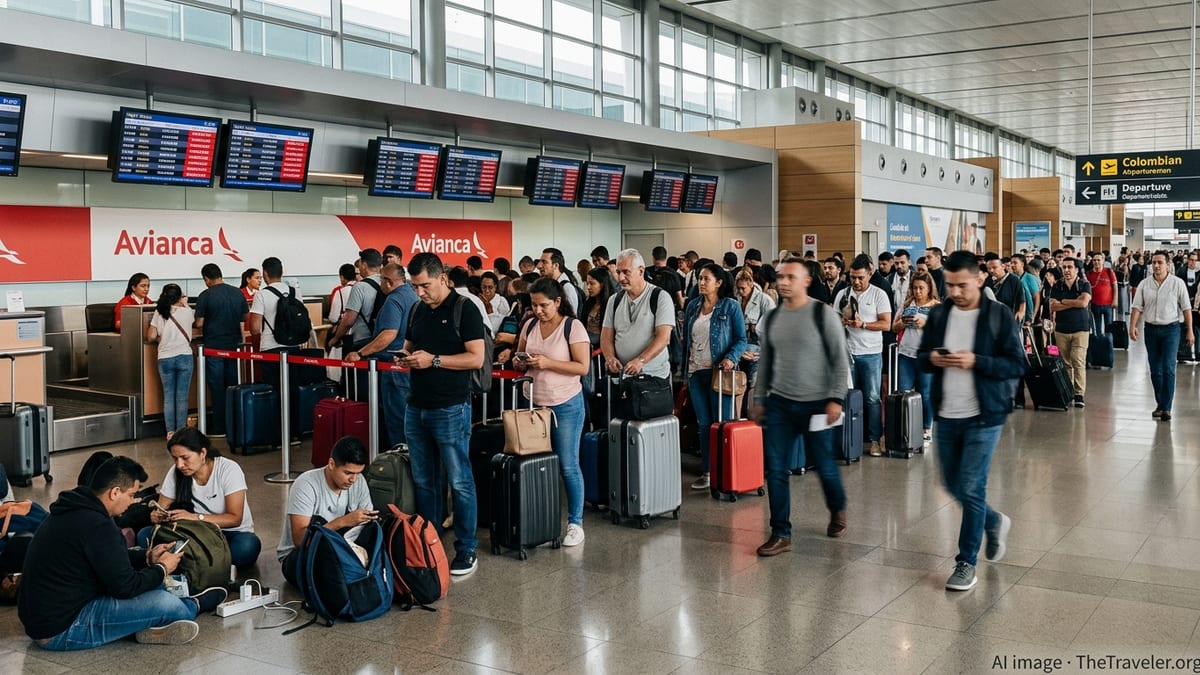
On the concourses, the impact of these disruptions is visible in long rebooking lines, crowded gate areas, and last-minute scrambles for hotel rooms. Passenger accounts from LaGuardia in recent weeks describe entire days spent in the terminal waiting for updates, only to learn that flights have been cancelled outright late in the boarding process.
Reports indicate that many affected travelers are being pushed onto flights departing the following day or even later, depending on the route and carrier. Those with time-sensitive trips, such as family events or work obligations, have documented paying out of pocket for last-minute tickets on other airlines from LaGuardia or nearby airports in a bid to salvage their plans.
Consumer advocates note that while U.S. regulations require airlines to provide refunds when flights are cancelled and passengers choose not to travel, compensation for hotel stays, meals, or lost time depends on each carrier’s internal policies. In the current environment at LaGuardia, the gap between a refundable ticket and a fully supported trip can feel stark for those stranded without clear guidance.
For now, published guidance from airlines and airport-focused resources emphasizes familiar advice for navigating major disruptions at LaGuardia: monitor flight status frequently, enroll in carrier alerts, consider earlier departures on critical travel days, and, when possible, build extra buffer time into connections. With Southwest, American, and Delta all wrestling with overlapping operational challenges at one of the country’s most constrained airports, travelers passing through LaGuardia are being reminded that even a short domestic hop can quickly turn into a prolonged test of patience.