


More news on this day
Colorado Springs Airport experienced a fresh pocket of gridlock on Tuesday as a cluster of delays and cancellations on SkyWest, American Airlines, United Airlines, Southwest Airlines and other carriers disrupted tight connections across the United States and complicated travel plans for passengers heading to and from transatlantic gateways.
Get the latest news straight to your inbox!
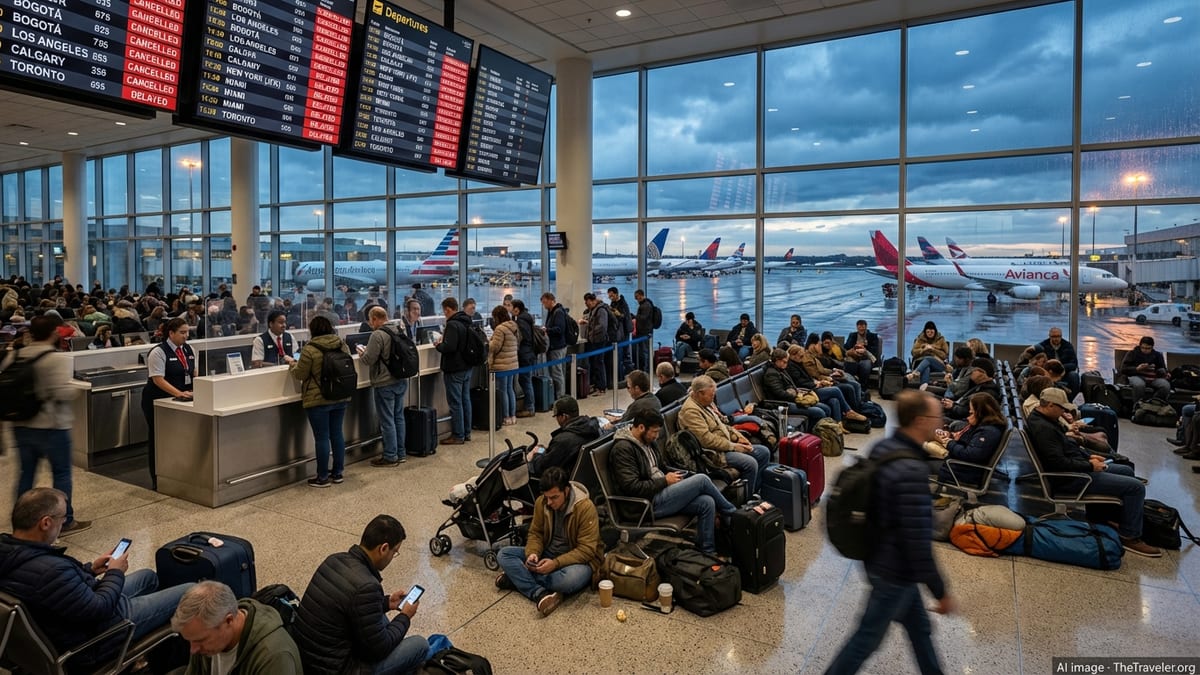
Chain Reaction of Delays and Cancellations
Publicly available flight tracking data for Tuesday indicates that operations at Colorado Springs Airport were constrained by a run of 16 delayed departures and arrivals and at least 5 cancellations, an unusually high tally for a regional facility that typically promotes a comparatively smooth passenger experience. The disruption affected multiple carriers serving the airport, including SkyWest-operated regional services branded as American Eagle and United Express, along with mainline flights on American Airlines, United Airlines and Southwest Airlines.
The affected flights were concentrated in the morning and early afternoon periods, when punctual departures are critical for maintaining onward connections at larger hubs. When several departures from Colorado Springs push back late or are canceled outright, missed links quickly cascade at connection points such as Denver, Dallas Fort Worth, Phoenix, Chicago and other major airports that feed transatlantic services.
Published coverage of national aviation trends shows that even localized slowdowns at smaller airports can reverberate widely once they intersect with already busy hub operations. A modest number of scrapped or heavily delayed departures from Colorado Springs can therefore contribute to missed long haul flights, including routes to Europe, when passengers are relying on tight connection windows at coastal or Midwestern gateways.
Although the disruption remained limited in absolute numbers compared with the nation’s largest hubs, the timing and concentration of the delays and cancellations raised the risk that Colorado Springs passengers would arrive late into connecting cities, particularly during already congested bank periods for transatlantic departures.
Operational Pressures at a Growing Regional Hub
Colorado Springs Airport has emerged as a growing regional node in recent years, with publicly available traffic statistics showing steady passenger growth and an expanding roster of airlines and destinations. SkyWest has become one of the most prominent operators at the airport, flying regional jets under the brands of major network carriers such as American Airlines and United Airlines. Southwest Airlines has also increased its footprint, linking Colorado Springs directly with Denver and other domestic markets.
This growth has improved options for local travelers but has also made daily operations more sensitive to disruptions. When regional jets operated on behalf of multiple major carriers are delayed or grounded, constraints can arise in aircraft and crew availability across several brands at once. On busy travel days, the limited spare capacity in regional fleets leaves airlines with fewer options to substitute aircraft or retime departures without further knock-on effects.
Reports on broader U.S. aviation performance indicate that carriers across the industry are managing tighter schedules and complex staffing patterns, particularly on regional routes. In this environment, a short series of weather, congestion or maintenance issues at a single airport can more easily tip a manageable delay into a small cluster of cancellations affecting multiple airlines.
Colorado Springs’ role as a spoke airport feeding larger hubs means its outbound flights are often closely sequenced with banked departures elsewhere. When an early morning flight leaves late, it can reduce recovery time at the hub and force rebookings, especially for travelers connecting to international or transcontinental services.
Weather, Airspace Congestion and Systemwide Strain
In the days leading up to the disruption at Colorado Springs, regional weather in the central Rocky Mountain corridor and the wider western United States had already been placing additional strain on airline networks. Recent coverage of operations at Denver International Airport, a key hub for United and Southwest, highlighted periods of ground stops and extended arrival delays in response to thunderstorms and fast-changing local conditions.
National data on flight interruptions consistently cite weather and airspace management challenges as leading drivers of delays and cancellations across the U.S. system. When Denver or other nearby hubs slow arrivals or departures, flights into and out of Colorado Springs can be forced to wait for available slots, compounding schedule pressure on regional jets that are typically scheduled for multiple short segments per day.
Analyses of airline performance by government and industry bodies have also emphasized how national aviation system factors such as congestion, crew positioning and ramp or deicing workloads interact with carrier specific issues. That mix can produce days when several airlines, including SkyWest, American, United and Southwest, all record elevated delay rates even without a single defining incident.
On Tuesday, the pattern at Colorado Springs aligned with this broader picture. The handful of cancellations and larger set of delays formed part of a wider matrix of regional and national disruptions affecting travel flows into and out of the central United States, with implications that stretched far beyond southern Colorado.
Impact on Domestic and Transatlantic Connections
Although Colorado Springs does not host nonstop transatlantic services, the airport plays an important role in funneling passengers toward major U.S. and Canadian gateways that do. Many travelers originating in Colorado Springs reach European destinations via connections in Denver, Dallas Fort Worth, Chicago, Phoenix, Los Angeles or Calgary, often with narrow transfer margins that leave little tolerance for departure slippage.
The 16 delays and 5 cancellations recorded at Colorado Springs therefore carried outsized consequences for customers booked on itineraries involving overnight flights to Europe and longer haul services to coastal destinations. Even a delay of 30 to 60 minutes on a regional leg can be enough to break itineraries that were planned around standard minimum connection times at large, busy hubs.
Travel industry coverage of recent national disruption waves has highlighted exactly this vulnerability, showing how thousands of passengers across the country can see their long haul trips upended by missed connections from smaller feeder airports. The situation at Colorado Springs on Tuesday fit that pattern, with some passengers facing involuntary rerouting, long layovers or overnight stays when onward flights were unavailable until the following day.
For airlines, the need to reaccommodate affected passengers on domestic and transatlantic routes also adds pressure to already full summer season schedules. Swapping customers onto alternative flights can quickly consume remaining seat inventory, leading to limited options for those affected later in the day.
What Travelers Can Expect in the Coming Days
Early indications suggest that the disruption at Colorado Springs is likely to be temporary rather than the start of a prolonged operational crisis at the airport. National tracking resources show that most recent clusters of delays and cancellations at U.S. airports tend to resolve over a period of several hours to a day as airlines reposition crews and aircraft and as weather or airspace constraints ease.
Even so, passengers traveling through Colorado Springs in the coming days may continue to encounter residual schedule adjustments, especially on routes operated by SkyWest for American and United, and on peak time departures flown by Southwest and other carriers. Slightly extended connection times and more conservative planning on the part of travelers may help mitigate the risk of missed onward flights, particularly for those heading to international gateways.
Consumer advocates and transportation analysts consistently recommend that passengers monitor real time flight status tools provided by airlines and third party tracking platforms, and remain attentive to gate and schedule changes on days when national delay totals begin to climb. For airports like Colorado Springs that serve as feeders to larger hubs, this can be especially important when traveling on itineraries that include overnight or long haul sectors.
While Tuesday’s gridlock at Colorado Springs Airport affected a relatively small slice of the national air travel picture, it underscored ongoing fragilities in the U.S. aviation system. As carriers juggle full flights, tight schedules and variable weather patterns, even modest disruptions at regional airports can ripple outward to touch domestic and transatlantic routes far beyond the Front Range.