


More news on this day
Hundreds of passengers at Newark Liberty International Airport faced hours of disruption as around 70 departures and arrivals were delayed and at least six flights were cancelled, affecting United States travelers booked on United Airlines, Air Canada, Delta, American and other carriers to destinations including Montreal, Melbourne, Washington, D.C., Paris and Zurich.
Get the latest news straight to your inbox!
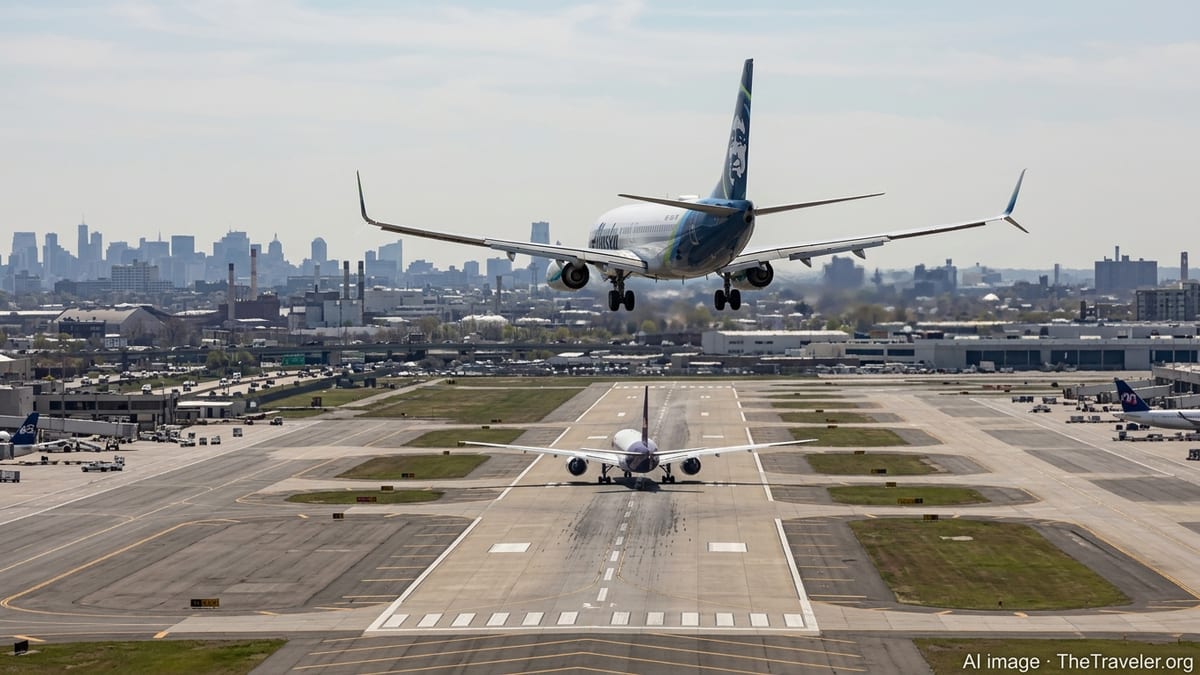
Operational Snarls Hit Major Carriers at Newark
Publicly available tracking data on Saturday indicates that Newark Liberty International Airport experienced a concentrated wave of disruption, with dozens of flights showing late departures and arrivals across the morning and early afternoon banks. The pattern of delays and a cluster of same-day cancellations affected several of the airport’s largest operators, including United Airlines, which runs a major hub at Newark, along with Air Canada, Delta Air Lines, American Airlines and other domestic and international carriers.
Flight status boards at the New Jersey airport showed repeated schedule slippages rather than outright ground stops, with many services pushed back by 30 minutes to several hours. The disruption was not confined to a single airline or route group, suggesting broader congestion in the local or regional air traffic system rather than an isolated mechanical problem. Travelers connecting through Newark to long haul destinations were among the hardest hit as modest delays cascaded into missed connections.
Newark Liberty has been operating under federal limits on arrivals and departures intended to relieve chronic congestion and staffing pressures in the busy New York area airspace. According to previous regulatory notices and aviation industry commentary, those caps are designed to smooth traffic throughout the day, yet the latest episode shows that even moderated schedules can be vulnerable when operations tighten across multiple carriers at the same time.
Online posts and travel forums in recent months have frequently highlighted Newark as an airport where minor disruptions can compound quickly because of the volume of connecting traffic and the dominance of a small group of large airlines. The latest round of delays and cancellations appears to fit that pattern, with ripple effects extending beyond New Jersey to airports across North America and Europe.
Routes to Montreal, Washington and Other North American Hubs Affected
Among the most visible disruptions on Saturday were services linking Newark with other major North American cities. Flights to Montreal, a route typically shared between United Airlines and Air Canada, were among those reporting schedule changes, with some departures pushed back significantly and at least one service scrubbed entirely. Passengers heading to or from Quebec’s largest city faced rebooking on later flights or alternate routings through other hubs in the United States and Canada.
Operations between Newark and Washington, D.C. were also affected, including services to Washington National and Washington Dulles operated by United, American and Delta’s partner network. These short-haul shuttle flights are a key link for both business travelers and connecting international passengers, meaning modest delays can quickly translate into missed onward departures. Public data showed a series of Washington-bound departures from Newark marked delayed in close succession, signaling congestion along one of the busiest corridors on the East Coast.
Domestic travelers to other U.S. cities reported similar experiences, with some aircraft leaving gates only to wait on taxiways before takeoff slots became available. Aviation analysts have previously noted that when delays accumulate on short intra-regional flights, airlines often have limited flexibility to recover schedules without resorting to cancellations, especially during peak travel hours when spare aircraft and crews are scarce.
While Saturday’s disruptions were significant for affected passengers, the number of outright cancellations remained lower than in some past weather or system outage events, according to historical data and federal consumer air travel reports. This reflects a broader industry trend in which airlines are increasingly favoring lengthy delays over cancellations in an effort to eventually deliver travelers to their destinations, even if substantially behind schedule.
Transatlantic and Long Haul Flights to Paris, Zurich and Melbourne Disrupted
The wave of irregular operations extended well beyond North America to key international destinations served from Newark. Flights to Paris and Zurich, two of the most important European gateways in the Newark route network, experienced notable schedule changes. United, which operates nonstop services to both cities, showed delayed departure and arrival times on multiple transatlantic rotations, while partner and codeshare services were also impacted by the knock-on effects of late arriving aircraft and crews.
Disruptions to transatlantic routes carry a heightened impact because long haul aircraft typically operate on tightly timed rotations that span multiple days. A delay on a Newark to Paris departure can, for example, shift the return leg, trigger crew rest issues under duty time regulations, and affect subsequent flights in the aircraft’s schedule. Industry reports and federal performance data have repeatedly highlighted how such knock-on effects can magnify the impact of even relatively short operational hiccups at a hub airport.
Passengers booked on services to Melbourne, one of the longest itineraries reachable from Newark via partner hubs, also faced uncertainty. Long haul journeys to Australia generally involve at least one connection through another North American or international gateway, making them particularly vulnerable when an initial domestic sector is disrupted. Publicly accessible itineraries showed some travelers rerouted through alternative U.S. and Pacific hubs as airlines sought to preserve same-day or next-day arrivals.
Routes to Zurich and other European financial centers are especially important for business travelers, and delays on these services can have disproportionate economic effects. Travel advisories and business travel management firms often warn clients that even when headline cancellation figures are modest, extended delays on long haul flights can disrupt meetings, conferences and onward intra-European connections for days.
Data Highlights Ongoing Vulnerability at Busy Northeast Hubs
While Saturday’s event was localized in time, it adds to a broader record of operational volatility at heavily trafficked Northeast Corridor airports. Air travel consumer reports and on-time performance rankings in recent years have shown that even as airlines adjust schedules and federal regulators cap movements to ease congestion, airports like Newark remain sensitive to weather, air traffic control constraints and airline staffing challenges.
Historical federal consumer reports show that major U.S. carriers have periodically posted elevated delay and cancellation rates at Newark and other New York area airports compared with their nationwide averages. In response, airlines and regulators have experimented with strategies such as schedule thinning, larger aircraft on key routes, and more conservative block times built into timetables. The mixed results of these efforts are reflected in days like Saturday, when an airport can move most of its schedule but still see dozens of flights run late.
Experts note that the intricate interdependence of the U.S. air transport system means that issues far from Newark can ripple into its operations. Weather in the Midwest, an equipment outage at an air traffic center, or an overseas delay on an inbound aircraft can all combine to squeeze a hub’s capacity during specific banks of departures and arrivals. As a result, travelers using Newark, particularly those with tight connections onto international flights, are frequently advised by travel planners to build in longer connection times or consider earlier departures.
The latest disruptions also underscore the importance of monitoring real-time flight status tools. Airlines, airport operators and third-party services now provide constantly updated information on departure and arrival times, allowing travelers to adjust plans more proactively. However, reports from recent disruption events suggest that when many flights are affected at once, alternative seats, hotel rooms and rebooking options can be exhausted quickly, making it critical for passengers to act as soon as irregular operations appear likely.
Passengers Face Long Waits, Rebookings and Limited Alternatives
For those caught in Saturday’s disruptions at Newark Liberty International Airport, the operational statistics translated into long waits at departure gates, customer service counters and baggage carousels. With tens of flights running late and several cancelled outright, rebooking options on the same day were constrained, particularly for popular routes to Montreal, Washington, D.C., Paris and Zurich where schedules are already tightly packed.
Public accounts from recent disruption days at Newark have described crowded terminal areas and long queues as travelers queue for assistance, seek meal vouchers or attempt to secure hotel rooms. Industry guidance notes that passengers whose flights are delayed or cancelled for reasons outside an airline’s control often receive fewer guaranteed protections, placing more importance on travel insurance, credit card coverage and flexible tickets that allow easier changes.
For airlines, episodes like Saturday’s create a difficult balance between recovering operations and managing customer dissatisfaction. Operational data from previous months shows that carriers have been trying to increase schedule resilience at Northeast hubs by adjusting departure banks and adding buffer time, but growing demand and tight aircraft utilization can limit how much slack they can build into the system. When large numbers of flights slip behind schedule, options to swap equipment or crews quickly run out.
As the busy summer travel period continues, travel management firms and consumer advocates are encouraging passengers flying through Newark and other major hubs to allow additional time, monitor their flights frequently on the day of travel, and consider backup itineraries where feasible. The latest pattern of around 70 delays and six cancellations at Newark serves as another reminder that even on days without major storms or national system outages, the margin between smooth operations and widespread disruption can be thin at the country’s busiest airports.