


More news on this day
A newly delivered package of turnouts and crossings for the Istanbul metro network is set to reinforce the city’s fast‑growing rail system, supporting higher capacity, smoother operations and upcoming extensions on several key urban lines.
Get the latest news straight to your inbox!
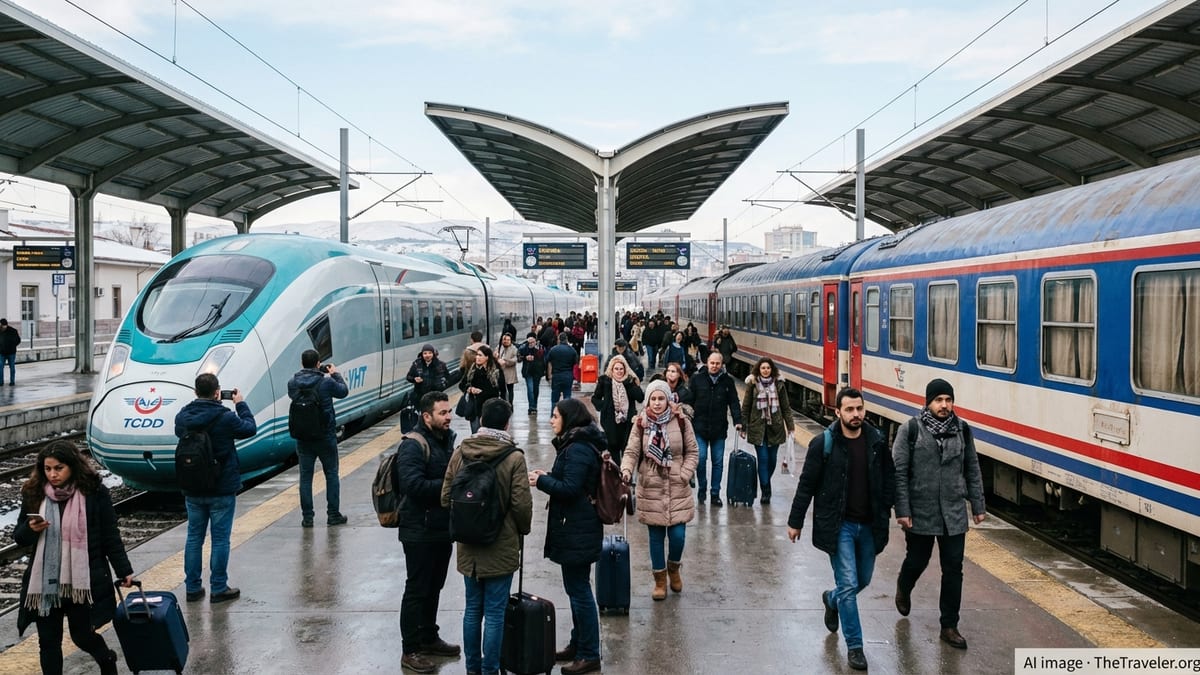
Strategic Components for a Rapidly Expanding Network
The latest deliveries cover a series of track turnouts and special track crossings for multiple corridors within the Istanbul metro, including high‑traffic sections that connect to new extensions and transfer hubs. Publicly available information indicates that the components have been procured as part of broader rail infrastructure contracts involving Turkish and international suppliers that specialize in urban rail systems and turnout technology.
Turnouts and crossings, sometimes described as the “switches and intersections” of a network, allow trains to move flexibly between tracks and enable complex operating patterns. On a densely used system such as Istanbul’s, which now includes an extensive portfolio of metro, light rail and tram lines, these elements are essential not only for daily operations but also for staging future services as new lines open.
Recent project documentation and supplier updates point to deliveries tailored for both underground metro alignments and surface or elevated approaches, reflecting Istanbul’s mix of deep tunnels, suburban sections and airport links. The new equipment is expected to be deployed progressively, coordinated with ongoing construction and maintenance windows in order to minimize disruption to existing services.
The rollout of the new hardware comes as Istanbul continues to invest heavily in rail as a long‑term response to congestion and environmental pressures. The metro operator and municipal authorities have consistently framed track upgrades as a core part of that strategy, placing particular emphasis on reliability and energy‑efficient operations.
Technical Role of Turnouts and Crossings in Metro Operations
In technical terms, a turnout is a section of track fitted with movable switch rails that guide a train from one line to another, while a crossing is the fixed element that lets wheel flanges pass through the intersection where two rails intersect. Together, they form the physical backbone of junctions, crossovers, sidings and terminal throats across a rail system.
On the Istanbul metro, these components are central to managing high‑frequency service during peak periods and to handling complex service patterns at interchanges where multiple lines converge. New turnouts and crossings are typically designed to integrate with modern signaling and train control systems, allowing safe operation at higher speeds and with shorter headways between trains.
Industry references indicate that recent deliveries for Istanbul use contemporary materials and manufacturing methods aimed at reducing wear and simplifying maintenance. This includes turnout bearers and fastening systems engineered to cope with intensive urban rail traffic and tight curves that are common in underground environments.
As metro lines extend farther across the metropolitan area and interline connections increase, the performance of these components becomes increasingly important. Robust design and precise installation help limit noise and vibration, reduce life‑cycle costs and improve ride comfort for passengers, especially on upgraded junctions where trains change tracks frequently.
Integration With New Lines, Extensions and Fleet Investments
The arrival of new turnouts and crossings coincides with a period of visible expansion across Istanbul’s rail map. Recent years have seen the opening of new metro segments on the Asian and European sides of the city, as well as the phased build‑out of lines serving the main international airports and emerging residential districts.
Project material and sector coverage describe a pipeline of additional metro, light rail and tram schemes now moving through construction and design stages. The newly delivered turnouts and crossings are expected to be installed not only on mainline routes, but also in depots, stabling yards and intermediate crossovers that give operators more options for routing trains, short‑turning services and recovering from incidents.
These physical upgrades align with rolling‑stock investments, including new generations of tram and metro vehicles that are being assembled locally for use on Istanbul lines. Matching modern trains with upgraded track components, including high‑specification turnouts, is viewed within the industry as a way to achieve more consistent performance, smoother acceleration and braking, and reduced downtime for maintenance.
In addition, the new junction equipment strengthens the city’s ability to introduce future service changes, such as express patterns, through‑running between lines or temporary diversions during construction works. Flexible track layouts give planners more room to adapt to changes in demand as the metropolitan area grows.
Local Industry and International Collaboration
The latest turnout and crossing deliveries also highlight the role of Turkey’s domestic rail industry, which has expanded its capabilities in recent years in areas such as concrete turnout bearers, fastening systems and complete turnout assemblies. Istanbul‑based manufacturers and engineering firms now participate in a range of metro and railway projects across the country, while also cooperating with international partners that supply specialized components and designs.
Company literature and sector analyses describe joint ventures and supplier agreements that bring together Turkish producers with global groups experienced in high‑speed, conventional and urban rail applications. This model allows Istanbul projects to draw on international standards and references while supporting local manufacturing, engineering jobs and technology transfer.
For the current deliveries, publicly accessible product information points to turnout solutions tailored for suburban, tramway and heavy metro contexts, with configurations designed for varying speeds, axle loads and track geometries. The emphasis is on reliability and durability under intensive use, reflecting the heavy ridership levels now typical on the Istanbul metro.
This industrial backdrop supports broader national goals related to increasing domestic content in strategic infrastructure projects. As more components are designed and produced within Turkey, project stakeholders gain greater control over lead times, maintenance support and long‑term availability of spare parts.
Implications for Passengers and Daily Service
For passengers, the delivery and installation of new turnouts and crossings is a largely invisible development, but it can have tangible effects on day‑to‑day travel. Modern junction hardware contributes to smoother train movements through crossovers and terminal approaches, which can translate into fewer delays and more predictable journey times, particularly during rush hour.
Reports on recent infrastructure enhancements for Istanbul’s metro and tram network emphasize that upgraded trackwork, including turnouts, is closely linked to service reliability indicators such as on‑time performance and reduced disruption from equipment failures. By renewing older junctions and expanding capacity at key bottlenecks, operators gain more flexibility to manage incidents and maintain frequent service.
In operational terms, new turnouts and crossings also support tighter scheduling, enabling trains to follow one another more closely and allowing more services per hour where demand is highest. This is especially significant on busy corridors that connect residential districts to central business and transfer hubs, where small improvements in throughput can benefit tens of thousands of daily riders.
As Istanbul’s rail network continues to expand and integrate with other transport modes, the focus on core track components such as turnouts and crossings represents a foundational step. While less visible than new stations or trains, the latest deliveries help underpin a more resilient, flexible and passenger‑focused metro system for one of the world’s largest and fastest‑growing cities.