


More news on this day
Air travel across Dubai and the wider Middle East has entered a fresh phase of disruption after the United Arab Emirates ordered an open-ended suspension of all flights operated by Iranian airlines, tightening regional air links already strained by ongoing security concerns and airspace restrictions.
Get the latest news straight to your inbox!
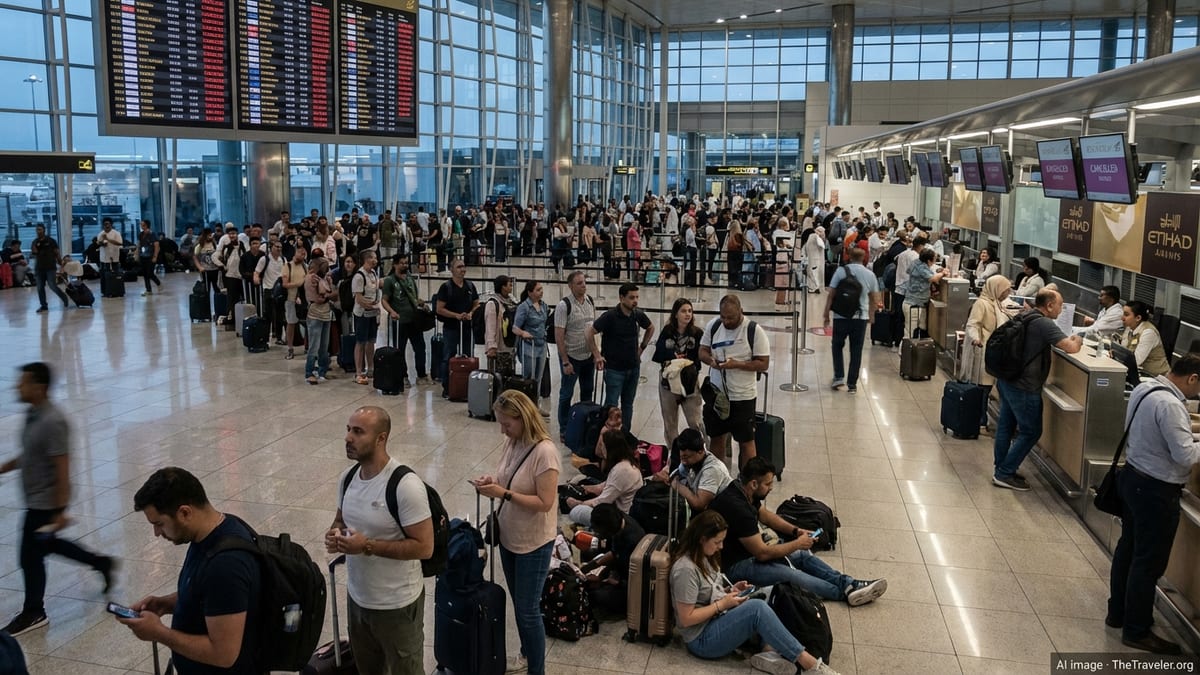
UAE bans Iranian carriers amid shifting sanctions landscape
According to publicly available notices and regional media coverage, the UAE General Civil Aviation Authority has instructed airports to halt all services operated by Iranian airlines to and from the country, effective September 24, 2026, with no end date announced. The move affects all Iranian carriers serving the UAE market, including Iran Air and privately owned operators that had recently restored links following earlier suspensions.
Reports indicate that the decision follows renewed United States sanctions targeting Iranian aviation and the use of foreign airports, prompting regulators in the UAE to align local policy with the broader sanctions framework. Aviation-focused outlets describe the step as a precautionary measure designed to reduce compliance risk for airports and service providers in Dubai, Abu Dhabi and the northern emirates.
Separate coverage from regional news platforms in Arabic and English notes that the latest suspension marks a reversal of the gradual reopening that began in mid-2026, when direct flights between Tehran and Dubai resumed after months of interruption linked to the Iran–Israel–US conflict. This earlier restoration had allowed a limited number of Iranian carriers back into the UAE market, particularly on high-demand routes such as Tehran to Dubai International.
The new directive leaves Iranian airlines without direct access to UAE airports for passenger or scheduled cargo operations. While regulators have previously made narrow exemptions for repatriation or special charter services during emergency situations, publicly available information on the current suspension does not outline any specific exceptions.
Dubai hub grapples with cascading delays and rerouting
Dubai International Airport remains one of the world’s busiest long-haul hubs, and the fresh constraints on Iranian carriers come on top of months of rerouting and schedule changes triggered by conflict across parts of the Middle East. Data from airline advisories and airport statements since late February 2026 show that airspace closures and missile strikes forced temporary shutdowns and gradual restarts at Dubai, with operations resuming at reduced levels and on altered routings.
Carriers based in the UAE, including Emirates, flydubai and Etihad Airways, have continued to operate through Dubai and Abu Dhabi but with modified schedules and longer routings around restricted airspace above Iran, Iraq and parts of the Levant. Industry analysis published in July 2026 highlighted that these detours have increased block times, reduced schedule flexibility and constrained capacity in the peak summer season, even before the latest suspension of Iranian airlines.
Travel and logistics briefings indicate that Dubai and Abu Dhabi airports remain open and functioning, yet travelers are experiencing extended journey times, tighter minimum connection windows and a higher incidence of last-minute retimings. Some long-haul services between Europe or Asia and the Gulf have been trimmed or consolidated as airlines seek to manage aircraft utilization in the face of complex routing requirements.
With Iran’s own aviation authorities also restricting or cancelling services to certain regional gateways in response to sanctions and security developments, the cumulative effect has been to reduce the number of viable routings through the central Gulf. This has increased pressure on remaining corridors through Saudi Arabia and the Red Sea region, which are themselves subject to periodic operational advisories.
Regional and global airlines adjust Middle East networks
The UAE suspension of Iranian carriers coincides with a broader pattern of network adjustments by airlines across Europe, Asia and the Gulf. Coverage in regional business media in July 2026 detailed how several international airlines extended or deepened suspensions of services to Dubai and other Middle Eastern destinations in response to security assessments and insurance constraints.
Air France and other European carriers have either halted flights into Dubai for defined periods or reintroduced them at reduced frequency, while continuing to avoid specific airspace segments. Nordic and Asian airlines have temporarily dropped or scaled back services to Doha, Riyadh and Tel Aviv, and in some cases pushed planned resumptions into October 2026 or later. Singapore-based carriers, for example, have extended the suspension of certain Dubai rotations while redeploying capacity onto long-haul routes less exposed to Middle East disruption.
Within the region, GCC-based airlines are following a mixed strategy. UAE carriers have sought to preserve connectivity by maintaining core long-haul links and adjusting timings, while some neighboring operators have opted for more extensive suspensions to limit exposure. Industry reporting suggests that seat capacity between Iran and the UAE, which had already fallen compared with early 2025, will drop sharply again as Iranian airlines are removed from schedules and code-share options disappear.
Global consultancy and logistics briefings on the Middle East supply chain add that cargo operators are facing similar constraints, with freighters required to route around closed airspace and contend with limited slots at key hubs. This has contributed to higher transit times and selective delays on shipments transiting Dubai and Abu Dhabi, particularly to and from markets in Iraq, Kuwait and parts of the Eastern Mediterranean.
Impact on travelers using Dubai and Gulf transit hubs
For travelers, the most immediate consequence of the UAE suspension is the loss of direct services operated by Iranian airlines between cities such as Tehran, Shiraz or Mashhad and Dubai, Abu Dhabi or Sharjah. Passengers who had booked on these carriers now face rebooking via alternative hubs, often involving additional stops in Doha, Istanbul or Jeddah if suitable connections are available.
Airline advisories emphasize that schedules remain fluid across the region and that flight-status pages should be checked on the day of travel. Emirates, flydubai and Etihad provide live status tools and app notifications that reflect last-minute airspace and routing changes, which have become more frequent since the escalation of hostilities earlier in 2026. Travelers booked on itineraries that previously relied on Iranian-operated segments may find that their tickets need to be reissued on different carriers or entirely different routings.
Available guidance from travel-industry sources suggests that longer connection times in Dubai and Abu Dhabi are advisable for the remainder of 2026, especially on journeys that combine multiple regional sectors. Minimum connecting times published in booking systems may no longer reflect operational realities where aircraft are subject to extended ground holds, alternate routings or unplanned fuel stops.
Travelers originating in Iran now face a more fragmented journey to reach the UAE, relying on foreign carriers that are still permitted to operate into both markets, where such links exist. In some cases this may involve overland travel to alternative departure points outside Iran or the UAE, particularly while the suspension on Iranian airlines remains in effect without a specified review timeline.
Outlook for Middle East air connectivity through late 2026
Forecasts from aviation analysts and supply chain specialists point to continued volatility in Middle East air connectivity over the coming months. Briefings issued in mid-2026 projected that extended flight-path deviations around Iranian and Iraqi airspace, combined with intermittent airport restrictions, would likely persist at least through the end of the year, shaping both pricing and capacity decisions for airlines.
Although the UAE previously lifted some temporary flight restrictions that were introduced at the onset of the Iran conflict, the new blanket suspension on Iranian airlines underscores how regulatory and sanctions-related measures can reappear quickly as political and security conditions evolve. Observers expect that any easing will depend not only on regional security developments but also on the evolution of sanctions policy affecting aviation services and aircraft parts.
For Dubai, the role as a global transfer hub remains intact but under strain. The combination of longer routings, constrained airspace and the removal of Iranian carriers from the local market is likely to keep pressure on airport capacity and airline schedules. Industry commentary indicates that hub operators will continue to prioritize maintaining core intercontinental links while selectively trimming or rescheduling regional flights where necessary.
Travelers planning itineraries through the Gulf in late 2026 are being advised, in publicly available guidance, to build additional flexibility into their plans, monitor airline notifications closely and be prepared for changes even close to departure. Until there is a sustained reduction in regional tensions and a clearer regulatory environment for Iranian aviation, flight disruptions around Dubai and the wider Middle East are expected to remain a central feature of the travel landscape.