


More news on this day
The European Union Aviation Safety Agency has intensified its focus on Middle East aviation risk, advising airlines to avoid the flight information regions of Tehran, Baghdad and Beirut until 31 August 2026 as military tensions persist despite fragile ceasefire arrangements involving Iran, Iraq, Lebanon, the United States, Israel and Gulf countries.
Get the latest news straight to your inbox!
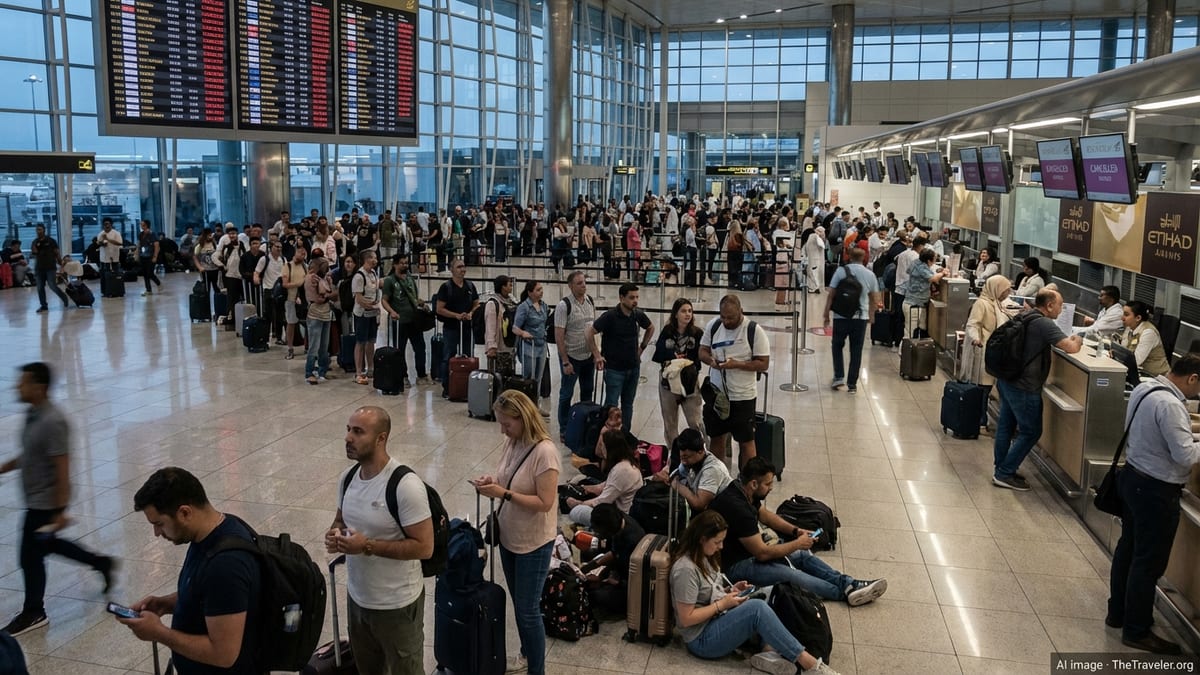
New CZIBs Sharpen Focus On Iran, Iraq And Lebanon
According to recently published conflict zone material and regional coverage, the latest EASA action replaces a broader Middle East and Persian Gulf bulletin with targeted Conflict Zone Information Bulletins for Iran, Iraq and Lebanon. The agency has set 31 August 2026 as the current validity date for its advice that commercial operators should avoid the affected airspace entirely, reflecting what it describes as a high level of residual risk.
Publicly available summaries of the new bulletins indicate that all flight levels in the Tehran, Baghdad and Beirut flight information regions are covered by the recommendation. The guidance applies to airlines based in the European Union and to non-EU operators using EU airports, but is also widely referenced by carriers elsewhere as a benchmark for conflict-zone assessment.
The adjustment follows an earlier regional CZIB that already highlighted the danger of misidentification of civilian aircraft and potential engagement by air defense systems in the event of renewed strikes. The separate, country-specific advisories signal that, while the wider region is assessed at a medium level of risk, Iran, Iraq and Lebanon continue to present a significantly higher hazard for civil aviation.
Industry-focused analyses note that the continuity of guidance, moving from an expiring regional bulletin to new targeted documents, underlines EASA’s view that the threat profile has evolved rather than disappeared. The emphasis has shifted from short-lived spikes in hostilities to managing a protracted period of instability.
Military Escalation And A Fragile Web Of Ceasefires
The tightened aviation guidance comes against the backdrop of a complex military and diplomatic environment linking Iran with Iraq, Lebanon, Israel, the United States and Gulf states. Reports from regional and international outlets describe a pattern of direct strikes and proxy engagements, including exchanges between US forces and Iranian-linked groups and cross-border fire between Israel and armed factions in Lebanon.
Despite formal ceasefire frameworks, including arrangements intended to de-escalate clashes between Israel and Hezbollah in Lebanon, assessments from risk consultancies and aviation security specialists stress that these understandings remain fragile. Short-notice violations, targeted attacks and miscalculation are all viewed as plausible scenarios over the coming months.
Analysis produced for airlines and insurers highlights that Tehran’s ties with armed groups in Iraq and Lebanon, as well as its tense relationship with Washington and several Gulf capitals, contribute to the unpredictability of any future escalation. In this environment, the risk that military actors could misidentify or misinterpret the trajectory of a civilian aircraft is seen as a central concern.
Mapping produced by security risk firms for 2026 places Iran, Iraq and Lebanon among the countries where the security environment has markedly deteriorated since the start of the year. These assessments feed directly into flight-planning decisions, as carriers weigh the likelihood that ceasefires may fray against the operational benefits of shorter routings.
Operational Impact On Airlines And Global Routings
The renewed EASA avoidance advice is already influencing how airlines route flights between Europe, North America, the Gulf and South and East Asia. Data from flight-tracking platforms and airport schedule changes point to increased use of more northerly corridors over Turkey and the Caucasus, as well as southern options that skirt the Arabian Peninsula.
While many long-haul operators had already been steering clear of Iran and Iraq since earlier phases of the crisis, the explicit extension of the advisory through late August effectively removes any near-term prospect of a return to pre-crisis routing across the heart of the Middle East. For passengers, the main impacts are slightly longer flight times on some routes and, in a number of cases, schedule adjustments or aircraft swaps to manage fuel and crew constraints.
Travel industry reporting from Lebanon in particular has described disrupted links between Beirut and several Gulf and regional cities as airlines reassess the viability of operating into the Beirut FIR under the current risk profile. European and Gulf carriers are closely monitoring demand and operational conditions, with some continuing limited services while maintaining significant buffers around the highest-risk airspace.
For cargo operators, the implications are also significant. Freight carriers moving time-sensitive goods between Asia and Europe are recalibrating routings and block times, which can translate into higher costs for shippers. Aviation analysts suggest that, while the statistical risk of an incident remains low, the severe consequences of any miscalculation make conservative routing policies the norm.
Regional Dynamics Involving The United States, Israel And Gulf States
Aviation risk in the skies above Iran, Iraq and Lebanon is being shaped by a wider contest involving the United States, Israel and several Gulf governments. Public timelines compiled by think tanks and news organizations trace a series of US strikes on Iranian-linked assets, Iranian drone and missile launches, and Israeli operations targeting positions in Syria and Lebanon, often in close proximity to civilian air corridors.
Coverage in Middle East and European media notes that Gulf countries find themselves balancing security partnerships with Washington and, in some cases, quiet understandings with Israel, against a desire to keep their own airspace and critical infrastructure out of the direct line of fire. Statements from regional officials and diplomatic sources, as reported in recent months, indicate that Gulf states have repeatedly sought assurances from both Iran and Western partners about the use of their territory and airspace in any wider confrontation.
For aviation planners, these dynamics mean that risk assessments cannot focus solely on the three FIRs now singled out by EASA. The agency’s broader, downgraded information note on the Middle East and Persian Gulf continues to flag medium-level risks over several neighboring states, including Bahrain, Kuwait, Qatar, Oman, the United Arab Emirates and Saudi Arabia’s Jeddah region, even if outright avoidance is not currently advised there.
Industry bulletins recommend that operators consider not only the official advisories but also the potential for rapid shifts in state-level restrictions. Sudden closures of segments of airspace around the Strait of Hormuz or the eastern Mediterranean remain a possibility in the event of renewed attacks or a breakdown of current ceasefire efforts.
What Travelers And Operators Should Watch Through August
From a traveler perspective, aviation experts emphasize that commercial flights are continuing safely across the region using adjusted routings, and that airlines are required to incorporate the latest conflict zone guidance into their risk management processes. However, passengers booked on itineraries that would typically transit Iranian, Iraqi or Lebanese airspace may experience schedule changes at relatively short notice.
Airlines and tour operators are advising passengers to pay close attention to booking notifications and to allow additional connection time where itineraries involve tight transits through major European or Gulf hubs. Some carriers have introduced flexible rebooking options for journeys touching the wider region, reflecting the potential for sudden operational constraints.
For operators, the period through 31 August 2026 is emerging as a test of how the industry manages prolonged, rather than episodic, conflict-zone exposure. Flight departments are updating internal risk matrices, re-briefing crews on diversion and communication procedures near the edges of restricted areas, and coordinating more closely with air navigation service providers in neighboring FIRs.
Aviation security analysts suggest that the key variables to monitor in the weeks ahead include the durability of ceasefire arrangements involving Israel and Lebanese factions, the trajectory of US-Iran exchanges, and the stance of Gulf states whose airspace provides critical alternatives to the now off-limits corridors. Any deterioration on these fronts could trigger further revisions to EASA’s guidance and to the patchwork of national advisories that airlines also must follow.