


More news on this day
Summer storms rolling up the US East Coast are triggering a sharp rise in flight cancellations and delays this week, snarling schedules at major hubs and creating ripple effects across the national air network just as peak vacation travel hits its stride.
Get the latest news straight to your inbox!
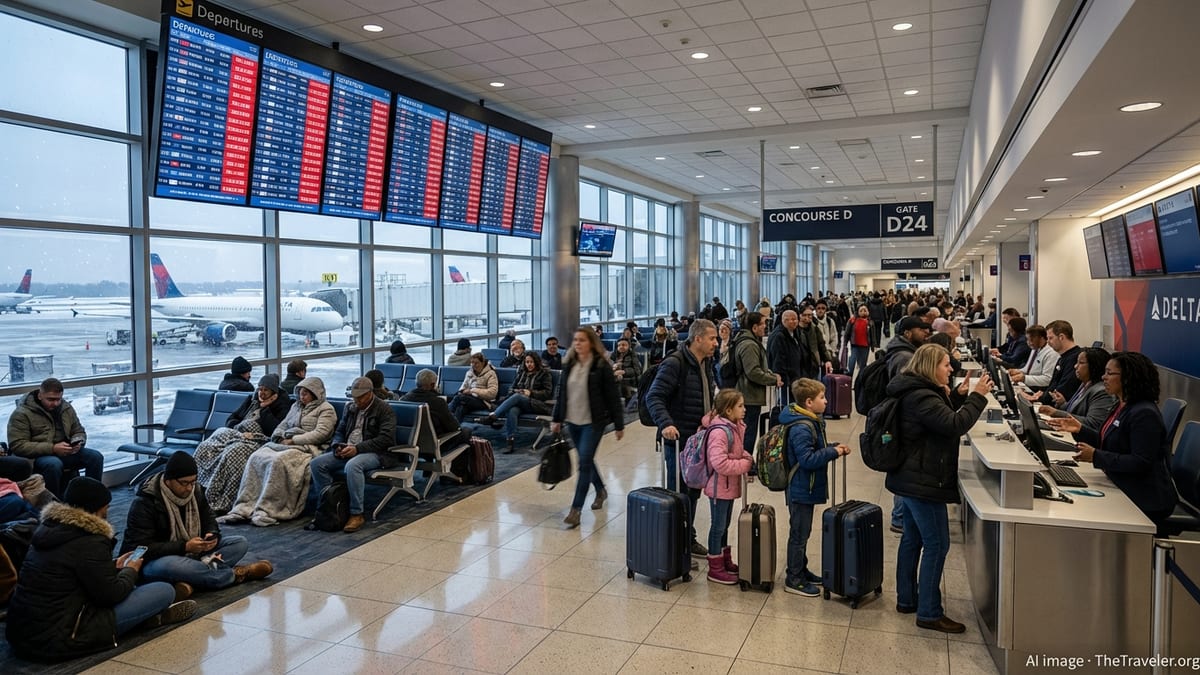
Storm Systems Stall Operations at Major East Coast Hubs
Publicly available tracking data on Tuesday indicated elevated disruption levels at key East Coast airports, with severe thunderstorms and low cloud ceilings slowing arrivals and departures from the mid-Atlantic to New England. New York area airports, Boston, Philadelphia and Washington region facilities all reported extensive delays as weather cells repeatedly moved over busy approach corridors.
Operational summaries from airline and airport dashboards show that morning ground stops and flow-control programs, introduced to keep traffic safely spaced in storm-affected airspace, cascaded into afternoon and evening schedules. Flights arriving late into East Coast hubs often departed late again, compounding holds across already congested routes. Travelers reported multi-hour waits, last-minute gate changes and rolling departure estimates as carriers attempted to work through the backlog.
While thunderstorms are a routine summer hazard, the current pattern features slow-moving storm clusters aligned with some of the country’s most heavily traveled corridors. Aviation weather charts for the mid-Atlantic and Northeast on Tuesday depicted strong convective bands along the I-95 corridor, forcing reroutes, altitude restrictions and, in some cases, outright cancellations when safe routing windows closed.
Thousands of Travelers Face Cancellations and Long Delays
According to aggregated flight-status boards, the number of cancellations and significant delays across the United States climbed well above a typical weekday baseline, with East Coast weather cited as a primary driver. Nationally, hundreds of flights were canceled and several thousand recorded departure or arrival delays of more than 30 minutes, with a large share of those tied to hubs and spokes feeding into the storm-affected region.
Passengers connecting through major gateways such as New York, Boston and Philadelphia appeared to be among the hardest hit. Social media posts from airports described lines stretching through concourses as travelers sought rebooking options, meal vouchers or overnight accommodations. In some locations, cots were set up in terminal corridors to accommodate passengers stranded by late-night cancellations and misconnected itineraries after hours.
Local disruptions at smaller East Coast and New England airports have also been pronounced. Reports from airports in Maine and upstate New York in recent days describe repeated gate holds, lengthy tarmac waits, and crews reaching federally mandated duty-time limits before flights could depart. When a crew times out after an extended weather or air-traffic delay, flights are sometimes scrubbed entirely if no replacement team is available, adding another layer of cancellations behind the initial storm-related slowdowns.
Airlines Activate Waivers and Contingency Measures
In response to the unsettled pattern, several major US carriers have issued flexible travel notices for customers booked to, from or through affected East Coast airports. According to published coverage and airline advisories, these waivers generally allow passengers to move their trips within a limited date range without change fees or fare differences, provided they keep the same origin and destination and rebook within the specified window.
Operational updates from carriers indicate that schedule adjustments began even before storms fully developed, with some flights proactively canceled to avoid trapping aircraft and crews at congested airports later in the day. When forecasters highlight a high risk of convective storms along key routes, airlines sometimes trim frequencies, consolidate lightly booked flights and build additional slack into the schedule to improve recovery prospects.
Industry analysts note that airlines have more tools than in previous decades to weather such disruptions, including improved storm forecasting, real-time data on aircraft positions and crew status, and algorithms that help prioritize which flights to protect. Even so, when intense storms park over high-density airspace along the East Coast, capacity reductions ordered by air-traffic control often leave carriers with little choice but to cancel or significantly delay portions of their schedules.
Staffing, Congested Airspace and Summer Demand Amplify Impact
Aviation experts point out that the current wave of disruptions is not driven by weather alone. Lean staffing at some airlines and within segments of the air-traffic control system can amplify the effect of storms by limiting how quickly schedules can recover once conditions improve. When available crews are already stretched by peak summer flying, a morning round of delays can push pilots and flight attendants to the edge of duty limits before the day is over.
High passenger demand is another key factor. With aircraft flying nearly full on many routes, there is limited room to rebook stranded travelers onto later departures. A single canceled flight can result in dozens or hundreds of passengers competing for the same handful of open seats, especially on smaller regional routes where options are already sparse.
In and around the Northeast, the structure of the airspace itself magnifies any strain. Several major hubs sit within a relatively compact geographic area, funnelling large volumes of traffic through narrow corridors constrained by coastline, military airspace and densely populated urban areas. When storms block one or more of these corridors, rerouted traffic can create choke points over a wide region, affecting flights that are not directly passing through the worst of the weather.
What Travelers Can Expect in the Coming Days
Forecasts from national and regional weather centers indicate that the same storm pattern is likely to continue influencing parts of the East Coast over the next couple of days, though the exact timing and intensity of each round of storms remains uncertain. Travelers booked on afternoon and evening departures, when daytime heating tends to fuel the strongest thunderstorms, may be particularly exposed to schedule changes.
Airline operations planners typically monitor these forecasts hour by hour and may adjust schedules with relatively short notice if new storm clusters develop along primary jet routes. Publicly available guidance suggests that early-morning departures often have a better chance of leaving on time during volatile weather periods, as aircraft and crews are already in place from the night before and convective activity is usually less intense.
Travel organizations advise passengers flying into or out of the affected region to build extra time into connections, keep a close eye on airline apps and flight-status alerts, and be prepared for last-minute gate or timing changes. With conditions along the East Coast still unsettled and nationwide schedules tightly wound, even modest storms can continue to spark outsized disruptions across the US air network through the week.