


More news on this day
Europe’s new biometric Entry/Exit System is facing its first peak summer test, with reports of multi-hour queues at several EU airports prompting fresh calls from airlines and airport groups to suspend or scale back the checks to prevent wider travel disruption.
Get the latest news straight to your inbox!
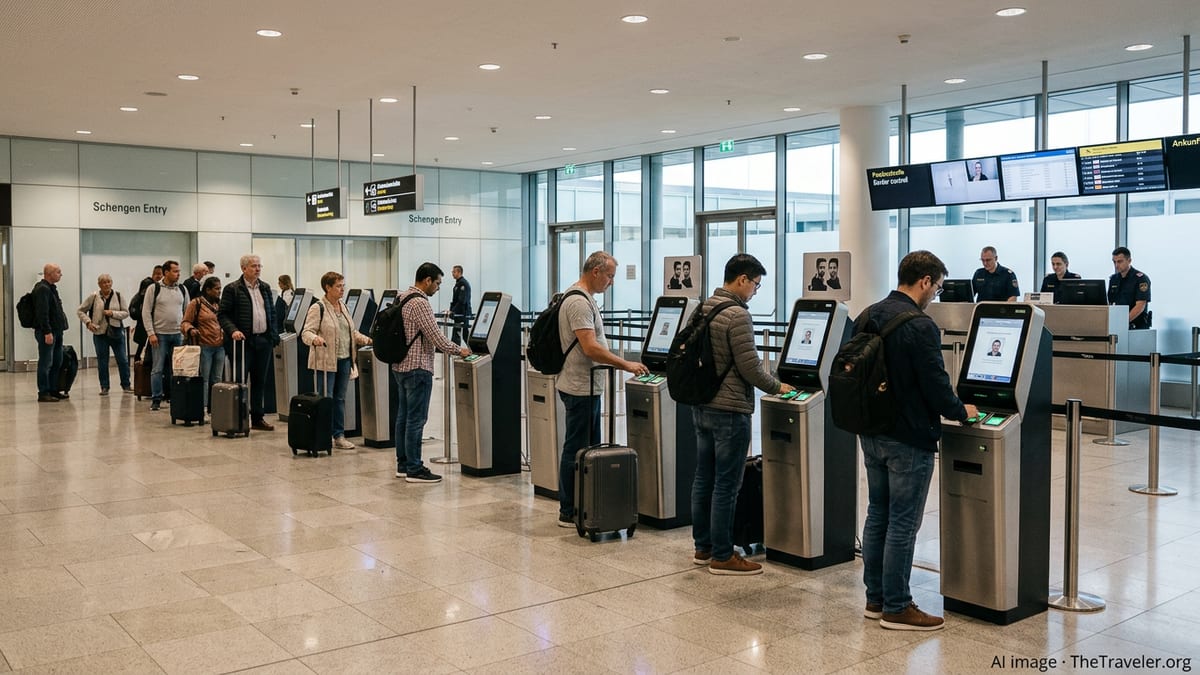
New Digital Border System Struggles In First Summer
The EU’s Entry/Exit System, which digitally records border crossings for non-EU nationals instead of stamping passports, became fully operational across Schengen external borders in April 2026 after a phased rollout. The system captures facial images and fingerprints at dedicated kiosks before travellers proceed to passport control.
According to publicly available information from industry bodies and European institutions, the transition has been marked by longer processing times at many airports, especially where infrastructure and staffing were already under pressure. Airport groups report that border checks that once took seconds can now stretch into several minutes per passenger when biometric registration is required.
Analysis of recent reports indicates that the heaviest disruption is occurring at major tourist gateways handling large volumes of non-EU passengers. At these hubs, bottlenecks at EES registration points have led to queues spilling into terminal corridors, missed departures and last-minute changes to boarding procedures as operators attempt to keep flights running.
Travel industry coverage notes that while the system is intended to strengthen border management and streamline repeat entries in the long term, the immediate impact in its first full summer is exposing gaps between the technology’s design and real-world passenger flows.
Queues, Missed Flights And Local Suspensions
Published reports from several European travel outlets describe waiting times at some airports extending to three hours or more at peak periods for travellers who need to enroll their biometrics for the first time. In extreme cases, passengers have reportedly missed flights despite arriving well ahead of departure, leaving aircraft departing with empty seats because travellers were still held in border queues.
Coverage from Italy and Portugal highlights how some border authorities have already made temporary use of flexibilities built into the system, allowing them to suspend biometric collection in response to severe congestion. In Lisbon, EES checks were previously paused for several months after long lines at border control, while more recent reporting indicates that Greek and Italian airports have on occasion reverted to traditional booths to clear backlogs.
In late June, news reports from Rome detailed concerns that the capital’s Fiumicino and Ciampino airports might need to set aside parts of the EES process during the busiest weeks in order to avoid what airport managers characterised as a looming “disaster” for summer operations. Local media accounts described instances where passengers were redirected from biometric kiosks to older passport-control lanes to keep queues from overwhelming terminal areas.
Airline-focused coverage also points to cases where carriers have had to delay departures, rebook passengers or adjust check-in cut-off times to account for unpredictable border processing, adding another layer of complexity to already tight summer schedules.
Airlines And Airports Demand Wider Flexibility
In early July, major airline and airport associations intensified pressure on Brussels by issuing an open letter to the European Commission president. According to summaries of the letter published by aviation industry outlets, groups including ACI Europe, Airlines for Europe and IATA warned that current EES-related delays risk eroding passenger confidence in travel to the EU.
These organisations are calling for the ability to partially or totally suspend mandatory biometric checks whenever queues exceed what airports can safely manage, not only during the initial rollout but throughout the summer season. They argue that existing provisions for temporary relief are too narrow or unclear, and that a more explicit framework is needed to allow border authorities to pivot quickly when terminals approach capacity.
Reports on the joint lobbying effort note that the associations want flexibility guaranteed at least until the end of October 2026, covering both the main holiday period and the busy early autumn months. The groups contend that such measures would avoid widespread disruption while technical issues are resolved, staff are trained and passengers become more familiar with the new process.
Some coverage also links the debate to broader discussions in the EU about passenger rights, with consumer advocates warning that travellers may struggle to understand who is responsible when missed flights or long waits stem from bottlenecks at border control rather than airline scheduling.
European Institutions Weigh Operational Trade-offs
Briefings from EU institutions and parliamentary documents describe EES as a central pillar of the bloc’s efforts to modernise border controls, combat irregular migration and track permitted stays by non-EU visitors. The system is designed and operated by eu-LISA, the EU agency responsible for large-scale IT systems in the area of freedom, security and justice.
Background notes from the European Parliament outline how the project endured years of delays due to technical complexity, funding questions and the need to coordinate implementation across nearly 30 countries and multiple types of border crossings, including air, sea and land. Staffing shortages at some border police units and slower-than-expected deployment of pre-registration tools have also been identified as constraints.
Recent communications from airport and airline groups stress that they support the overall objectives of EES but want what they describe as a pragmatic approach to implementation. They argue that, without adjustments, the system’s rigid requirements risk overwhelming infrastructure that was not designed for large-scale biometric capture at short notice, especially in older terminals and ferry ports.
Analysts tracking the rollout suggest that European policymakers now face a balancing act between maintaining the integrity of the new border regime and avoiding scenes of overcrowding that could damage the reputation of key tourist destinations. Any decision to broaden or clarify suspension powers would likely need to reconcile security considerations, data-protection obligations and the economic importance of smooth travel during the summer high season.
What Travellers Can Expect This Summer
For non-EU travellers planning trips to Europe in the coming months, current reporting indicates that conditions may vary significantly between airports and even between different times of day at the same location. Large hubs handling heavy intercontinental traffic appear most prone to extended waits at border control, particularly during morning and evening waves of arrivals.
Travel industry guidance recommends that passengers arriving at Schengen airports for the first time since EES became fully operational allow extra time to clear border checks, especially if connecting to onward flights. Some airlines and airports are advising customers to pay close attention to pre-departure communications for updates on local conditions and any temporary changes in procedures.
Observers note that, where authorities activate flexibility to suspend or limit biometric checks, queues may shorten without any visible change from the passenger perspective, apart from a quicker passage through border control. However, because these decisions can be made at short notice in response to crowding, travellers are unlikely to know in advance whether their arrival will involve full EES registration or a simplified process.
Industry analysts suggest that the coming weeks will be a critical test of whether the EU’s new digital border infrastructure can be adapted quickly enough to cope with peak demand. The outcome is expected to shape both the pace of future enhancements and the political appetite for further biometric systems at Europe’s borders.