

More news on this day
Emirates is rolling out expanded rebooking and refund flexibility for travelers caught up in recent operational disruptions, giving affected passengers clearer options to change or cancel flights without extra charges.
Get the latest news straight to your inbox!
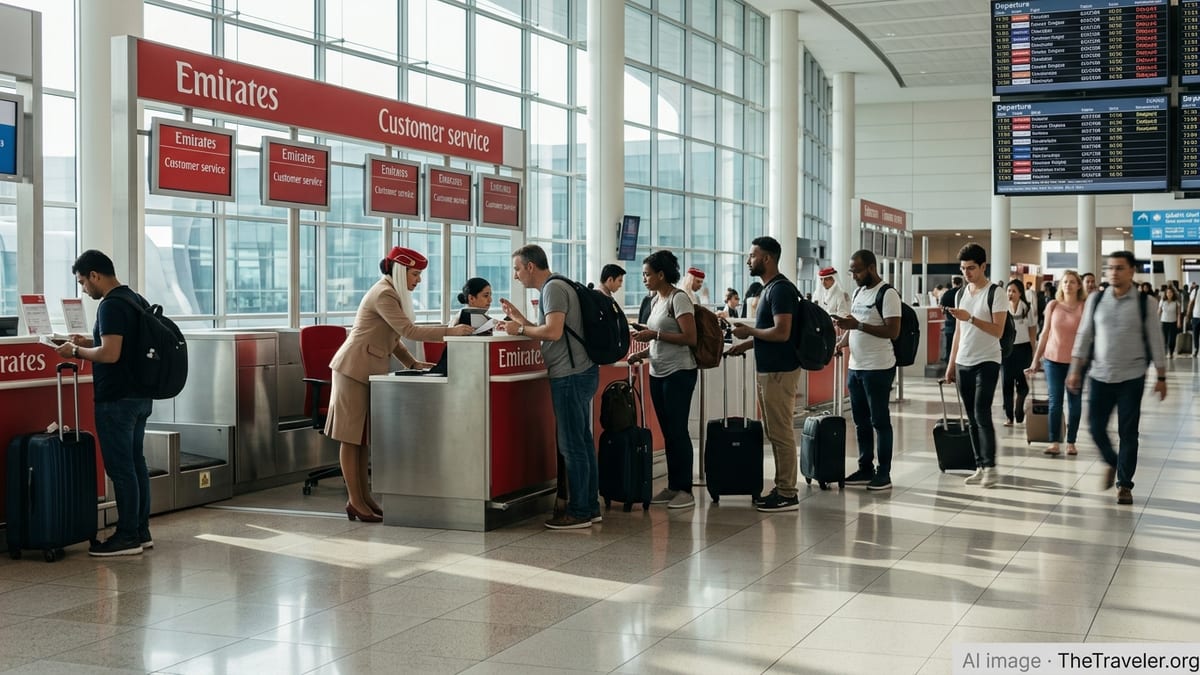
Broader Waiver Periods Give Passengers More Choice
Recent weeks have seen Emirates adjust its disruption policies to offer wider relief windows for customers whose journeys have been affected by airspace issues and schedule changes across parts of its network. Travel industry coverage and customer reports indicate that the airline has been applying special waivers to itineraries falling within defined travel dates, allowing many passengers to either move their trip or cancel altogether without standard penalties.
Advisories highlighted by travel blogs and online forums describe waiver periods that initially covered late February and March 2026 and have since been extended in stages, in some cases through mid April and, for rebookings, into late May. For bookings that fall inside these specified dates, Emirates is reported to be offering fee free date changes, options to reroute to alternative dates on its own services, and full refunds in cases where customers decide not to travel.
The approach reflects how major Gulf carriers have been responding to a wave of disruption across the region. Coverage in business and travel media notes that Emirates, alongside other Middle Eastern airlines, has leaned on flexible change and cancellation policies as a way to keep itineraries manageable for travelers facing short notice schedule shifts and uncertainty over transit routes.
While the details of each waiver can vary by route and travel date, information shared publicly suggests that the core principle has remained consistent: if a flight falls within the defined disruption window, customers gain access to significantly more generous rebooking and refund terms than under normal fare rules.
Simplified Rebooking: Next Available Flights and Alternate Dates
Emirates’ disrupted travel guidance emphasizes automatic or assisted rebooking as a first line of support when flights are cancelled or heavily delayed. The airline’s customer service plan states that teams will work to place travelers on the next flight it operates with seats available in the same class of service, minimizing gaps in onward connections wherever possible.
Disrupted travel information on the airline’s website indicates that when one sector of an itinerary is changed, passengers can request assistance with return and onward segments as well. This can include shifting the full round trip to later dates, moving to another Emirates-operated service on the same route or, in some cases, adjusting the arrival airport to the closest available option within the same country when disruption makes the original destination difficult to reach.
Reports from travel rights organizations note that, during the current period of operational strain, Emirates has also broadened the travel period during which passengers may rebook without paying fare difference in certain booking classes. Where that is not possible, many customers are at least able to change dates without the usual change fees, paying only any increase in underlying fare if they choose a peak travel day or a higher cabin.
For travelers departing from or connecting through the European Union, consumer advocates point out that these rebooking rights exist alongside protections under European air passenger regulations, which require carriers to offer either a later flight or a refund when services are significantly disrupted. This means many Emirates passengers on affected routes are navigating both airline specific waivers and statutory entitlements at the same time.
Clearer Refund Paths for Disrupted Itineraries
Refunds are a central part of the relief on offer. Emirates’ publicly available customer service plan for the United States commits to providing prompt refunds in the original form of payment when flights are cancelled, significantly delayed, or undergo substantial schedule changes and a passenger chooses not to accept alternative transportation. The policy also specifies that, when alternatives are presented, travelers have the right to reject a rerouting offer and request their money back instead.
During the current disruption cycle, travel blogs and passenger forums have circulated airline communications indicating that full refunds are being granted on eligible tickets within the published disruption window even where flights remain technically scheduled. In practice, that has allowed some passengers to cancel at their own discretion due to concerns about operational reliability, rather than waiting for a formal flight cancellation to trigger standard refund rules.
In addition to direct refunds, Emirates’ broader waiver policies allow some customers to retain the value of their tickets as future travel credits or vouchers, which can later be converted back to cash in certain circumstances. Earlier iterations of the airline’s flexible policy, developed during the pandemic, similarly offered options to keep tickets open for future use, exchange them for travel vouchers with extended validity, or request a full refund once travel plans became clearer.
Consumer advocates advise travelers to pay close attention to whether their case is treated as an involuntary refund due to disruption or as a voluntary cancellation. Publicly shared guidance from the airline and from passenger groups emphasizes that disruption based refunds are typically processed without the usual penalties, whereas standard cancellations may still be subject to fare conditions and fees on some lower priced tickets.
How to Access Changes: Direct Channels and Third Parties
For those seeking to make use of rebooking or refund options, Emirates directs customers to its digital channels and contact centers as primary points of contact. The carrier’s help pages state that passengers who booked directly with Emirates can manage many changes through the Manage a Booking function, including submitting refund requests via an online form when their flights fall under a published waiver or have been significantly altered.
Customers who purchased tickets through online travel agencies or traditional travel agents face a slightly different process. Public information from Emirates underscores that, in such cases, changes and refunds often need to be processed through the original booking channel, because the agency holds the ticket in its own reservation system. During widespread disruption, this can create bottlenecks, as agency support teams handle high volumes of reissue and refund requests in parallel with the airline’s own channels.
Travel media commentary on recent disruptions stresses the importance of keeping records of any notifications, advisory messages in airline apps, and screenshots of waiver language. These materials can help passengers demonstrate eligibility for fee free changes or refunds if there are discrepancies between what is displayed online and what frontline staff initially advise.
Industry observers also recommend monitoring the airline’s travel updates pages regularly, since waiver periods, eligible routes, and conditions can shift quickly in response to evolving airspace or operational constraints. For passengers whose travel falls just outside the currently published dates, these rolling updates can make the difference between being locked into original plans and qualifying for more flexible options.
What Travelers Should Watch Before Their Next Emirates Flight
As Emirates continues to adapt its policies to the present disruption environment, the experience of affected passengers highlights several key points for travelers preparing to fly. First, the exact eligibility window for rebooking or refunds is driven by the travel dates and routes listed in the latest advisories, not by ticket purchase date alone. Bookings made recently may still qualify if at least one flight in the itinerary occurs during the covered period.
Second, various channels suggest that when Emirates cancels a flight outright, passengers are generally offered a choice between being moved to an alternative service and taking a refund instead. In these situations, accepting an automatic rebooking does not necessarily eliminate the possibility of requesting a refund later, particularly while a disruption waiver remains active for the same journey dates.
Third, travelers connecting on complex itineraries should consider the knock on effects of a single changed segment. Emirates’ guidance indicates that if one leg is disrupted, passengers can seek assistance reshaping the rest of their trip, including return flights. However, some customer reports indicate that rebooking onto partner airlines is more tightly limited and may only be offered when Emirates services are unavailable, rather than as an automatic option of equal priority.
Finally, specialists in air passenger rights note that statutory protections in some jurisdictions operate alongside Emirates’ own generous waiver policies. For long haul trips that begin in the European Union or certain other regulated markets, travelers may have additional rights to refunds and, in some cases, compensation. Understanding how these layers interact can help passengers choose whether to accept a new itinerary, hold value as credit, or request a full refund as Emirates continues to refine its response to ongoing flight disruptions.