


More news on this day
Travel across the Gulf is facing another period of uneven recovery as Emirates flights to Bahrain and Kuwait remain grounded following recent regional disruptions, while Qatar Airways has begun reopening key routes through Doha, reshaping how passengers move between major hubs in the Middle East.
Get the latest news straight to your inbox!
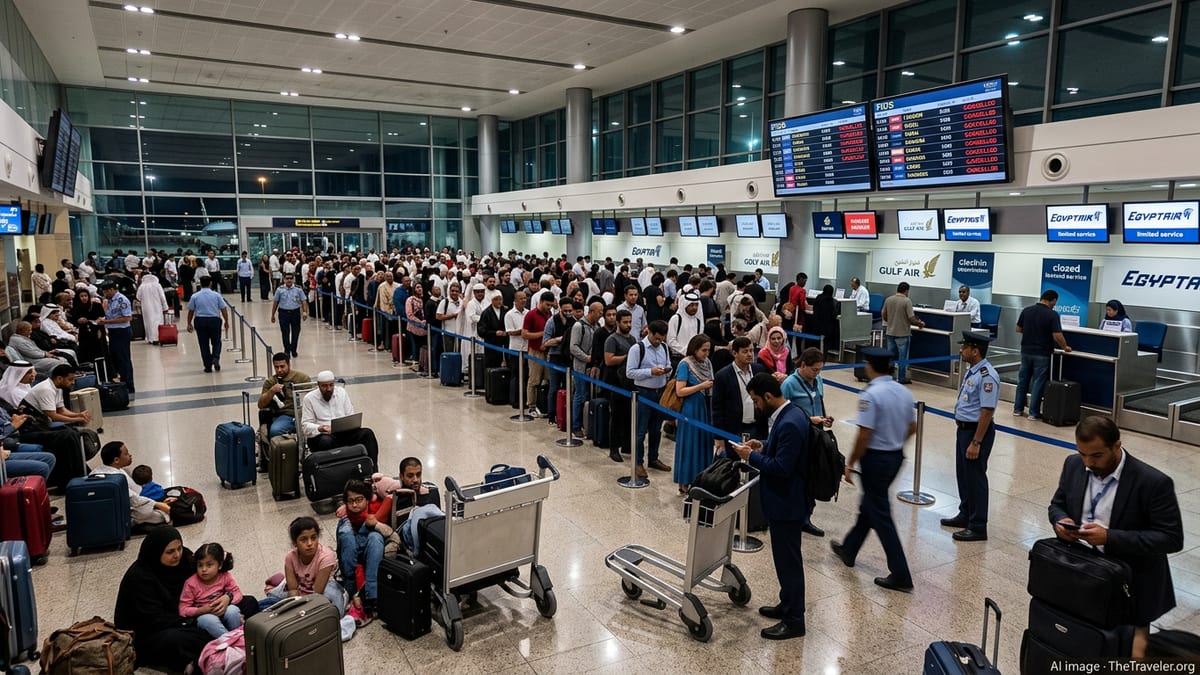
Mixed recovery across Gulf air corridors
Publicly available aviation advisories describe a patchwork reopening of Gulf airspace in 2026, following months of regional tension and intermittent closures affecting Bahrain, Kuwait, Qatar and the United Arab Emirates. As regulators in Bahrain and Kuwait move to restore airport operations and reopen selected corridors, airline networks are adjusting at different speeds, resulting in contrasting outcomes for carriers serving similar markets.
Emirates has continued to operate a curtailed regional schedule, focusing on destinations judged to be less exposed to evolving security and operational constraints. Reports from passenger forums and travel advisories indicate that flights from Dubai to Bahrain and Kuwait are among the services still suspended or heavily reduced, with customers rebooked via alternative hubs or offered rerouting options on partner airlines.
At the same time, Qatar Airways is using the gradual stabilisation of airspace around Doha to reinstate parts of its Gulf network. Official timetable information and recent announcements point to a rebuilding strategy prioritising short regional sectors that feed long haul connections from Hamad International Airport, including renewed services to Bahrain and Kuwait.
This divergence is creating a new map of connectivity within the Gulf, where established assumptions about easy, interchangeable access to major hubs such as Dubai and Doha no longer always hold. Travellers seeking to reach Bahrain or Kuwait from long haul origins increasingly face a choice between indirect routings and new reliance on carriers that are expanding back into those markets.
Emirates maintains suspensions to Bahrain and Kuwait
Emirates has historically been one of the largest foreign operators into both Bahrain International Airport and Kuwait International Airport, leveraging short shuttle flights to feed its extensive global network in Dubai. Since the latest round of disruptions in early 2026, however, travel update bulletins and passenger communications have highlighted ongoing cancellations on these segments, even as other regional routes return.
Advisories monitoring Middle East airspace conditions describe persistent capacity and routing challenges affecting services into Bahrain and Kuwait. In this context, Emirates appears to be prioritising operational resilience on higher volume or less constrained corridors while leaving some shorter Gulf links on hold. For passengers, the result has been repeated schedule changes, day‑of‑departure cancellations and, in some cases, involuntary rerouting via third countries.
Travel discussion boards show that some customers originally booked on Emirates itineraries touching Bahrain or Kuwait have been shifted to flights operated by other Gulf or European carriers, or advised to route through Doha where capacity is returning more quickly. These experiences suggest that, for now, Emirates is maintaining a cautious stance on resuming full operations into the two markets most directly affected by recent airspace concerns.
Industry analysts note that restarting flights into airports that have experienced closures or nearby security incidents can involve lengthy risk assessments, negotiations over air corridors and the reallocation of scarce aircraft and crew. Against this backdrop, holding Bahrain and Kuwait services on the ground allows Emirates to preserve schedule integrity elsewhere on its network while conditions continue to evolve.
Qatar Airways rebuilds links to Bahrain and Kuwait
Qatar Airways, which relies heavily on short regional sectors to support its global hub in Doha, has taken a visibly different approach as conditions allow a controlled reopening of airspace. According to the airline’s published network updates, daily services to Bahrain have been scheduled back into the timetable, with flights designed to slot into early morning and late evening connection banks at Hamad International Airport.
In parallel, Qatar Airways has earmarked Kuwait City as another early candidate for reinstatement, positioning the route as a key feeder for traffic between Asia, Europe and the Gulf. Public information from regional media and airline-facing schedules indicates that flights between Doha and Kuwait are returning on a daily basis, often using narrowbody aircraft that can be flexibly redeployed as demand and risk assessments change.
Qatar’s broader travel and government updates describe a phased reopening strategy built around “approved safe corridors” into and out of Doha, a framework that has enabled the flag carrier to resume operations while airspace in parts of the wider region remains restricted. By concentrating on routes that fall within these designated corridors, Qatar Airways can rebuild its network without exposing crews and passengers to higher‑risk overflight zones.
The restoration of Bahrain and Kuwait services also reflects Qatar Airways’ interest in reclaiming regional market share lost during earlier suspensions. As long haul demand returns, being among the first movers back into key Gulf capitals provides an opportunity to capture connecting traffic from travellers whose preferred carriers have yet to restore comparable options.
Passenger impact and shifting booking patterns
For passengers, the uneven pace of recovery is translating into a more complex decision-making process when planning trips in and out of Bahrain and Kuwait. Travel advisories continue to urge customers to monitor bookings closely and remain prepared for last‑minute changes, particularly on itineraries touching multiple Gulf states that may be subject to different regulatory conditions.
Reports from booking platforms and frequent‑flyer communities suggest that some long haul travellers who previously favoured Dubai as their primary gateway are now choosing routings via Doha instead, especially when their final destination is Bahrain or Kuwait. The presence of Qatar Airways flights on these city pairs, combined with restored connectivity to Europe and Asia, is reshaping traditional flows of transit traffic across the region.
Corporate travel managers are also adjusting policies in response to the shifting landscape. Some companies are temporarily steering employees away from routings that depend on suspended Emirates services, opting instead for carriers whose schedules into Bahrain and Kuwait appear more stable in the short term. This shift can increase journey times and costs, but is seen as preferable to the operational risk posed by repeated cancellations.
The knock‑on effects of these changes reach beyond individual passengers to affect tourism boards, hotel occupancy and trade flows. With arrival patterns altered and some markets slower to regain direct links, businesses in Bahrain and Kuwait may find themselves more reliant on visitors and cargo arriving via Doha than through the previously dominant Dubai hub.
Outlook for Gulf aviation amid ongoing uncertainty
Despite the gradual reopening of airspace and airport operations, forecasts for Gulf aviation in the coming months remain highly conditional on regional security developments. Published economic assessments of the 2026 Iran conflict underline the scale of disruption that airspace closures and reroutings have inflicted on carriers, airports and supply chains across the Middle East.
Industry observers expect that Emirates and Qatar Airways will continue to review their Gulf schedules frequently, with the possibility of rapid adjustments as risk calculations change. For Emirates, a decision to resume flights to Bahrain and Kuwait will likely depend on sustained evidence of stability in local airspace and on the ground, as well as on the availability of aircraft capacity to support a meaningful relaunch rather than an intermittent service.
Qatar Airways, having taken early steps to restore its presence in both markets, may look to deepen frequencies or upgauge aircraft as demand returns, provided operational conditions allow. However, the airline also faces the challenge of maintaining flexibility in an environment where renewed closures or restrictions cannot be ruled out.
For now, the contrast is clear: travellers heading to Bahrain and Kuwait are more likely to find regular options through Doha than through Dubai, even as both Emirates and Qatar Airways navigate the same volatile regional backdrop. How long this imbalance persists will help determine the competitive shape of Gulf aviation in the next phase of recovery.