


More news on this day
Swiss International Air Lines’ decision to phase out its Airbus A220-100 fleet by 2027 is reshaping not only the carrier’s short haul strategy but also signaling how European airlines are rethinking fleet choices in an era of rising demand, persistent engine headaches and pressure for greater efficiency.
Get the latest news straight to your inbox!
From Flagship Arrival To Early Exit
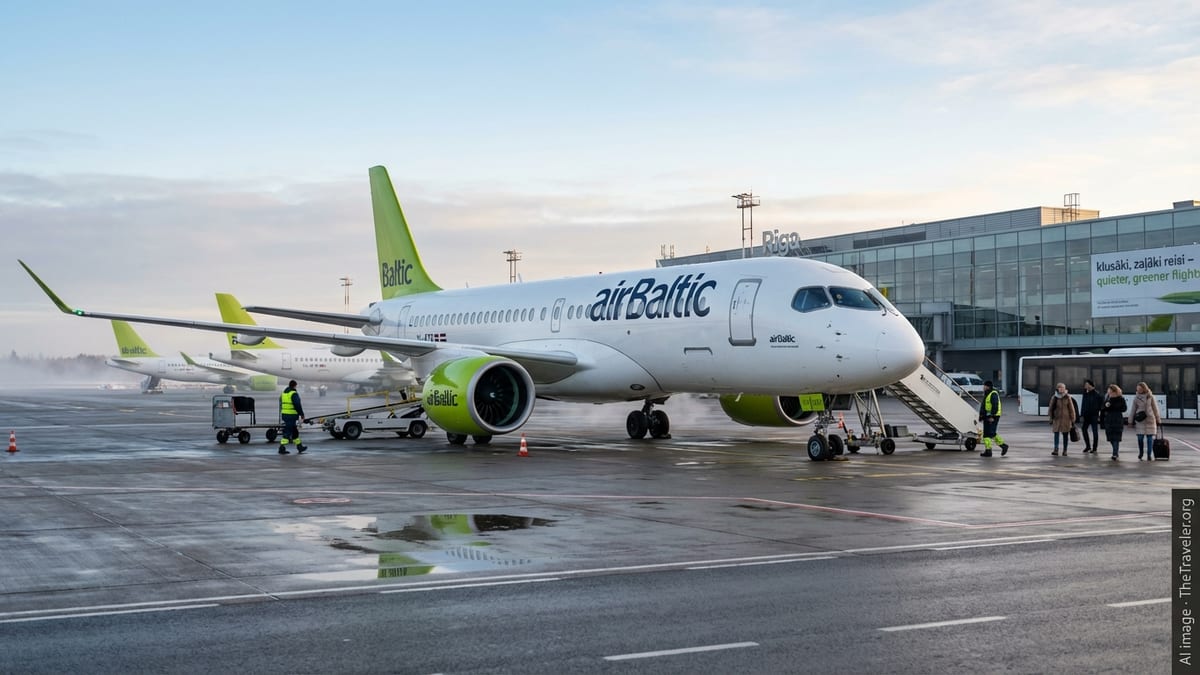
When Swiss introduced the then Bombardier CSeries in 2016, it became the launch operator for what Airbus would later rename the A220-100. The compact jet quickly became a familiar sight on European business routes, offering a modern cabin, low noise levels and improved fuel burn compared with the aging Avro RJ100s it replaced. The type was closely associated with Swiss’ role as an early adopter of next generation regional jets in Europe.
A decade on, the picture looks very different. Publicly available information shows that Swiss now intends to withdraw its subfleet of nine A220-100s from regular service by 2027, with some aircraft already permanently retired and dismantled for spare parts to support the larger A220-300s. Reports indicate that at least two of the smallest A220s have been broken up to ease a chronic shortage of Pratt & Whitney geared turbofan engine components that has affected operators worldwide.
Industry coverage suggests that the retirement decision has been shaped by both technical and commercial realities. The A220-100 has accumulated a relatively small global order book compared with its stretched A220-300 sibling, making it harder for airlines to justify a mixed subfleet. At the same time, European demand on many trunk routes has rebounded beyond pre pandemic levels, encouraging carriers to favor higher capacity aircraft.
Engine Shortages And The Cost Of Complexity
Swiss is far from alone in grappling with the impact of Pratt & Whitney’s PW1500G engine issues, but its fleet structure has made the problem particularly visible. Public reports from late 2025 showed the airline grounding its entire A220-100 fleet for an extended period, using the aircraft primarily as a reservoir of spare parts to keep the more numerous A220-300s flying. That move underlined the operational strain caused by long turnaround times for inspections and repairs.
Analysts note that dismantling relatively young jets is an extreme measure, yet in this case it has become a rational response to supply chain constraints. By parting out the oldest A220-100s, Swiss can sustain a higher level of dispatch reliability on the A220-300 fleet, which carries more passengers per flight and serves many of the carrier’s core European markets. The decision also avoids paying lease or ownership costs on aircraft that would otherwise sit idle.
The episode highlights a broader challenge for European airlines that adopted small subfleets or niche variants before the full extent of engine issues became clear. Maintaining separate pilot training, maintenance stocks and scheduling patterns for a small number of aircraft increases complexity. As carriers look to simplify and de risk operations, types with limited scale are coming under fresh scrutiny, even when they are technologically advanced.
Capacity Upgauging Across The Continent
Swiss’ A220-100 exit fits into a wider regional trend toward larger narrowbody aircraft. Publicly available fleet plans at several European airlines show a gradual shift from smaller regional jets and low capacity narrowbodies toward higher density versions of the A220-300, Airbus A320neo family and Boeing 737 MAX. The goal is to spread costs over more seats on routes where demand has recovered strongly.
Industry observers point out that the seat gap between the A220-100 and A220-300 is significant for short haul economics. Typical two class layouts put the smaller variant at around 100 to 120 seats, while the A220-300 can reach up to around 150 in high density configurations. On many intra European sectors, fixed costs such as crew, airport charges and navigation fees are similar regardless of variant size, making the larger model more attractive when load factors are high.
For Swiss, concentrating on larger A220-300s and Airbus A320 family aircraft simplifies scheduling between Zurich, Geneva and key European capitals. Reports from regional aviation outlets indicate that capacity in western Switzerland is increasingly being provided by higher seat count jets, complemented by partner airlines on thinner routes. This mirrors a pattern seen at other network carriers, where regional jets are either being retired or redeployed to secondary markets.
Network Strategy And Passenger Experience
The gradual withdrawal of the A220-100 is also prompting adjustments in Swiss’ network planning. The smallest A220s were closely associated with business heavy markets and airports with stricter noise and runway constraints. With those aircraft leaving the fleet, some routes are being upgauged to larger types, while others are being served by partner operators using modern regional jets or leased A220-300s.
From a passenger perspective, the change will be subtle but noticeable. The A220 cabin concept, with its wider seats and large windows, is shared between the -100 and -300 variants, meaning many travelers will continue to see the same interior features on the larger jets. However, higher seat counts may lead to fuller cabins on peak flights, reflecting the airline’s push to maximize revenue on constrained airport slots.
Airport communities in Switzerland and neighboring countries are keeping a close eye on how these shifts affect connectivity. The A220-100 allowed Swiss to offer higher frequency with smaller gauges on certain business routes. As the type disappears, some frequencies may be consolidated into fewer flights with bigger aircraft, potentially altering the timetable choices that have long been a selling point for corporate travelers.
Implications For The A220 Program And European Fleets
Swiss’ decision carries symbolic weight for the Airbus A220 program. As the launch customer that helped prove the aircraft in European operations, the airline’s move away from the smallest variant underscores the market’s clear preference for the A220-300. Airbus data and recent orders show that the majority of new A220 commitments in Europe are for the larger model, which offers more seats with similar operating costs and performance.
Nevertheless, the retirement of Swiss’ A220-100s does not signal a retreat from the A220 family itself. The airline remains one of the type’s most prominent operators and continues to rely on the -300 for a substantial portion of its short haul network. For Airbus, the episode reinforces the case for focusing development and marketing resources on the variant that has attracted the strongest demand worldwide.
Across Europe, other carriers are watching closely as they refine their own fleet renewal plans ahead of the late 2020s. Engine reliability, maintenance support and residual values are becoming as important as fuel burn and passenger comfort when airlines weigh new aircraft orders. Swiss’ accelerated timeline for withdrawing a relatively young subfleet shows how quickly those factors can reshape strategies and, in turn, the experience of travelers across the continent.