


More news on this day
New operational data from global aviation analysts indicates that Emirates is now among the world’s least likely airlines to cancel flights, underscoring the Dubai-based carrier’s emphasis on schedule reliability even as international traffic continues to grow.
Get the latest news straight to your inbox!
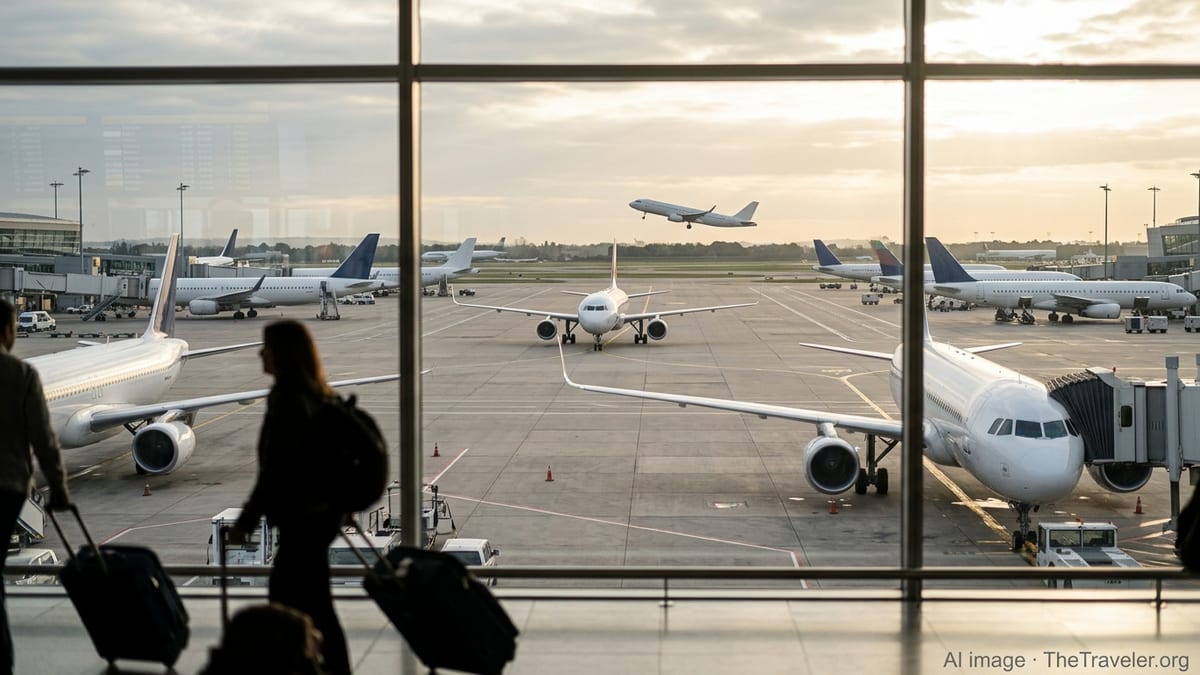
New rankings highlight near-zero cancellation record
Recent on-time performance analysis of major global airlines shows Emirates recording exceptionally low cancellation levels, placing the carrier among the world’s most reliable for operating flights as scheduled. Industry data compiled for March 2025 indicates that Emirates registered just a single cancelled service during the month while maintaining an on-time performance rate above 85 percent, a combination that positions it near the top of international reliability tables.
That single cancellation came against a backdrop of thousands of scheduled flights across Emirates’ long-haul network linking Dubai with cities across Europe, Asia, Africa and the Americas. Publicly available statistics from aviation tracking platforms point to a cancellation rate for Emirates that in some recent 30 day periods has been close to 0.2 percent, far below typical global averages that often range between 1 and 2 percent depending on region and season.
While precise rankings differ between data providers, multiple comparisons of large network airlines now place Emirates in a small group of carriers that cancel only a fraction of one percent of their services in normal operating conditions. This performance stands out in an industry where weather disruptions, air traffic control constraints and staffing issues regularly push up cancellation and delay rates.
Middle Eastern hubs gain reputation for operational resilience
The strong record of Emirates is part of a broader trend in which several Middle Eastern airlines have emerged as reliability leaders. Aviation schedule analysis for 2025 has highlighted that Emirates, along with regional peers such as Qatar Airways and other Gulf carriers, consistently posts high on-time performance while keeping cancellations to a minimum.
Industry observers link this resilience to hub-based business models centered on airports like Dubai International, which are designed to handle large volumes of connecting passengers within tightly managed operational windows. Concentrating fleets and crews in a single primary hub allows carriers to reposition aircraft more easily and recover from disruptions more quickly than point-to-point competitors spread across multiple bases.
At the same time, sustained investment in fleet renewal has helped reduce technical-related disruption. Emirates operates one of the world’s youngest widebody fleets by seat capacity, dominated by Airbus A380 and Boeing 777 aircraft configured for long-haul missions. Analysts note that a modern, homogeneous fleet can simplify maintenance planning and spare parts logistics, supporting more predictable day-to-day operations.
Contrast with higher cancellation rates elsewhere
Emirates’ low cancellation rate contrasts sharply with the experience in some other major aviation markets over the past two years. Data from national transport authorities in North America and Europe shows that average cancellation rates for large carriers frequently sit above 1 percent and can spike significantly higher during peak travel periods or severe weather events.
Reports on airline performance in 2024 and 2025 have documented instances where carriers in the United States and Europe cancelled several percent of their scheduled operations during busy holiday periods or following technology outages. In some cases, thousands of flights were withdrawn over just a few days as airlines struggled to reposition aircraft and crew, leaving airports congested and passengers seeking rebooking options.
By comparison, Emirates has so far avoided such large-scale schedule disruptions. While the carrier is not immune to weather, airspace closures or isolated operational issues, public data shows that its cancellation numbers remain very low relative to overall flight volumes. Aviation analysts say this difference is increasingly visible to passengers who compare records of major long-haul airlines when choosing itineraries.
What low cancellations mean for travelers
For passengers, an airline’s cancellation record is often as important as its on-time performance. A delayed flight can still get travelers to their destination the same day, but a cancellation typically requires rebooking, overnight accommodation or significant changes to onward plans. In an era of tight connection windows and busy international hubs, avoiding cancellations can materially reduce travel stress.
Travel industry commentators note that Emirates’ reliability record is particularly significant given its role as a connector between continents. Many of the carrier’s customers rely on smooth transfers in Dubai to complete journeys between Europe and Asia, or between Africa and North America. In such itineraries, a cancellation on one leg can jeopardize the entire trip.
Low cancellation rates can also have financial implications for travelers. Fewer cancellations generally mean fewer instances where customers must cover last minute hotel stays, alternative transport or missed event costs while waiting for replacement flights. As passenger rights regimes tighten in various jurisdictions, airlines with consistently low cancellation levels may also face fewer compensation claims and regulatory disputes.
Competitive pressure on global network airlines
Emirates’ standing among the least cancellation-prone airlines adds another dimension to the competition between major long-haul carriers. Reliability is increasingly becoming a key marketing and loyalty factor alongside cabin product, pricing and frequent flyer benefits, particularly for corporate travel buyers and high-value leisure passengers who place a premium on certainty.
Travel management companies report that corporate clients are paying closer attention to operational data when negotiating contracts or setting internal travel policies. Carriers that can demonstrate strong records on cancellations and delays may be better positioned to secure preferred-carrier status on long-haul routes, especially where alternatives involve more disruption-prone hubs.
As travel demand continues to expand through 2026, analysts expect that performance metrics such as cancellation rates, on-time arrivals and rapid recovery from disruptions will remain under scrutiny. Emirates’ current position among the world’s least likely airlines to cancel flights suggests that operational resilience will remain a central part of its competitive strategy as the global aviation market grows more crowded.