


More news on this day
Emirates passengers flying between Dubai and eastern China are being urged to brace for major delays and schedule changes as Typhoon Dolphin disrupts operations at Shanghai and Hangzhou airports, prompting widespread flight cancellations and forcing airlines to rapidly rework their timetables.
Get the latest news straight to your inbox!
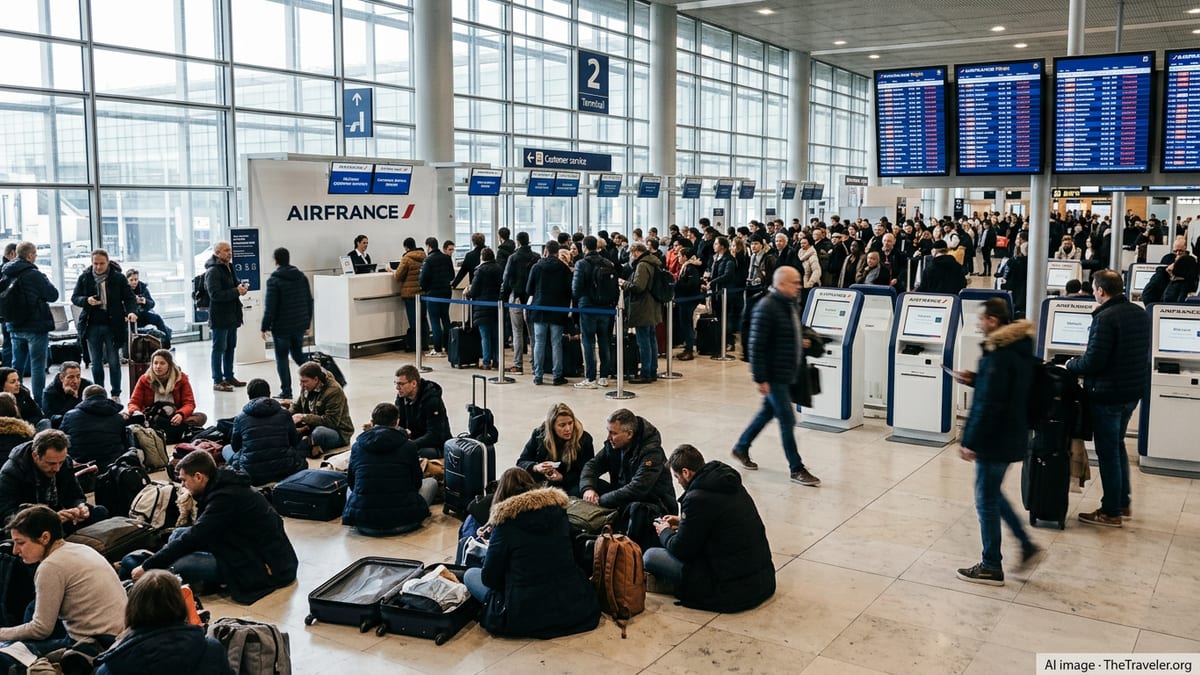
Typhoon Dolphin Triggers Large-Scale Flight Cancellations
Typhoon Dolphin has made landfall along China’s eastern seaboard, bringing intense rain, strong winds and coastal flooding to the Yangtze River Delta. Publicly available meteorological data indicate that the system has prompted the highest-level storm alerts for parts of Zhejiang Province and the Shanghai area, regions that host two of the mainland’s busiest aviation hubs.
Reports from Chinese and international media describe extensive disruption at Shanghai Pudong and Hongqiao airports, with more than a thousand flights cancelled or rescheduled in response to deteriorating conditions. Airport authorities in the region have been prioritizing safety, resulting in rolling adjustments to departure and arrival windows as wind speeds and visibility fluctuate around the typhoon’s core.
Hangzhou Xiaoshan International Airport, which sits closer to Dolphin’s path along the Zhejiang coastline, has also seen significant operational constraints. Available data suggest a pattern of clustered cancellations and ground holds as bands of heavy rain move through the area, creating a highly dynamic operating environment for both local and long haul services.
The scale of the disruption is especially acute because the Shanghai and Hangzhou airports are key gateways for domestic connections across China, amplifying the knock-on effects of each cancellation or prolonged delay.
Emirates Adjusts Dubai–Shanghai and Dubai–Hangzhou Schedules
Emirates, which links Dubai with multiple major cities in mainland China, has been forced to adjust operations on its routes to Shanghai and Hangzhou as Typhoon Dolphin disrupts airport capacity and airspace flows across eastern China. Flight tracking data and customer reports indicate that a mix of outright cancellations, lengthy delays and equipment swaps is being used to manage the impact.
On the Dubai–Shanghai sector, several Emirates services have operated with extended ground time, diversion risk or last minute timing changes as the storm has moved closer to the coast. At peak disruption, some outbound flights from Dubai to Shanghai have been held back for many hours until conditions at Pudong improved sufficiently to support safe arrivals and turnarounds.
The newer Dubai–Hangzhou link, which has been positioned as a growth route into the booming Zhejiang market, has faced similar headwinds. Observers following live flight status tools report cases where services have been rescheduled to later departure slots, converted into combined passenger and recovery operations, or, in some instances, cancelled when local conditions at Hangzhou Xiaoshan no longer permitted safe operations within crew duty limits.
Industry data on network planning practices suggest that carriers such as Emirates will typically prioritize safety and regulatory compliance first, then work to realign aircraft rotations and crew rosters to restore their long haul schedules once storm conditions ease. That process can take days even after the immediate weather threat has passed.
Knock-On Impacts for Transit Passengers in Dubai
The disruption in eastern China is also being felt thousands of kilometers away at Dubai International Airport, where Emirates operates a major global connecting hub. Passengers traveling from Europe, the Middle East, Africa and the Americas and connecting onward to Shanghai or Hangzhou are experiencing extended layovers, missed onwards connections and, in some cases, involuntary overnight stays.
Travel forums and social media posts from passengers in transit through Dubai describe situations in which connecting flights to the Chinese mainland were delayed by up to a full day while crews and aircraft waited for slots to reopen in Shanghai and Hangzhou. Some customers report being automatically rebooked on alternative routings via other Chinese cities or later departures once updated schedules became available.
Operational analysts note that long haul hub carriers can face complex challenges when a weather event closes or constrains a major destination airport that sits at the far end of their network. Aircraft scheduled to shuttle between Dubai and China may be forced to remain on the ground, creating rotations that fall out of sync and reducing overall capacity for several days. This can affect not only the passengers on the disrupted legs but also travelers booked on subsequent services that would have used the same aircraft or crews.
With Dubai itself currently operating normally, the primary constraint for Emirates passengers is not conditions in the United Arab Emirates but the uncertain timing of airport reopenings and slot availability in the typhoon-affected region of China.
What Affected Travelers Can Expect in the Coming Days
Forecast models show Typhoon Dolphin gradually weakening as it moves inland, but residual bands of heavy rain and strong winds are expected to affect parts of eastern China for at least the next day or two. As a result, schedules on the Dubai–Shanghai and Dubai–Hangzhou routes may remain unstable even after the worst of the storm has passed, as airlines work through aircraft positioning, crew duty-time restrictions and a backlog of displaced passengers.
Travel operations specialists indicate that passengers already holding tickets on Emirates services to and from Shanghai and Hangzhou should expect ongoing adjustments to departure and arrival times. These may include short notice delays announced on the day of travel, as well as potential changes to flight numbers, operating aircraft or routings if aircraft are redeployed to cover gaps elsewhere in the network.
Industry practice in comparable typhoon events suggests that airlines often introduce flexible rebooking policies, allowing customers to shift travel dates without additional change fees, or to reroute through alternative cities in the same region when capacity becomes available. Travelers are advised to monitor their booking status frequently, particularly within the 24 hours before departure, as timetable updates can occur multiple times in a single day while weather and airport conditions evolve.
Observers of previous typhoon seasons in eastern China also note that it can take several days for airport operations to return to a normal rhythm after large-scale cancellations. Even once Dubai–Shanghai and Dubai–Hangzhou flights are operating more regularly again, lingering congestion in air traffic management and ground handling may continue to cause moderate delays.
Travel Planning Tips for Passengers Heading to Eastern China
Given the evolving situation around Typhoon Dolphin, travel experts recommend that Emirates customers heading to Shanghai or Hangzhou build additional flexibility into their plans. This can include allowing longer buffers for important meetings or onward domestic travel within China, as well as considering travel insurance products that specifically cover weather-related disruption and missed connections.
Passengers are also encouraged to keep essential items, including medication, valuables and a change of clothes, in their carry on luggage in case extended delays in Dubai or at the destination airport lead to unplanned overnight stays. Observations from previous major weather events suggest that accommodation near key hubs can book up quickly when large numbers of travelers become stranded at once.
For those yet to depart, analysts advise keeping a close eye on official airline status tools and verified aviation data platforms, which tend to update more quickly than third party travel apps when widespread cancellations occur. Travelers who are able to adjust their dates without major penalty may choose to shift their journeys to avoid the peak of the disruption while Emirates and other carriers rebuild their schedules into Shanghai and Hangzhou.
While the situation remains fluid, current indications are that Typhoon Dolphin’s impact on Emirates’ China network, though significant in the short term, is likely to ease as weather conditions improve and airport operations in eastern China gradually normalize over the coming days.